Canine Resource Guarding: Behavioral Analysis and Modification
Understand the root causes of canine resource guarding. Learn expert behavioral analysis and evidence-based modification protocols to keep your dog safe.
Understanding Canine Resource Guarding: An Expert Behavioral Analysis
Resource guarding is one of the most misunderstood and frequently mishandled behaviors in canine ethology. Defined as the use of avoidance, threatening, or aggressive behaviors to retain control of food or non-food items in the presence of a human or another animal, guarding is a natural, adaptive survival strategy. From a behavioral analysis perspective, it is crucial to understand that a dog is not being 'stubborn' or 'spiteful' when they growl over a bone or stiffen when approached while eating. Instead, they are exhibiting a deeply ingrained evolutionary response to perceived resource scarcity.
As a core component of canine health and wellbeing, addressing resource guarding requires a shift away from outdated, punitive measures toward evidence-based, fear-free modification protocols. When left unaddressed, or when addressed with aversive methods, resource guarding can escalate into severe bite incidents, compromising both the physical safety of the household and the psychological welfare of the dog.
The Ethology and Neurobiology of Guarding
In the wild, canids must protect valuable caloric resources to survive. This evolutionary hangover persists in our domestic dogs. When a dog perceives a threat to a high-value item—be it a bully stick, a favorite plush toy, a stolen sock, or even a beloved human—their sympathetic nervous system activates. The amygdala processes the threat, triggering a release of cortisol and adrenaline. This 'fight-or-flight' response lowers the dog's bite inhibition threshold and heightens their reactivity.
Behaviorists categorize guarding into several distinct triggers:
- Food and Edibles: Guarding kibble, raw meat, or high-value chews.
- Objects and Toys: Guarding tennis balls, sticks, or stolen household items.
- Locations: Guarding crates, beds, couches, or specific rooms.
- People: Guarding a specific owner from other dogs or humans (often mislabeled as 'loyalty').
Debunking the Dominance Myth
For decades, popular media incorrectly attributed resource guarding to a dog's desire to establish 'alpha' status or dominate their human family. Modern veterinary behaviorists have thoroughly debunked this theory. According to the American Veterinary Society of Animal Behavior (AVSAB), dominance is not a personality trait but a dynamic description of a relationship regarding access to specific resources. Confrontational, dominance-based training methods (such as alpha rolls or forcibly taking items away) do not cure guarding; they merely suppress the outward warning signs while increasing the dog's underlying anxiety and aggression.
The Canine Aggression Escalation Ladder
Dogs rarely bite without warning. They communicate their discomfort through a progressive escalation ladder. Recognizing these early, subtle signs is the cornerstone of behavioral analysis and prevention. Punishing a dog for early warning signs (like growling) teaches them to skip the warning and bite immediately next time.
| Stage | Behavioral Indicators | Human Action Required |
|---|---|---|
| 1. Calming Signals | Lip licking, yawning, turning head away, freezing, whale eye (showing whites of eyes). | Stop approaching. Give the dog space. Do not punish. |
| 2. Distance-Increasing Signals | Hard staring, low rumbling growl, stiffening of the body, hovering over the item. | Back away slowly. Toss a high-value treat away from the resource to diffuse tension. |
| 3. Threat Displays | Loud growling, snarling (lips pulled back to show teeth), snapping at the air. | Evacuate the area. Manage the environment to prevent future access to the trigger. |
| 4. Offensive/Defensive Aggression | Biting, holding, and releasing, or biting and tearing. | Seek immediate veterinary and behavioral intervention. Implement strict management. |
Evidence-Based Modification Protocols
Modifying resource guarding relies on changing the dog's underlying emotional response (Conditioned Emotional Response, or CER) from 'this person is a thief' to 'this person is a provider of better things.' The American Kennel Club (AKC) strongly advocates for positive reinforcement and counterconditioning over punitive measures.
Protocol 1: Desensitization and Counterconditioning (DS/CC)
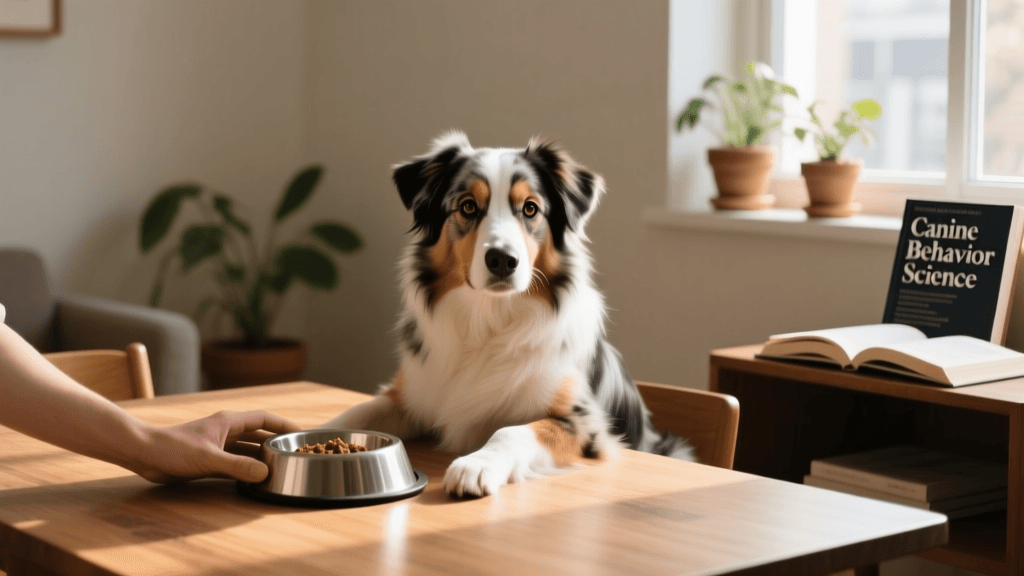
This protocol is used when a dog guards a stationary item (like their food bowl) or a location. The goal is to work strictly sub-threshold, meaning at a distance where the dog notices you but does not exhibit guarding behaviors.
- Establish the Threshold: If your dog stiffens when you are 5 feet away, your starting distance is 10 feet.
- The Approach and Toss: Stand at the 10-foot mark. The moment the dog looks at you, mark the behavior with a calm 'yes' and toss a pea-sized, ultra-high-value treat (e.g., Happy Howie's meat rolls or freeze-dried beef liver) directly to them.
- Retreat: Turn and walk away. This teaches the dog that your approach predicts fantastic food, and your departure means they get to keep their original item.
- Decrease Distance Gradually: Over multiple sessions (spanning weeks), decrease the distance by 1-foot increments, only if the dog remains relaxed and shows no signs of the escalation ladder.
- Timing is Critical: The treat must be delivered within 0.5 seconds of the dog noticing you to forge the correct neurological association.
Protocol 2: The 'Trade-Up' Method
This protocol is utilized when a dog has picked up an inappropriate or dangerous item (e.g., a chicken bone or a shoe) and you must retrieve it. Never chase the dog or pry their jaws open.
- Approach calmly with a 'trade-up' item that is significantly higher in value than the guarded object. If they have a shoe, offer a piece of roasted chicken or a stuffed Kong Classic.
- Present the high-value item near their nose. When they drop the shoe to eat the chicken, calmly pick up the shoe.
- Once the shoe is secured, give the shoe back to the dog (if it is safe to do so). This builds immense trust, proving that giving up an item does not mean losing it forever.
- If the item is dangerous and must be discarded, follow the trade with a prolonged enrichment activity, such as scattering kibble in an Outward Hound Snuffle Mat, to redirect their foraging drive.
Environmental Management and Enrichment
While modification is underway, strict management is non-negotiable to ensure safety and prevent the dog from rehearsing the guarding behavior. Management is not a cure, but it is a vital safety net.
- Spatial Separation: Feed dogs in separate rooms or inside their crates. Use baby gates to separate dogs during high-arousal chew times (e.g., when giving bully sticks).
- Remove Temptations: Keep floors clear of shoes, children's toys, and trash. Use dog-proof trash cans with locking lids.
- Enrichment Feeding: Ditch the traditional food bowl, which can foster a 'guard the perimeter' mentality. Instead, feed meals via puzzle toys, snuffle mats, or scattered in the yard to encourage natural foraging and reduce bowl fixation.
The Dangers of Aversive Punishment
Using aversive tools—such as prong collars, shock collars, or physical intimidation—to stop resource guarding is highly dangerous. The Humane Society of the United States (HSUS) warns that punishing a growl does not remove the dog's desire to guard; it simply removes their ability to warn you. A dog that learns 'growling gets me punished' will eventually skip the growl and proceed directly to biting when they feel their resource is threatened. This creates a 'shut-down' dog that appears cured but is internally highly stressed and unpredictable, posing a severe bite risk to children and visitors.
When to Seek Professional Behavioral Help
Resource guarding can be complex, especially in multi-dog households or when children are present. If your dog has broken skin, if the guarding is unpredictable, or if you feel overwhelmed, it is time to hire a professional.
Look for a Certified Professional Dog Trainer (CPDT-KA) or, ideally, a Diplomate of the American College of Veterinary Behaviorists (DACVB). A DACVB is a licensed veterinarian with advanced residency training in animal behavior, capable of diagnosing underlying medical conditions (like pain or neurological issues) that may lower a dog's aggression threshold, and can prescribe anti-anxiety medications (such as fluoxetine or clomipramine) to aid the behavioral modification process.
Estimated Costs for Professional Help:
- CPDT-KA (Private Sessions): $80 to $150 per hour.
- DACVB (Initial Telehealth or In-Person Consult): $250 to $450, which includes a comprehensive behavioral history, medical review, and a customized, multi-page modification plan.
Conclusion
Canine resource guarding is a natural behavior rooted in survival instincts, not malice or a desire for dominance. By analyzing the behavior through an ethological lens, respecting the canine aggression escalation ladder, and implementing evidence-based desensitization and counterconditioning protocols, owners can profoundly improve their dog's emotional wellbeing. Patience, impeccable timing, and a commitment to fear-free methods will transform your dog's anxiety into trust, ensuring a safer and more harmonious household for everyone.
tom-renshaw
All our authors care for dogs every day — read more of their work on the authors page.