Getting a Dog During a Cross-Country Move: 2026 Guide
Planning an interstate move and adopting a dog? Our 2026 guide covers travel logistics, housing laws, and decompression tips for a smooth transition.
Navigating Dual Life Transitions: Moving and Adopting in 2026
Relocating across the country is universally ranked as one of life's most stressful events. Deciding to adopt a dog during this exact window might sound like a recipe for chaos, but for many individuals transitioning to remote work or seeking a fresh start in a new state in 2026, it is a deeply rewarding choice. The key to success lies in meticulous logistical planning, understanding current interstate pet regulations, and prioritizing the psychological decompression of your new companion.
This comprehensive guide breaks down the exact steps you need to take when merging a cross-country move with a new dog adoption, ensuring both you and your furry friend arrive at your new front door safely and happily.
Timing Your Adoption: The 8-Week Transition Plan
The most common mistake new owners make is adopting a dog in the final week of packing. Moving day involves heavy furniture, open doors, and a revolving cast of movers—a highly dangerous and stressful environment for an animal adjusting to a new family. To mitigate this, you should follow a strict timeline.
Option A: Adopt 6-8 Weeks Before the Move
If you are still living in your current home, adopting well in advance allows the dog to bond with you in a stable environment. You can establish crate training, basic obedience, and a predictable routine. When moving day arrives, the dog views the transition as simply following their trusted human, rather than being uprooted from a shelter directly into a chaotic moving truck.
Option B: Adopt 3-4 Weeks After the Move
If your packing schedule is already overwhelming, delay the adoption. Use a service like Rover to foster or volunteer at a local shelter at your destination once your new home is unpacked and secured. This allows you to set up a dedicated 'safe room' before the dog ever steps paw inside the house.
Navigating 2026 Interstate Pet Regulations
When crossing state lines with a dog, you are legally required to comply with both federal and state-specific animal health regulations. As of 2026, the American Veterinary Medical Association (AVMA) emphasizes that nearly all states require a valid Certificate of Veterinary Inspection (CVI), commonly known as a health certificate, issued within 10 to 30 days of travel.
- Rabies Vaccinations: Ensure your newly adopted dog's rabies vaccine is up to date and that you have the physical or digital certificate signed by a licensed veterinarian. States like Colorado and Hawaii have strict quarantine or immediate-entry protocols if documentation is missing.
- Parasite Prevention: Many southern and midwestern states now require proof of recent heartworm testing and active tick/flea prevention before allowing rescue transports to cross their borders.
- Breed-Specific Legislation (BSL): If your cross-country move takes you through or to municipalities with active BSL, ensure your adoption agency has accurately identified the dog's breed mix to avoid legal complications at checkpoints or with new landlords.
Securing Pet-Friendly Housing in a Competitive 2026 Market
The rental and real estate markets in 2026 remain highly competitive, and pet-friendly listings are often subject to stringent financial requirements. When searching on platforms like Zillow or Trulia, always filter by 'Pet Friendly' but verify the fine print directly with the property manager.
Understanding Modern Pet Fees
Be prepared for the financial realities of renting with a dog in 2026. The national average for pet rent has climbed to between $50 and $85 per month, per pet. Additionally, many properties now utilize third-party pet screening services (like PetScreening.com) which require you to create a profile for your dog, upload vaccination records, and pay a nominal annual review fee.
Insurance Considerations
If you are buying a home, speak to your homeowners insurance provider about dog liability. While many major insurers have dropped breed-specific exclusions in recent years, you may still need to add an umbrella liability policy to cover potential dog bite claims, especially if adopting a large guardian breed mix.
Cross-Country Travel Logistics: Flying vs. Ground Transport
How you transport your new dog across the country will depend on their size, temperament, and your budget. Major US airlines have entirely banned pets from traveling in the cargo hold as checked baggage as of 2026, restricting in-cabin travel strictly to small dogs in soft-sided carriers that fit under the seat.
| Travel Method | 2026 Est. Cost | Stress Level | Best For |
|---|---|---|---|
| Driving (Personal Vehicle) | $500 - $1,200 (Gas/Hotels) | Low to Moderate | Dogs of all sizes; owners with flexible schedules. |
| Airline In-Cabin | $150 - $250 (One-way fee) | Moderate | Dogs under 20 lbs (including carrier weight). |
| Professional Ground Transport | $1,000 - $2,500+ | Low | Large dogs when the owner must fly ahead for work. |
Essential Road Trip Gear for 2026
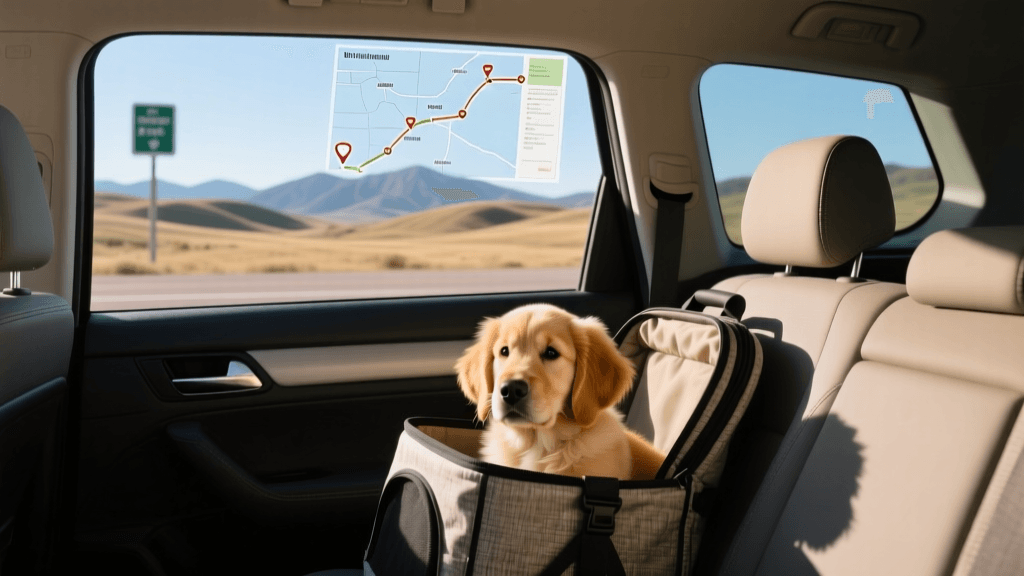
If you are driving, safety is non-negotiable. An unrestrained 50-pound dog becomes a dangerous projectile in a sudden stop. Invest in a crash-tested harness, such as the Kurgo Tru-Fit Smart Harness, which tethers directly to the vehicle's seatbelt system. For frequent rest stops in unfamiliar territories, equip your dog with a GPS-enabled collar like the Garmin Alpha 300 or an Apple AirTag securely fastened to a breakaway collar to ensure you can track them if they spook and bolt at a highway rest area.
The Decompression Phase: Applying the 3-3-3 Rule
Upon arriving at your new home, your dog will experience sensory overload. The ASPCA recommends maintaining as much of their previous routine as possible to anchor them during the transition. To manage expectations, rescue professionals universally rely on the 3-3-3 Rule of Decompression, a framework detailed extensively by The Humane Society of the United States.
- 3 Days of Overwhelm: Your dog may refuse to eat, hide under furniture, or test boundaries. Keep the environment quiet. Do not invite friends over to meet the new dog.
- 3 Weeks of Settling: The dog begins to learn your schedule, figure out where the food comes from, and show their true personality. This is the time to enroll in local positive-reinforcement obedience classes to build confidence.
- 3 Months of Bonding: Trust and a deep attachment are formed. The dog now recognizes your new house as their permanent territory.
Setting Up the 'Safe Room'
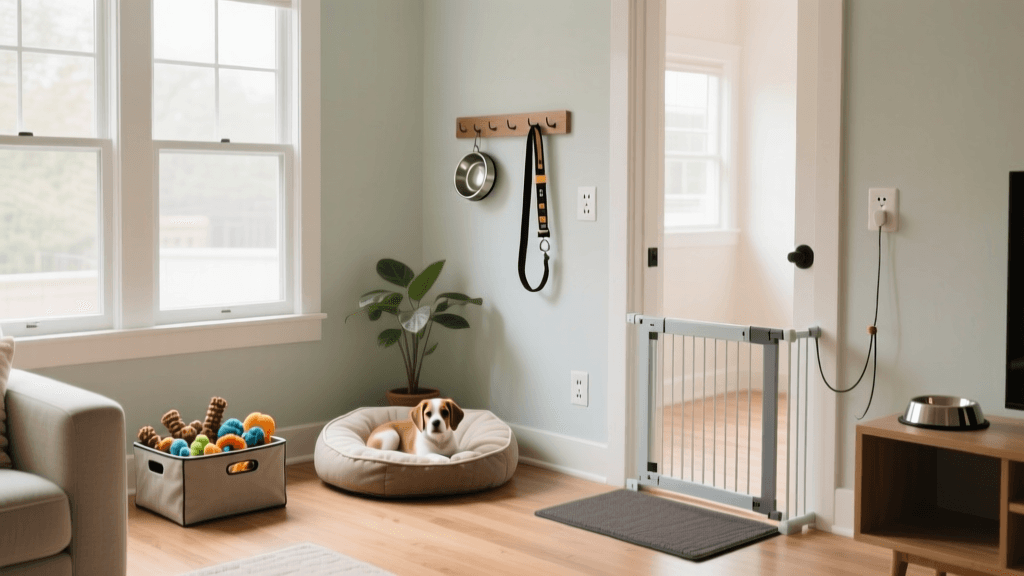
Before bringing the dog inside, designate one quiet room (like a guest bedroom or a large bathroom) as their sanctuary. Outfit this room with:
- A familiar-smelling blanket or an item of your worn clothing.
- An interactive puzzle feeder to encourage mental stimulation without overwhelming them.
- A white noise machine to drown out the sounds of unpacking, neighborhood traffic, or nearby construction.
- Calming pheromone diffusers (such as Adaptil) plugged in 24 hours before the dog arrives.
Final Thoughts on Your New Journey
Combining a cross-country move with a new dog adoption is undoubtedly an ambitious life transition. However, by respecting interstate health laws, investing in safe travel equipment, and giving your dog the grace and time to decompress in their new environment, you are laying the groundwork for a lifelong, unbreakable bond. Welcome to your new home, and welcome to dog ownership.
beth-carrasco
All our authors care for dogs every day — read more of their work on the authors page.