First-Time Puppy Prep: Essential Home Setup and Supply Guide
Discover the ultimate first-time puppy prep guide. Learn essential home setup tips, must-have supplies, costs, and safety proofing for your new dog.
Welcome to Puppy Parenthood: Why Preparation Matters
Bringing home a new puppy is one of the most exciting milestones in life, but for first-time dog owners, the reality of puppy parenthood can quickly become overwhelming. Between the midnight potty breaks, the teething phase, and the boundless energy, it is easy to feel unprepared. The secret to a smooth transition lies entirely in what you do before your puppy ever crosses your threshold. Proper preparation minimizes stress for both you and your new dog, establishing a foundation of safety, routine, and trust from day one.
This comprehensive first-time owner guide will walk you through the exact steps to puppy-proof your home, the essential supplies you need (and what to avoid), and a structured timeline for your puppy's first 24 hours in your care.
Puppy-Proofing Your Home: A Room-by-Room Safety Guide
Puppies explore the world with their mouths, and they have no innate understanding of household dangers. Puppy-proofing is not just about hiding shoes; it is about eliminating life-threatening hazards. Think of your puppy as a crawling toddler with sharp teeth and an incredible ability to jump and climb.
The Kitchen and Dining Areas
The kitchen is arguably the most dangerous room in the house for a new dog. You must secure all cleaning supplies behind child-proof latches. More importantly, you must audit your pantry for xylitol. Xylitol is an artificial sweetener found in sugar-free gum, certain peanut butters, and baked goods. Even a microscopic amount can cause rapid hypoglycemia and fatal liver failure in dogs. The FDA strongly warns pet owners to always check ingredient labels before offering any human food to a dog. Keep all trash cans inside latched cabinets; an overturned trash can is not just a mess, it is a choking and intestinal blockage hazard.
Living Spaces and Houseplants
Many common houseplants are highly toxic to canines. Sago palms, lilies, aloe vera, and pothos can cause severe gastrointestinal distress, neurological damage, or death if chewed. Before bringing your puppy home, cross-reference every plant in your house with the ASPCA's comprehensive toxic plant list. Relocate toxic plants to high shelves or outdoor areas. Additionally, secure all loose electrical cords using split loom tubing or cord concealers. A puppy chewing on a live wire can suffer severe oral burns or fatal electrocution.
Setting Up Physical Boundaries
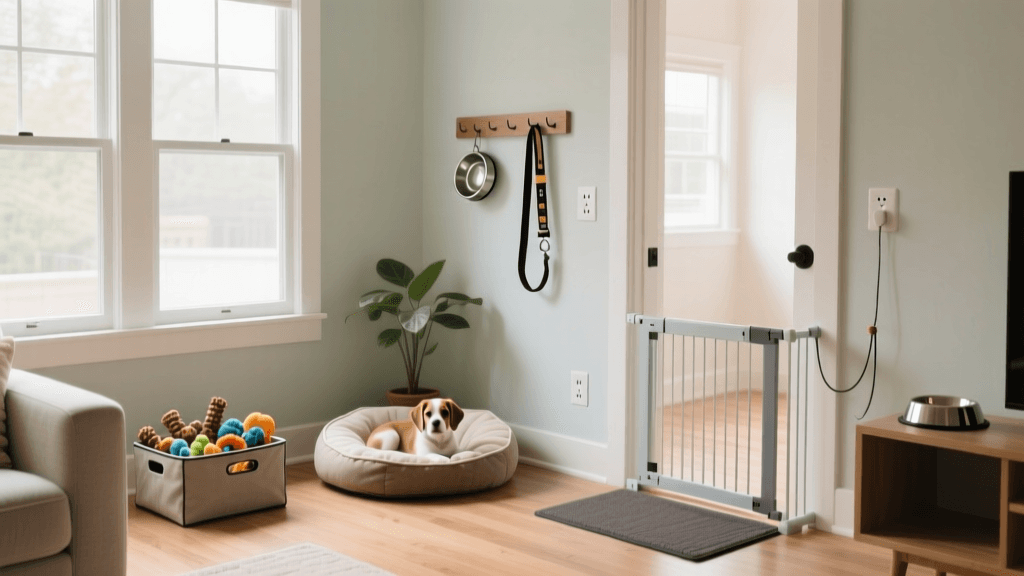
Invest in high-quality baby gates. For first-time owners, hardware-mounted gates are vastly superior to pressure-mounted ones, as an enthusiastic medium-to-large breed puppy can easily knock a pressure gate down by week three. Look for gates that are at least 30 inches tall with vertical slats to prevent climbing, and ensure the gap at the bottom is less than two inches to prevent small-breed puppies from squeezing underneath.
The Ultimate First-Day Puppy Supply Checklist
Walking into a pet store or browsing online can lead to severe overspending on gimmicky products you do not need. Below is a curated, practical supply list tailored for first-time owners, focusing on durability, safety, and long-term value.
| Item Category | Specific Recommendation | Estimated Cost | First-Time Owner Tip |
|---|---|---|---|
| Crate | Wire Crate with Divider Panel | $60 - $110 | Buy the adult size now. Use the divider to shrink the space so the puppy has just enough room to stand, turn, and lie down. This prevents them from soiling one corner and sleeping in the other. |
| Bedding | Fleece Blankets or Chew-Proof Cot | $15 - $130 | Avoid plush, stuffed beds for the first six months. Puppies will shred and ingest the stuffing, leading to emergency vet visits. Use washable fleece blankets until the chewing phase passes. |
| Food Bowls | Stainless Steel Bowls | $15 - $25 | Never use plastic bowls. Plastic harbors bacteria in microscopic scratches, which can cause canine acne and skin infections on your puppy's chin. |
| Harness | Front-Clip No-Pull Harness | $20 - $40 | A front-clip harness gently redirects a pulling puppy toward you, protecting their delicate developing trachea while teaching loose-leash walking. |
| Cleaner | Enzymatic Cleaner (e.g., Nature's Miracle) | $12 - $18 | Standard household cleaners do not break down uric acid. If you don't use an enzymatic cleaner, the puppy will still smell the urine and return to the same spot to potty. |
| Toys | Kong Classic (Red) & Nylabone Puppy Chew | $15 - $25 | Stuff the Kong with wet puppy food and freeze it. This provides a soothing, long-lasting distraction for teething puppies and helps build positive crate associations. |
Setting Up Your Puppy's "Safe Zone"
First-time owners often make the mistake of giving a new puppy free roam of the entire house. This leads to potty training accidents and destructive chewing. Instead, create a designated "Safe Zone" or "Puppy Playpen" area.
Use a 4x4 foot metal exercise pen (X-pen) and place your puppy's crate inside it with the door propped open. Place a pee pad or artificial grass potty patch at the far end of the pen, away from the sleeping area. This setup taps into a dog's natural instinct not to soil their sleeping quarters, drastically accelerating the house-training process. Keep this zone in a low-traffic but socially integrated area of your home, like a corner of the living room, so the puppy learns to settle while still feeling part of the family.
The First 24 Hours: A Timeline for Success
How you handle the first day sets the tone for your relationship. The Humane Society recommends keeping things incredibly calm and structured when bringing a new dog home to prevent sensory overload.
- Hour 1: The Arrival and Immediate Potty Break. Carry your puppy directly from the car to the designated outdoor potty spot. Do not bring them inside first. Wait patiently, and the moment they eliminate, offer a high-value treat and calm praise. This immediately establishes the outdoor potty routine.
- Hour 2-3: Leash Exploration. Bring the puppy inside, but keep them on a lightweight leash attached to your belt loop—a technique known as "umbilical training." This prevents them from wandering off to chew baseboards or have hidden accidents while allowing them to safely observe their new environment.
- Hour 4: The First Meal and Decompression. Offer a small portion of the exact food the breeder or shelter was feeding to avoid gastrointestinal upset. After eating, take them outside for another potty break, followed by mandatory crate time for a nap. Puppies need 18-20 hours of sleep a day, and overtired puppies become aggressive biters.
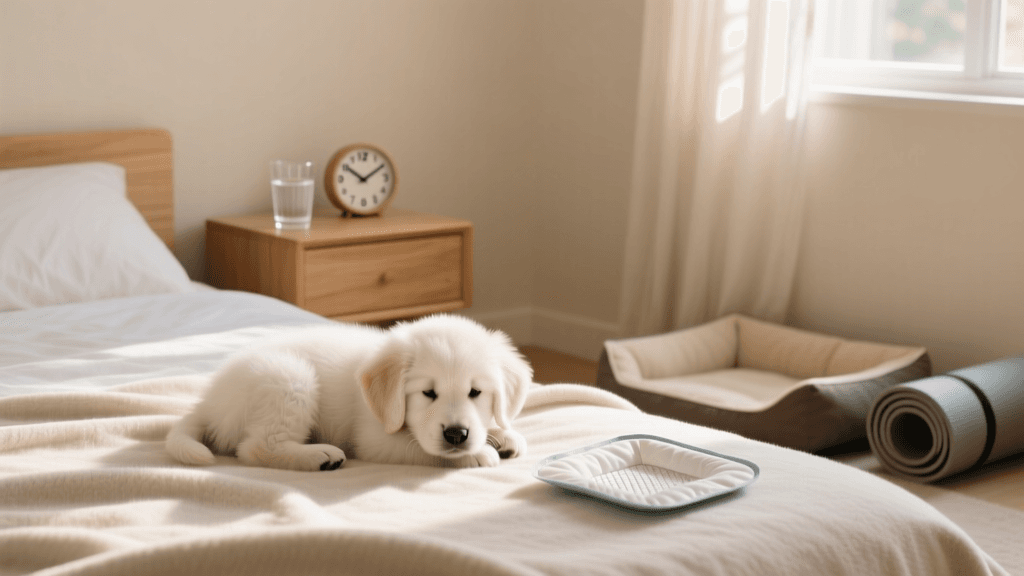
- Nighttime: Settling In. Place the crate in your bedroom for the first few nights so the puppy can hear and smell you. If they whine, wait for a brief pause in the noise before offering a calm, quiet verbal reassurance. Never let them out while they are actively crying, or you will teach them that crying equals freedom.
Common First-Time Owner Mistakes to Avoid
Even with the best intentions, new owners frequently stumble into a few common traps. The first is overstimulation. It is tempting to invite friends and family over to meet the new puppy, but this is incredibly stressful for a young dog. Limit introductions to one or two calm people at a time during the first week.
The second mistake is inconsistency with rules. If the puppy is not allowed on the furniture as a 10-pound furball, they cannot be allowed on the furniture when they become a 60-pound adult. Decide on your household rules before the puppy arrives, and ensure every family member enforces them uniformly. Finally, do not skip early socialization. Once your veterinarian clears your puppy for outings, expose them to new surfaces, sounds, and environments daily. The critical socialization window closes around 14 to 16 weeks of age, making early, positive exposure vital for a well-adjusted adult dog.
Final Thoughts
Preparing for a puppy requires time, patience, and a bit of financial investment, but the payoff is immeasurable. By puppy-proofing your home, investing in the right durable supplies, and sticking to a structured 24-hour routine, you are setting your new companion up for a lifetime of success. Take a deep breath, trust your preparation, and get ready for one of the most rewarding journeys of your life.
priya-sutaria
All our authors care for dogs every day — read more of their work on the authors page.