Cooperative Care Dog Training 2026: Build Deep Trust Fast
Discover how cooperative care training builds deep trust with your dog in 2026. Learn the chin rest and bucket game techniques for stress-free handling.
The Paradigm Shift: Why 2026 is the Year of Consent
Welcome to the frontier of modern dog training. As we navigate through 2026, the dog training and veterinary communities have fully embraced a revolutionary approach to husbandry and handling: Cooperative Care. Gone are the days of forced compliance, physical pinning, and the 'alpha' dominance myths that historically damaged the human-canine bond. Today, relationship building is rooted in mutual trust, clear communication, and the empowering concept of canine consent.
Cooperative care training involves teaching your dog to actively participate in their own grooming, veterinary exams, and daily handling. Instead of restraining a fearful dog to trim their nails or clean their ears, we teach them to offer a specific behavior—like a chin rest or a focused gaze—that signals they are ready and willing to be handled. If the dog becomes uncomfortable, they are taught that they can 'opt-out' by breaking the behavior, which immediately pauses the procedure. This level of agency drastically reduces cortisol levels, eliminates defensive aggression, and forges an unbreakable bond of trust between you and your dog.
According to the American Veterinary Society of Animal Behavior (AVSAB), positive reinforcement and consent-based methods are the absolute gold standard for animal handling and behavioral modification. By prioritizing the dog's emotional state over human convenience, we set the stage for a lifetime of stress-free care and deep relational harmony.
The Psychology of the 'Opt-In' Bond
Why does letting your dog say 'no' actually make them say 'yes' more often? The answer lies in canine cognitive psychology and the reduction of learned helplessness. When a dog realizes they have control over their environment and their body, their baseline anxiety drops significantly. The ASPCA's comprehensive dog training guidelines emphasize that building a lasting bond relies heavily on mutual trust and the removal of fear-inducing stimuli.
When you force a dog to endure an uncomfortable procedure, their brain associates you, the handler, with panic and pain. Conversely, when a dog learns that offering a 'chin rest' results in high-value rewards and that breaking the chin rest makes the scary clippers go away, you transform from a source of stress into a partner in their safety. In 2026, certified fear-free handlers and advanced canine behavioral therapists utilize these opt-in techniques to rehabilitate severely fearful rescue dogs, proving that consent is not just a luxury—it is a neurological necessity for behavioral health.
Essential Equipment for Modern Husbandry
Before diving into the techniques, ensure you have the right tools for success. The 2026 market offers fantastic advancements in training gear that support cooperative care:
- Magnetic Quick-Release Treat Pouches: Brands like DogTreat and FrogDog have updated their magnetic closure pouches this year, allowing for silent, instant access to rewards without fumbling with zippers or velcro that might startle a sensitive dog.
- High-Value Reward Paste: Squeeze tubes filled with bone broth paste, goat milk, or single-ingredient purees are ideal. They keep the dog's head in a stationary position while licking, which is naturally soothing.
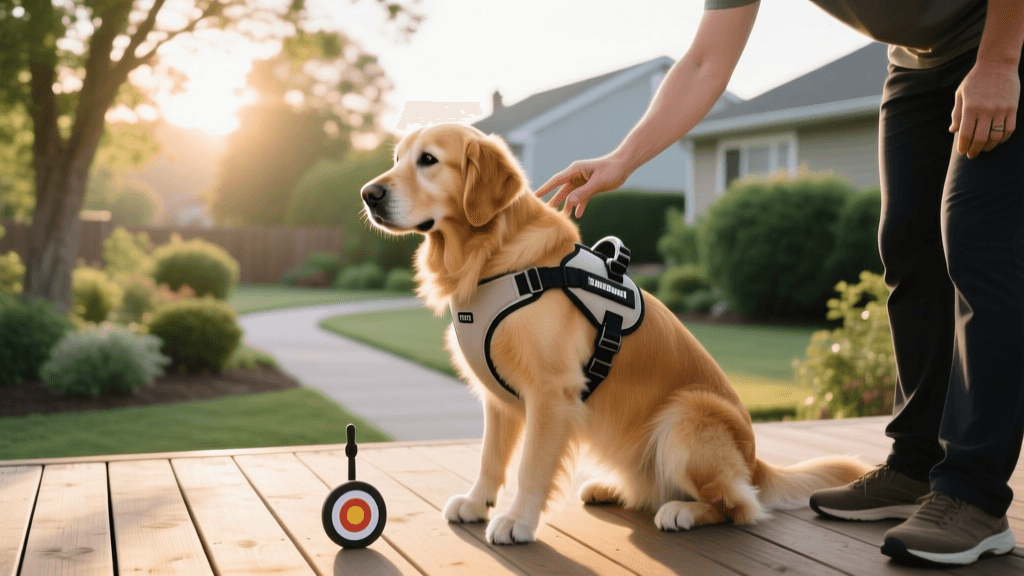
- Biothane Target Sticks: Lightweight, easy to sanitize, and available in high-visibility colors, these are perfect for teaching targeting behaviors.
- Non-Slip Yoga Mats or Vet Beds: Providing a dedicated, non-slip 'work station' helps the dog understand that stepping onto the mat means a cooperative care session is about to begin.
Core Technique 1: The Chin Rest for Grooming and Vet Care
The chin rest is arguably the most versatile and powerful cooperative care behavior you can teach. It is used for eye exams, ear cleaning, tooth brushing, and even drawing blood at the vet. The goal is for the dog to voluntarily rest their chin on a target (your hand, a towel, or a specialized chin rest prop) and hold it still.
Step-by-Step Chin Rest Training
- Capture the Target: Sit on the floor with your dog. Hold out your flat palm or a small towel. The moment your dog sniffs or looks at your hand, click a marker (or say 'Yes!') and deliver a treat directly to their mouth.
- Shape the Downward Motion: Wait for your dog to lower their head slightly toward your hand. Mark and reward. Gradually raise your criteria until the dog's chin actually makes physical contact with your palm.
- Add Duration: Once the chin is resting on your hand, delay the mark and reward by half a second, then one second, then three seconds. Feed the treat while the chin is still resting on the target to reinforce the duration.
- Introduce the 'Opt-Out' Rule: This is critical. If your dog lifts their head, do not force it back down. Simply withdraw your hand, pause for three seconds, and offer the target again. This teaches the dog that lifting their head is a valid way to ask for a break.
- Add Distractions and Handling: Once the dog can hold a chin rest for 10 seconds, gently touch their shoulder, then their neck, then their ear, marking and rewarding heavily for maintaining the rest. Progress to holding a brush or mock syringe near their face.
Core Technique 2: The Bucket Game for Nail Trims
Pioneered by renowned animal behaviorist Chirag Patel, the Bucket Game is a staple in 2026 for dogs who have severe aversions to paw handling and nail trimming. It uses a physical object (a bucket or a sturdy plastic tub) as a focal point and a consent signal.
How to Play the Bucket Game
- Establish the Focal Point: Place a small bucket on the floor. Whenever your dog looks at or sniffs the bucket, mark and toss a treat away from the bucket. This creates a cycle where the dog returns to the bucket to 'start the game' again.
- Shape the Focus: Require the dog to stare continuously at the bucket. While they are staring at the bucket, you will perform the husbandry task. The rule is simple: If the dog looks at the bucket, the handling continues and treats flow. If the dog looks away from the bucket (at you, at the clippers, or at the door), all handling stops immediately.
- Introduce the Handling: While the dog is locked onto the bucket, gently touch their shoulder. If they keep looking at the bucket, mark and feed a treat (you can place it right on top of the bucket or toss it). Progress to touching the leg, then the paw, then holding a single toe.
- The Power of the Break: When you bring out the nail clippers, the dog will likely look away from the bucket in apprehension. The moment they look away, freeze. Put the clippers down. Wait for the dog to look back at the bucket to 'restart' the game. This empowers the dog to dictate the pace of the nail trim, entirely eliminating the panic associated with forced paw restraint.
Traditional Restraint vs. Cooperative Care: A 2026 Comparison
Understanding the physiological and emotional differences between old-school restraint and modern cooperative care highlights why the latter is vastly superior for relationship building.
| Metric | Traditional Forced Restraint | Cooperative Care (Consent-Based) |
|---|---|---|
| Canine Cortisol Levels | Spike significantly; takes hours to return to baseline. | Remain near baseline; rapid recovery if a break is taken. |
| Handler Relationship | Deteriorates; dog associates handler with fear and loss of control. | Strengthens; dog views handler as a provider of safety and agency. |
| Risk of Bites/Injury | High; defensive aggression is a natural response to trapping. | Negligible; the dog can opt-out before reaching a bite threshold. |
| Long-Term Compliance | Decreases over time as the dog learns to fight back or shut down. | Increases over time as the dog builds confidence and positive associations. |
Troubleshooting Common Roadblocks
Even with the best intentions, you may encounter hurdles during your cooperative care journey. Here is how to navigate them while preserving your bond:
- The Dog Won't Opt Back In: If your dog takes a break during the Bucket Game and refuses to look back at the bucket, the session is over. Do not lure them back. You have pushed too far, too fast. End on a positive note with a quick game of tug, and lower your criteria for the next session.
- Treating Medical Pain: Cooperative care is not a substitute for pain management. If your dog suddenly breaks a previously solid chin rest during ear handling, stop immediately. In 2026, veterinary standards dictate that behavioral aversions to specific body handling should always trigger a thorough veterinary exam to rule out underlying osteoarthritis, dental disease, or ear infections.
- Over-Arousal in High-Drive Dogs: Some working breeds become overly frustrated or excited by the treat delivery during targeting. To counter this, utilize 'calmness protocols' such as scatter feeding on a snuffle mat between reps, or switch to lower-value rewards like kibble to keep the dog's nervous system regulated.
Conclusion: The Ultimate Act of Love
Training is not merely about teaching a dog to sit, stay, or heel on command; it is about establishing a shared language. By adopting cooperative care techniques like the chin rest and the Bucket Game, you are telling your dog that their feelings matter, their boundaries are respected, and their voice is heard. For further reading on low-stress handling and advanced bonding techniques, the American Kennel Club's training hub offers excellent resources to supplement your journey.
As we continue to advance our understanding of canine cognition in 2026, remember that the deepest bonds are not forged through control, but through compassion. Give your dog the gift of consent, and watch your relationship transform into a partnership built on unshakeable trust.
beth-carrasco
All our authors care for dogs every day — read more of their work on the authors page.