Cooperative Care Chin Rest Training for Rescue Dog Bonding in 2026
Build deep trust with your rescue dog in 2026 using cooperative care chin rest training. Learn step-by-step force-free husbandry techniques and gear.
The Evolution of Canine Husbandry and Bonding in 2026
As we navigate the dog training landscape in 2026, the paradigm has definitively shifted away from forced compliance and toward trauma-informed, cooperative care. For rescue dogs, who often carry the invisible weight of past neglect or mishandling, traditional restraint methods can trigger deep-seated fear, eroding the very bond you are trying to build. Today, leading behaviorists emphasize that true obedience and lifelong bonding stem from agency and trust. According to the Fear Free Pets initiative, giving dogs a choice in their husbandry and medical care drastically reduces cortisol levels and accelerates the human-canine bonding process.
One of the most powerful, versatile, and relationship-building techniques to emerge as a gold standard in 2026 is the Cooperative Care Chin Rest. This behavior involves teaching your dog to voluntarily rest their chin on a designated target—such as your hand, a specialized mat, or a grooming stand—in exchange for high-value rewards. It is not just a 'trick'; it is a profound communication tool that tells your rescue dog: 'You are safe, you have a voice, and I will listen.'
Why the Chin Rest is the Ultimate Bonding Tool
The chin rest is uniquely suited for relationship building because it requires the dog to face you or focus forward, naturally calming the nervous system. When a dog voluntarily places their chin down and maintains eye contact or soft body language, they are engaging in a vulnerable, trusting act. By pairing this vulnerability with positive reinforcement, you rewire their emotional response to handling. Whether you are checking their ears, wiping their paws after a muddy hike, or simply practicing gentle massage, the chin rest serves as a 'consent button.' If the dog lifts their chin, the handling stops immediately. This opt-out rule is the cornerstone of modern force-free training and is heavily supported by the American Veterinary Society of Animal Behavior (AVSAB) in their guidelines on humane handling and stress reduction.
Essential 2026 Gear for Cooperative Care Training
To set your rescue dog up for success, you need the right tools. Precision in reward delivery and comfort in the target area are critical. Here is the recommended 2026 gear list for chin rest training:
- Ruffwear Treat Trader Pouch ($44.95): The magnetic closure is essential. Fumbling with zippers or velcro can break the dog's focus and spike frustration. The Treat Trader allows for instant, silent reward delivery.
- Karen Pryor i-Click ($7.50): For sensitive rescue dogs, the loud 'box clicker' can be startling. The i-Click provides a muted, precise acoustic marker that bridges the gap between the behavior and the reward without causing auditory stress.
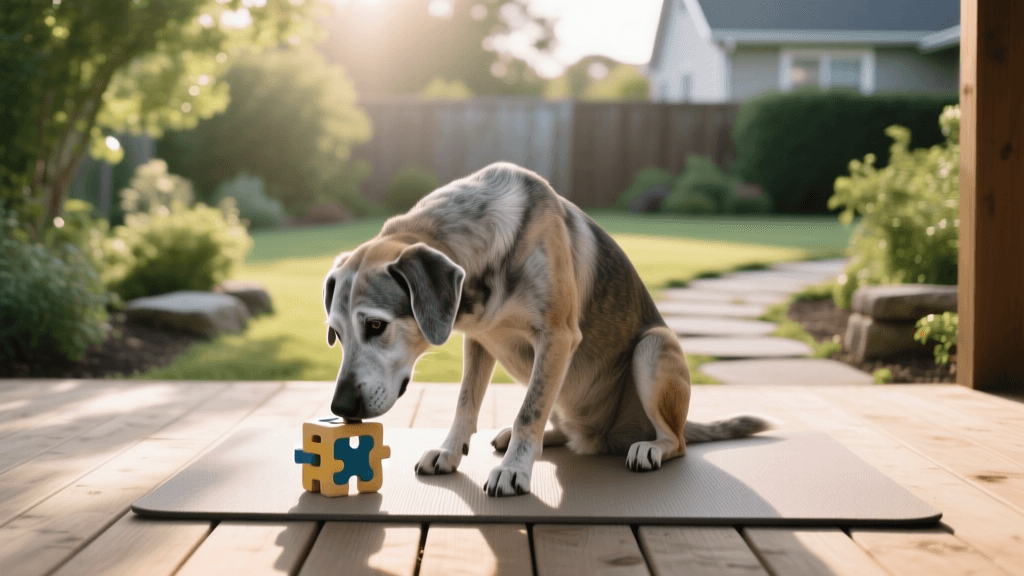
- Snuffle Mat Co. Target Pad ($18.00): While your hand can be the target, starting with a distinct, textured pad helps the dog understand exactly where their chin should go. This is especially useful for hand-shy rescues who may initially flinch when a hand approaches their face.
- High-Value Lickable Treats: Squeeze tubes filled with bone broth or plain pumpkin puree are excellent for encouraging duration, as licking is a naturally soothing, self-regulating behavior for canines.
Step-by-Step Chin Rest Training Protocol
Building a behavior rooted in trust takes time. Do not rush the process; the bond is forged in the patience you display during these steps.
Phase 1: Capturing the Downward Glance (Week 1)
Place the Target Pad on a low, stable surface like a coffee table or the floor. Sit comfortably beside your dog. Wait for them to investigate the pad. The exact second their nose touches or sniffs the pad, click your i-Click and deliver a treat directly onto the pad. Repeat this 15-20 times per session. You are building a positive emotional response to the target.
Phase 2: Shaping the Chin Drop (Week 2)
Once your dog is confidently booping the pad with their nose, withhold the click for just a second longer. Wait for the nose to touch and the head to lower slightly so the chin grazes the pad. Click and reward. Gradually shape the behavior until the dog is resting their full chin weight on the pad for one full second before the click.
Phase 3: Adding Duration and the 'Opt-Out' Rule (Week 3)
Now, introduce the squeeze tube. Allow your dog to lick the tube while their chin is on the pad. Slowly pull the tube away; if the chin stays down, reward. If the dog lifts their chin, immediately stop the treat flow, put the tube away, and wait. Never physically push the dog's head down. If they lift their chin, it means they need a break or the difficulty is too high. Respecting this opt-out is what builds unbreakable trust.
Phase 4: Introducing Handling (Week 4 and Beyond)
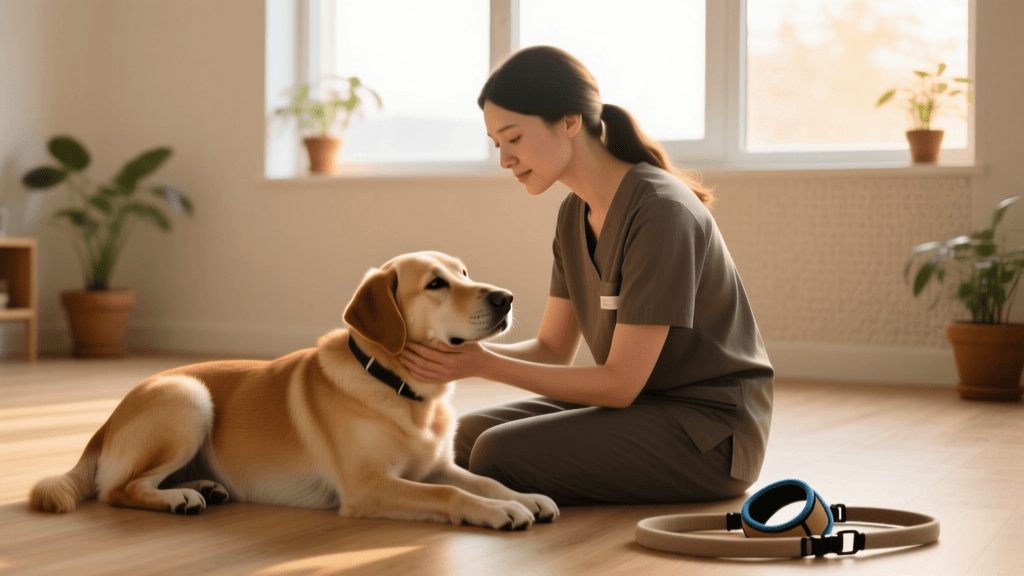
With the chin rest solidified, begin adding mild handling. While the dog is resting their chin, gently stroke their shoulder with one hand. Click and reward. Over subsequent sessions, progress to touching their ears, examining their teeth, or lightly brushing their coat. If at any point the dog lifts their chin, stop the handling immediately, reset, and try again at a lower intensity.
Traditional Restraint vs. Cooperative Care: A 2026 Comparison
Understanding the physiological and emotional differences between old-school methods and modern cooperative care highlights why the latter is superior for rescue dog bonding.
| Metric | Traditional Forced Restraint | Cooperative Care (Chin Rest) |
|---|---|---|
| Canine Agency | None; dog is physically held. | High; dog can opt-out at any time. |
| Stress Hormones | Cortisol and adrenaline spike. | Cortisol remains baseline; oxytocin increases. |
| Bonding Impact | Damages trust; creates avoidance. | Deepens trust; creates willing participation. |
| Time Investment | Fast in the moment, slow long-term. | Slower initially, near-instant long-term. |
| Safety for Handler | High risk of fear-based biting. | Extremely low risk; warning signs are clear. |
Troubleshooting Common Bonding Roadblocks
My rescue dog is hand-shy and flinches when I reach out.
This is common in dogs with histories of abuse. Do not use your hand as the initial target. Rely entirely on the Target Pad or a specialized wooden chin stand. Once the dog is confidently resting their chin on the inanimate object for 30+ seconds, you can begin desensitizing them to your hand by resting your hand next to the pad, clicking, and treating, without attempting to touch the dog.
My dog keeps lifting their chin the second I touch their ears.
This is the system working perfectly! Your dog is communicating that ear handling is currently too overwhelming. Respect the opt-out. Go back to Phase 3 and practice touching their neck or shoulders instead. Break the ear-handling down into micro-steps: touch the base of the ear for one second, click, treat. Build up to the ear flap over several weeks.
My dog is too food-motivated and won't settle.
If your dog is frantically pawing at your treat pouch, lower the value of the reward. Switch from freeze-dried liver to standard kibble, or use a lickable treat that forces them to slow down and engage their parasympathetic nervous system through the rhythmic motion of licking.
The Neurological Bond: What Happens in the Brain
When you practice cooperative care, you are actively participating in neurochemical bonding. The Humane Society of the United States and various canine cognitive studies note that positive, choice-based interactions trigger the release of oxytocin in both the human and the dog. Often called the 'love hormone,' oxytocin facilitates social bonding, lowers blood pressure, and creates a feedback loop of mutual affection. By allowing your rescue dog to choose to participate in their own care, you transition from being a 'handler' to a 'partner.' In 2026, the most successful dog owners recognize that a well-trained dog is not one that obeys out of fear of correction, but one that cooperates out of a deep, secure attachment to their human.
'The ultimate goal of training is not blind obedience, but a shared language of trust. When a dog chooses to give you their chin, they are giving you their trust.' — Modern Canine Behaviorist Consensus, 2026.
Conclusion: A Lifetime of Trust
Investing time in cooperative care chin rest training is one of the most profound gifts you can offer a rescue dog. It transforms necessary, often stressful husbandry tasks into opportunities for connection. As you move through 2026, prioritize your dog's emotional well-being alongside their physical health. Equip yourself with the right gear, respect their opt-out signals, and celebrate the small victories. The result will be a resilient, confident dog who looks to you not just for guidance, but for genuine partnership and safety.
marcus-aldridge
All our authors care for dogs every day — read more of their work on the authors page.