Canine Weight Management: Portion Control & Diet Tips
Discover actionable canine weight management strategies. Learn how to calculate caloric needs, measure portions in grams, and choose healthy low-calorie treats.
The Hidden Epidemic of Canine Obesity
As dog owners, we often equate food with love. A wagging tail at the sound of a treat bag opening is one of the most rewarding sights in our daily routines. However, this well-intentioned affection has contributed to a severe health crisis. According to the Association for Pet Obesity Prevention (APOP), over 55% of dogs in the United States are classified as overweight or obese. This is not merely a cosmetic issue; excess adipose tissue is an active endocrine organ that secretes inflammatory hormones, directly leading to osteoarthritis, type 2 diabetes, hypertension, and a significantly decreased life expectancy.
Addressing your dog's weight requires moving away from guesswork and embracing a scientific, data-driven approach to nutrition. In this deep dive, we will explore the exact mathematics of canine caloric needs, the critical importance of gram-based portion control, and how to implement a safe, effective 12-week weight loss protocol without sacrificing your bond with your pet.
Assessing the Starting Line: Body Condition Scoring
Before altering your dog's diet, you must establish an accurate baseline. The World Small Animal Veterinary Association (WSAVA) Global Nutrition Committee strongly advocates for the use of a 9-point Body Condition Score (BCS) system. A dog at an ideal weight (BCS 4 or 5) should have an easily palpable ribcage without excess fat cover, a visible waist when viewed from above, and an abdominal tuck when viewed from the side.
If your dog scores a 7 or higher, they are considered obese. At this stage, a veterinary visit is mandatory before starting any caloric restriction to rule out underlying metabolic conditions like hypothyroidism or Cushing's disease. Once cleared, you can begin calculating their specific energy requirements.
Calculating Your Dog's Exact Caloric Needs
Feeding guidelines on the back of a kibble bag are notoriously inaccurate. They are based on broad averages and often overestimate the needs of the average sedentary, neutered house dog by up to 30%. To manage weight effectively, you must calculate your dog's Resting Energy Requirement (RER) and Maintenance Energy Requirement (MER).
The RER and MER Formulas
The RER represents the calories your dog's body burns at complete rest. The formula is:
RER = 70 × (Body Weight in kg)^0.75
Once you have the RER, you apply a multiplier to find the MER, which accounts for daily activity and life stage. For a weight loss program, veterinary nutritionists typically recommend multiplying the RER of the target ideal weight by 0.8, or multiplying the current RER by 0.8 for a conservative deficit.
A Real-World Example
Let's look at a 50 lb (22.7 kg) neutered male Labrador Retriever whose ideal weight is 40 lbs (18.2 kg).
- Target Weight in kg: 18.2 kg
- Target RER: 70 × (18.2)^0.75 = 70 × 8.82 = 617 kcal/day
- Weight Loss MER: 617 × 0.8 (weight loss multiplier) = 493 kcal/day
This Lab should consume exactly 493 kilocalories per day to achieve steady, safe weight loss. This total includes all meals, treats, and edible chews.
Ditching the Measuring Cup: Why Grams Matter
One of the most common pitfalls in canine weight management is the use of standard 8-ounce measuring cups. A study published in the Journal of the American Veterinary Medical Association found that dog owners' measurements using cups can vary by up to 20% depending on the scoop method (scooping directly from the bag vs. pouring into the cup). Over a year, an extra 10% of kibble per day can equate to several pounds of unwanted fat.
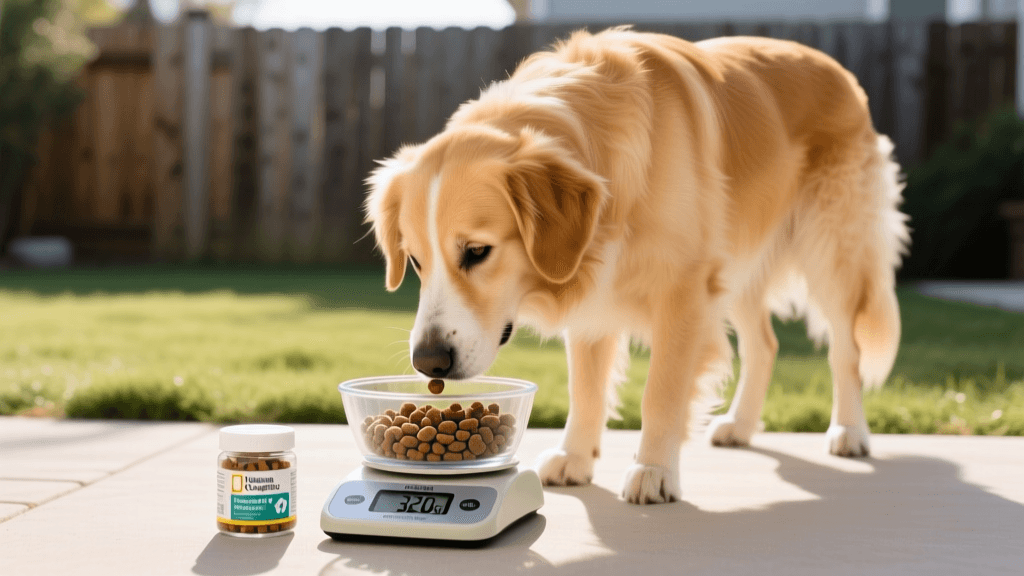
The Solution: Invest in a $15 digital kitchen scale. Look at the caloric density on your dog food label (e.g., 3,500 kcal/kg or 380 kcal/cup). Weighing food in grams guarantees precision. If your dog needs 493 kcal per day, and their food contains 3.5 kcal per gram, you will feed exactly 141 grams of food daily, divided into two meals of 70.5 grams each.
Daily Caloric Needs and Kibble Portions
The table below provides a quick reference guide for common dog weights undergoing a weight loss protocol. Note: These are estimates based on a standard dry kibble containing approximately 350 kcal per cup (115g). Always adjust based on your specific food's caloric density.
| Current Dog Weight | Target Weight Loss Calories (kcal/day) | Dry Kibble Portion (Cups) | Dry Kibble Portion (Grams) |
|---|---|---|---|
| 20 lbs (9 kg) | 260 kcal | 0.75 cups | 85g |
| 30 lbs (13.6 kg) | 340 kcal | 1.0 cup | 115g |
| 50 lbs (22.7 kg) | 490 kcal | 1.4 cups | 160g |
| 70 lbs (31.8 kg) | 620 kcal | 1.75 cups | 200g |
The 10% Treat Rule and Low-Calorie Swaps
The WSAVA and the Tufts University Cummings Veterinary Medical Center both emphasize the '10% Rule': treats and supplements should never constitute more than 10% of a dog's daily caloric intake. For our 50 lb Lab eating 493 kcal/day, the treat allowance is a mere 49 kcal. A single commercial dental chew or peanut-butter biscuit can easily exceed 100 kcal, instantly ruining the day's caloric deficit.
Top Low-Calorie Treat Alternatives
To maintain training motivation and bonding without the caloric penalty, swap commercial treats for whole, dog-safe vegetables and fruits. Here is a cost and calorie comparison:
- Baby Carrots: ~4 kcal each. High in fiber and beta-carotene. Cost: ~$0.05 per carrot. (Always chop to prevent choking in small dogs).
- Canned Green Beans (No Salt Added): ~2 kcal per tablespoon. Excellent for adding volume to meals to make the dog feel full. Cost: ~$0.10 per serving.
- Apple Slices (No Seeds/Core): ~15 kcal per ounce. High in vitamins A and C. Cost: ~$0.15 per ounce.
- Blueberries: ~8 kcal per 10 berries. Packed with antioxidants. Cost: ~$0.20 per serving.
- Commercial Training Bites: Often 3-5 kcal per treat, but highly processed. Cost: ~$0.30+ per serving.
Weight loss in dogs should be gradual and monitored. A safe rate of loss is 1% to 2% of body weight per week. Rapid weight loss can lead to muscle wasting, hepatic lipidosis, and severe nutritional deficiencies.
A 12-Week Actionable Weight Loss Protocol
Successfully managing your dog's weight requires consistency, tracking, and environmental management. Follow this structured 12-week protocol to ensure safe, sustainable results.
Weeks 1-2: Baseline and Environmental Shift
- Veterinary Check: Confirm ideal target weight and rule out metabolic diseases.
- Audit the Home: Remove free-feeding stations. Switch to scheduled, twice-daily meals.
- Scale Up: Purchase a digital kitchen scale and weigh your dog. Record the starting weight and BCS.
- Calculate & Measure: Determine the daily kcal limit and weigh out daily food rations into a dedicated daily container each morning.
Weeks 3-8: Implementation and Activity
- Strict Feeding: Feed only the weighed gram allotment. Replace all high-calorie treats with green beans or carrots.
- Enrichment: Serve meals in puzzle toys or snuffle mats. This slows down eating, prevents regurgitation, and provides mental stimulation that mimics foraging.
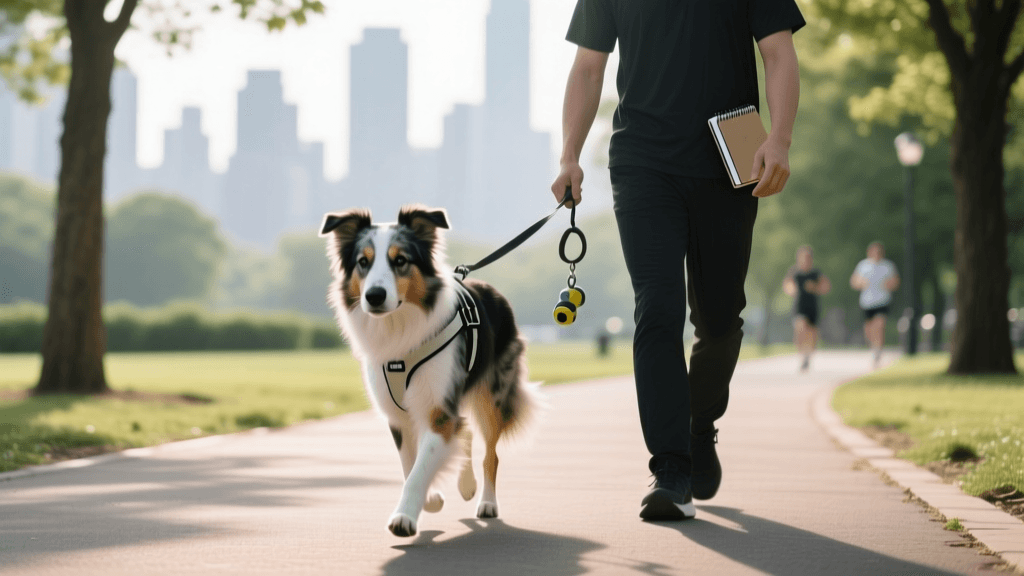
- Exercise: Increase daily leash walks by 10-15 minutes. Avoid high-impact activities like agility or frisbee for obese dogs to protect their joints.
- Bi-Weekly Weigh-ins: Weigh your dog every two weeks. Adjust calories down by 5-10% if weight loss stalls for more than 14 days.
Weeks 9-12: Re-evaluation and Maintenance
- Vet Re-check: Assess the new BCS. If the target weight is reached, recalculate the MER using a maintenance multiplier (typically 1.2 to 1.4 for neutered adults) rather than the weight loss multiplier.
- Family Alignment: Ensure all household members understand the new maintenance portions. Post the daily gram allowance on the refrigerator to prevent accidental double-feeding.
Conclusion
Canine weight management is not about depriving your dog; it is about optimizing their health, mobility, and longevity. By abandoning the imprecise measuring cup, utilizing gram-based portion control, and leveraging low-calorie whole foods for treats, you take the guesswork out of nutrition. Remember that food is fuel, and your time, attention, and daily walks are the truest expressions of love you can offer your companion.
jonas-cole
All our authors care for dogs every day — read more of their work on the authors page.