Moving Homes With Dogs: Understanding Canine Spatial Anxiety 2026
Discover how dogs process moving homes through spatial mapping. Learn 2026 strategies to ease canine territorial anxiety and ensure a smooth transition.
The Psychological Impact of Moving on Your Dog
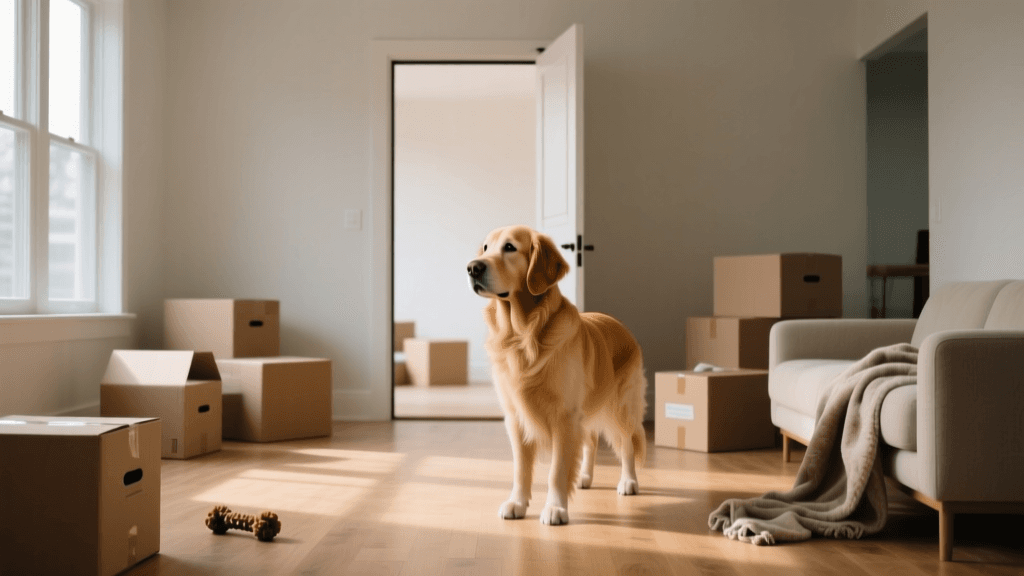
For humans, moving to a new home is a logistical challenge filled with boxes, tape, and change-of-address forms. But for our canine companions, a move represents a profound psychological disruption. As we navigate life transitions in 2026, veterinary behaviorists emphasize that understanding the 'why' behind your dog's stress is just as important as managing the 'how' of the move itself. Dogs do not simply inhabit a house; they map it, claim it, and rely on its spatial and olfactory boundaries to feel secure. When you uproot your dog from their established territory, you are essentially erasing their cognitive map of the world. This sudden loss of environmental predictability triggers a spike in cortisol, leading to what experts call canine spatial anxiety. In this comprehensive guide, we will explore the science behind how dogs process territorial shifts and provide actionable, modern strategies to help your dog confidently transition into their new environment.
The Science of Canine Spatial and Olfactory Mapping
To understand why moving is so disorienting for dogs, we must first look at how they perceive their environment. Unlike humans, who rely heavily on visual landmarks and street addresses, dogs construct complex cognitive maps using a combination of spatial memory and olfactory data. A dog's hippocampus—the region of the brain responsible for spatial memory—is highly attuned to the layout of their territory. They know exactly how many steps it takes to get from their bed to the back door, and they understand the acoustic properties of each room.
Even more critical is olfactory mapping. A dog's olfactory bulb is proportionally much larger than a human's, allowing them to detect microscopic scent particles that linger on baseboards, carpets, and furniture. In their current home, your dog has spent years layering their own scent (through facial rubbing, paw pad secretions, and general presence) over the scents of the previous occupants, local wildlife that entered through the HVAC system, and the natural settling of the house. This invisible tapestry of scent tells your dog that they are safe, that they own this space, and that no intruders have breached their perimeter. When you move to a new house, that olfactory safety net is gone, replaced by the unfamiliar, and potentially threatening, scents of strangers and unknown animals.
Recognizing Territorial Anxiety Signals in 2026
Canine spatial anxiety does not always manifest as obvious panic. While some dogs may whine, pace, or refuse to eat, others display subtle, easily misunderstood behaviors. According to ASPCA's official guidelines on moving with pets, recognizing early signs of environmental stress is crucial for preventing long-term behavioral issues. In 2026, behaviorists categorize territorial anxiety into three distinct behavioral clusters:
- Hyper-Vigilance and Pacing: Your dog may refuse to settle, constantly patrolling the perimeter of the new home or a specific room. They might stare intensely at doors, windows, or air vents, reacting to the unfamiliar acoustics and scents of the new neighborhood.
- Resource Guarding and Clinginess: In an unpredictable environment, dogs often attempt to control what they can. This can lead to sudden resource guarding over food bowls, beds, or even their primary caretaker. Alternatively, they may exhibit 'Velcro dog' behavior, refusing to let you out of their sight for fear that the remaining stable element of their life will vanish.
- Regression in Training: It is incredibly common for fully house-trained dogs to have accidents indoors during the first few weeks in a new home. This is rarely an act of spite; rather, it is a breakdown of their spatial understanding. The 'outside' boundary has changed, and the familiar olfactory cues that previously signaled 'bathroom area' are missing.
The 2026 Basecamp Method: A Step-by-Step Transition Plan
The most effective way to mitigate spatial anxiety is to control the rate at which your dog processes the new environment. The 'Basecamp Method' remains the gold standard in 2026 for introducing anxious dogs to a new home. This method relies on creating a small, highly controlled sanctuary before allowing the dog to explore the larger, unpredictable territory of the house.
Phase 1: Pre-Move Scent Preservation
Two weeks before the move, stop washing your dog's primary bedding. Allow it to accumulate a heavy concentration of their natural pheromones. Pack the rest of your house, but leave your dog's 'safe room' completely untouched until the very last hour before you leave. When packing their belongings, place their unwashed bedding, favorite toys, and worn clothing of the primary caretaker into a dedicated, sealed plastic bin to preserve the scent profile during transit.
Phase 2: Move Day Isolation
Move day is chaotic, loud, and dangerous for an anxious dog. The constant opening of doors presents a massive flight risk. On moving day, your dog should be boarded, placed in doggy daycare, or kept in a completely empty, secure room with a white noise machine and an adaptive calming diffuser recommended by humane societies. Do not bring the dog to the new house while movers are carrying heavy furniture and shouting instructions.
Phase 3: Establishing the New Basecamp
Before bringing your dog to the new home, set up their Basecamp. Choose a quiet, low-traffic room (like a guest bedroom). Unpack the sealed bin of their scent-heavy items. Set up their bed, water bowl, and interactive feeders exactly as they were in the old house. Plug in a smart pheromone diffuser 24 hours in advance. When you finally bring your dog home, lead them directly into the Basecamp on a leash. Do not allow them to roam the rest of the house. Let them decompress in this small, familiar-smelling space for at least 48 to 72 hours.
Modern Tech and Tools for Transition Stress
The pet technology landscape in 2026 offers incredible tools for monitoring and managing your dog's stress levels during a life transition. By leveraging biometric data and environmental controls, owners can take the guesswork out of their dog's adjustment period. Below is a comparison of the top tools recommended by veterinary behaviorists this year.
| Tool / Technology | Primary Function | How It Helps During a Move | 2026 Estimated Cost |
|---|---|---|---|
| Fi Series 4 Smart Collar | GPS & Biometric HRV Tracking | Monitors Heart Rate Variability (HRV) to detect hidden stress spikes and tracks escape attempts if the dog bolts from an unfamiliar door. | $149 + Sub |
| Adaptil Smart Diffuser | App-Controlled Pheromone Release | Releases synthetic dog-appeasing pheromones (DAP). The 2026 smart model adjusts output based on room temperature and time of day. | $65 |
| Furbo 360 Dog Camera | AI Treat Tossing & Bark Alerts | Allows owners to monitor Basecamp adjustment remotely, dispense treats to reward calm settling, and identify specific anxiety triggers via AI audio analysis. | $210 |
| Snuffle Mat & Lick Mat Set | Foraging & Somatic Soothing | Encourages natural foraging behaviors which lower heart rate and distract the dog from unfamiliar environmental noises outside the Basecamp. | $35 |
Expanding the Map: Post-Move Olfactory Reset
Once your dog has spent a few days decompressing in the Basecamp and their biometric data (if tracked) shows a return to baseline resting heart rates, it is time to expand their cognitive map. Do this gradually, one room at a time. Keep your dog on a leash and walk them through the new spaces, allowing them to stop and sniff every corner, baseboard, and piece of furniture. This active sniffing is how they overwrite the previous owner's scent map with their own.
To accelerate this olfactory reset, you can play scent games in the new rooms. Hide high-value treats in the corners of the living room or kitchen, encouraging your dog to explore and associate the new, strange smells with positive outcomes. If you have a yard, walk the perimeter with them on a long line, allowing them to mark the boundaries. This physical marking is a vital psychological mechanism that tells the dog, 'This new territory is now mine, and I am responsible for its security.'
Maintaining Routine Amidst the Chaos
While the physical environment has changed, the temporal environment—your daily routine—must remain rigidly consistent. Dogs rely heavily on circadian rhythms and predictive routines to feel safe. Feed them at the exact same times, walk them for the exact same duration, and initiate play sessions when they expect them. In 2026, behavioral science heavily supports the concept of 'predictability as a buffer against stress.' When a dog knows exactly what is going to happen next, the unfamiliarity of their surroundings becomes much less threatening.
Conclusion: Patience is the Ultimate Tool
Life transitions are inherently stressful, and moving homes is arguably the most disruptive event in a dog's life. By understanding the deep psychological reliance dogs have on spatial and olfactory mapping, we can approach the moving process with empathy and scientific precision. Utilizing the Basecamp method, leveraging modern 2026 monitoring technology, and prioritizing scent preservation will transform a potentially traumatic event into a manageable adventure. Remember that spatial mapping takes time; give your dog the grace and patience they need to draw the boundaries of their new world, and soon enough, the new house will truly feel like home.
hannah-wickes
All our authors care for dogs every day — read more of their work on the authors page.