Senior Dog Trick Training: Top Joint Supplements 2026
Discover how to safely train senior dogs using low-impact tricks and the best joint supplements in 2026 to keep their minds sharp and bodies comfortable.
The Intersection of Joint Health and Canine Learning
As we navigate through 2026, veterinary science has made incredible strides in extending the lifespans of our beloved canine companions. However, increased longevity often brings age-related challenges, particularly osteoarthritis, hip dysplasia, and general joint degradation. Many pet owners mistakenly believe that a dog with limited mobility can no longer participate in obedience or trick training. This is a dangerous myth that can lead to canine cognitive decline and depression.
Mental stimulation is just as critical as physical exercise for a dog's overall well-being. When a dog experiences chronic joint pain, it creates a cognitive barrier. Pain masks cognition; if a dog hurts when they sit, stand, or pivot, they will become hesitant, distracted, and ultimately unresponsive to training cues. Therefore, integrating a high-quality joint support regimen is the foundational first step before introducing new learning concepts to an older or mobility-impaired dog.
According to the American Veterinary Medical Association (AVMA), senior pets require comprehensive care that addresses both their physical comfort and their mental enrichment. By managing pain with modern supplements, you unlock your dog's ability to focus, learn, and bond with you during training sessions.
Top Joint Supplements for Dogs in 2026: A Trainer’s Perspective
When preparing a senior or joint-sensitive dog for a training session, ensuring they are pain-free is paramount. The supplement market in 2026 has evolved significantly, moving beyond basic glucosamine to include advanced bioavailable compounds like Avocado/Soybean Unsaponifiables (ASU), Green-Lipped Mussel extract, and specialized Omega-3 fatty acid profiles (EPA/DHA) that actively reduce joint inflammation.
Here is a comparison of the top joint supplements recommended by canine rehabilitation therapists and trainers this year:
| Brand (2026 Formulation) | Key Active Ingredients | Best For | Est. Monthly Cost |
|---|---|---|---|
| Nutramax Dasuquin Advanced | Glucosamine, Chondroitin, ASU, Boswellia, EGCG | Severe osteoarthritis and post-surgical recovery | $65 - $80 |
| VetriScience GlycoFlex Plus | Green-Lipped Mussel, MSM, Glucosamine, DMG | Moderate joint stiffness and active senior dogs | $45 - $55 |
| Zesty Paws Advanced Mobility | Glucosamine, Chondroitin, Turmeric, Qmin+ Curcumin | Mild joint maintenance and picky eaters (soft chew) | $30 - $40 |
Trainer's Tip: Joint supplements are not immediate pain relievers like NSAIDs. They require a loading dose and typically take 4 to 6 weeks to build up in the synovial fluid. Begin your supplement regimen well before you expect to start a rigorous new training routine.
Low-Impact Tricks for Dogs with Joint Sensitivities
According to the American Kennel Club (AKC), teaching an older dog new tricks is highly beneficial for their cognitive health, helping to stave off canine cognitive dysfunction (doggie dementia). The key is to select behaviors that require high mental effort but minimal physical strain. Avoid tricks that require jumping, spinning rapidly, sitting on hard surfaces, or balancing on hind legs.
1. 'Touch' or Target Training
Target training teaches your dog to touch a specific object (or your hand) with their nose. It is incredibly versatile and can be used to guide your dog into positions without physically manipulating them, which is vital for dogs with sensitive hips or spines.
- Step 1: Rub a high-value treat on the palm of your hand to transfer the scent.
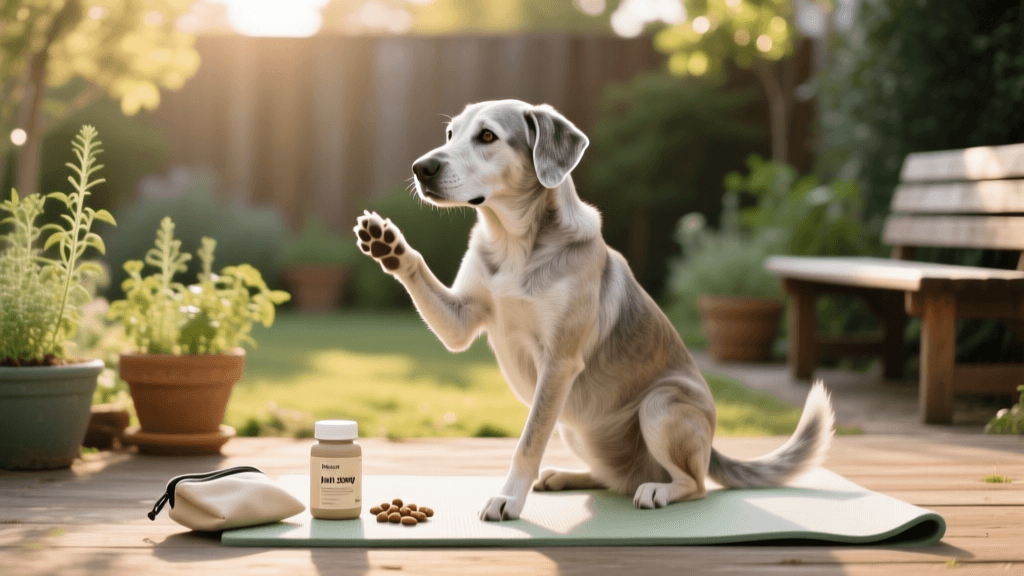
- Step 2: Present your open palm a few inches from your dog's nose while they are comfortably lying on an orthopedic mat.
- Step 3: The moment their nose bumps your hand, say 'Yes!' and reward them with a treat from your other hand.
- Step 4: Gradually increase the distance, requiring them to stretch their neck or take a single step forward to touch the target.
2. 'Find It' Scent Work
Scent work is arguably the most tiring mental exercise a dog can do. Sniffing naturally lowers a dog's heart rate and releases dopamine, making it a soothing, joint-friendly activity.
- Step 1: Have your dog stay in a 'down' position on their supportive bed.
- Step 2: Show them a strongly scented treat (like freeze-dried liver) and place it just a foot away in plain sight.
- Step 3: Give the cue 'Find it!' and let them get up at their own pace to eat it.
- Step 4: Progress to hiding the treats under snuffle mats, behind furniture legs, or in different rooms, forcing them to use their nose rather than their eyes.
3. 'Watch Me' (Eye Contact)
Sustained eye contact builds focus and impulse control without requiring any physical movement.
- Step 1: Hold a treat near your eyes to draw your dog's gaze upward.
- Step 2: The second they make eye contact, mark the behavior with a clicker or a verbal 'Yes' and toss the treat onto their mat.
- Step 3: Build duration by waiting two seconds, then three seconds, before marking and rewarding.
Caloric Management During Low-Impact Training
A critical, often overlooked aspect of training senior dogs in 2026 is caloric management. Because joint-sensitive dogs are engaging in less cardiovascular exercise, using standard high-carbohydrate training treats can quickly lead to weight gain. Excess body fat exacerbates joint pain by increasing the mechanical load on the cartilage and promoting systemic inflammation.
To keep your dog lean and motivated, swap out traditional biscuits for low-calorie, high-value alternatives. Excellent options include single-ingredient freeze-dried minnows, small cubes of boiled chicken breast, or even lickable treats like bone broth squeezed from a reusable silicone tube. By keeping the treat size to the volume of a pea, you can conduct a 15-minute training session without disrupting your dog's daily caloric limits.
Structuring Your Training Environment
The physical environment where you train is just as important as the supplements in your dog's system. Never ask a senior dog to perform obedience routines on slippery hardwood floors or tiles. The micro-slips they experience trying to maintain traction can cause severe strain on the hip and shoulder joints.
Invest in interlocking foam mats or lay down thick, non-slip yoga mats specifically for your training sessions. Additionally, redefine what a 'sit' looks like. Many older dogs develop a 'puppy sit' or slide their hips to the side to avoid the pressure of a square sit. In 2026, modern force-free trainers highly recommend accepting a 'down' or a 'stand' as an alternative default position for dogs with diagnosed hip dysplasia or severe arthritis.
Conclusion
Training should be a lifelong journey, not a privilege reserved only for puppies and agile adult dogs. By leveraging the advanced joint supplements available in 2026 and adapting your training methods to focus on low-impact, high-reward mental exercises, you can dramatically improve your senior dog's quality of life. Keep the sessions short, keep the surfaces soft, and celebrate every small victory your dog achieves.
marcus-aldridge
All our authors care for dogs every day — read more of their work on the authors page.