Adapting Dog Training for Osteoarthritis: 2026 Guide
Discover how to adapt obedience and trick training for dogs with osteoarthritis in 2026. Learn low-impact exercises, cognitive games, and joint-safe tips.
Understanding Canine Osteoarthritis in the Training Context
Osteoarthritis (OA) is a progressive, degenerative joint disease that affects a vast majority of senior dogs and many younger canines with genetic predispositions, orthopedic surgeries, or past injuries. When a dog is diagnosed with OA, many owners mistakenly believe that all structured training and physical activity must cease entirely. However, according to the American College of Veterinary Surgeons, maintaining appropriate muscle mass through controlled, low-impact movement is one of the most effective ways to support compromised joints and slow the progression of the disease. The key lies not in stopping training, but in fundamentally adapting your training methodology to accommodate your dog's changing physical reality.
As we navigate the veterinary landscape of 2026, our understanding of canine pain management and biomechanics has evolved significantly. Training a dog with OA requires a delicate balance of physical conditioning, mental stimulation, and strict adherence to joint-safe protocols. This comprehensive guide will walk you through how to modify your obedience routines, introduce low-impact tricks, and leverage cognitive enrichment to keep your arthritic dog happy, engaged, and comfortable.
The 2026 Treatment Paradox: Pain Relief vs. Overexertion
In recent years, veterinary medicine has seen a massive shift in how canine OA is treated. By 2026, anti-NGF (Nerve Growth Factor) monoclonal antibodies, such as bedinvetmab (commonly known by the brand name Librela), have become the gold standard for managing osteoarthritic pain in dogs. These monthly injections are highly effective at neutralizing the proteins that cause pain signaling in the nervous system, providing profound relief for suffering dogs.
While this is a miraculous advancement for canine welfare, it introduces a unique challenge for dog trainers and owners: the pain-masking paradox. Because these treatments are so effective at eliminating the sensation of pain, dogs often feel like puppies again and will attempt to jump, run, and play with the same intensity they did in their youth. Unfortunately, while the pain is gone, the mechanical degradation of the joint remains. If a dog overexerts themselves during a training session because they no longer feel the warning signs of joint pain, they can cause severe inflammatory flare-ups and accelerate joint destruction. Therefore, structured, controlled training is more critical than ever to enforce boundaries and prevent overexertion.
Modifying Core Obedience Commands for Joint Health
Basic obedience is essential for safety, but traditional methods of teaching these cues can be harsh on arthritic joints. Here is how to adapt the core commands for a dog with OA.
Rethinking the Sit and Down
The Sit and Down commands require significant flexion of the hips, knees, and hocks. For a dog with hip dysplasia or severe stifle (knee) OA, repeatedly dropping into a sit or down on a hard surface is agonizing.
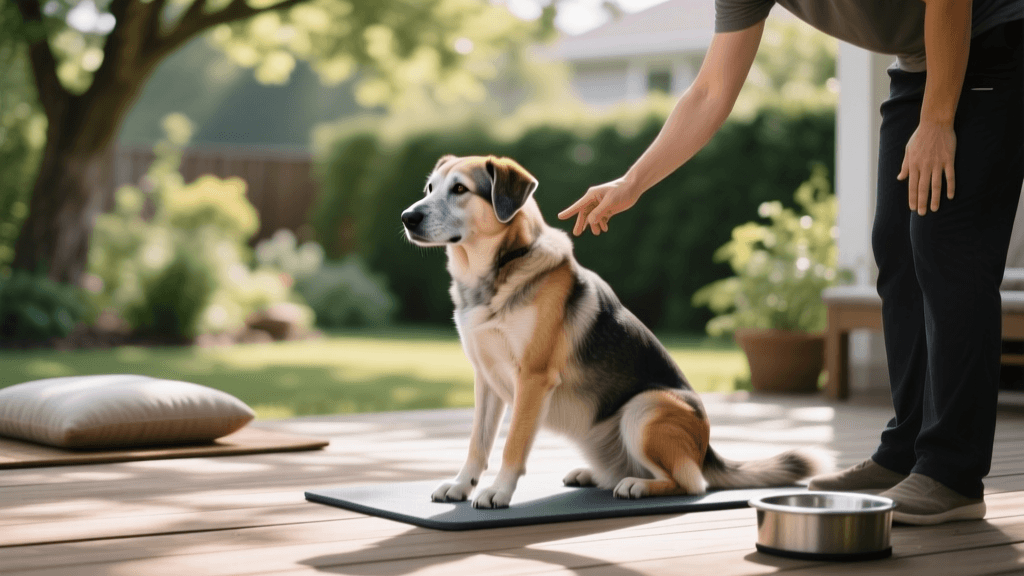
- Use Orthopedic Surfaces: Never ask an OA dog to sit or lie down on hardwood, tile, or concrete. Always use a high-density memory foam mat or a raised orthopedic cot (like a Kuranda bed) to provide cushioning and reduce the distance the dog must lower themselves.
- Modify the Down: Instead of asking for a full sphinx or side-lying down, accept a stand-stay or a settle on a mat as an equivalent resting behavior.
- The Puppy Sit Warning: Watch for a sloppy sit where the dog rolls their hips to one side to avoid joint flexion. If you see this, do not force them to correct it repeatedly; instead, ask for a stand and reward that posture instead.
Adjusting the Recall and Stay
A traditional recall involves the dog sprinting toward the owner and performing an abrupt, skidding stop to sit in front of them. This sudden deceleration puts immense torque on the shoulders and knees.
- Shorten the Distance: Practice recalls only over short distances (5 to 10 feet) to prevent the dog from building up momentum.
- Reward the Stand: Instead of requiring a sit upon arrival, reward the dog simply for reaching you and standing still. This eliminates the need for sudden braking and joint flexion.
- Release from Stay Gently: When releasing a dog from a Stay, use a calm release word like Okay or Free in a low tone, rather than an exciting, high-pitched tone that encourages them to bolt out of the position.
Low-Impact Trick Training and Proprioception
Trick training is an excellent way to bond with your dog, but tricks like roll over, play dead, jump, or weave through legs involve spinal twisting and high-impact loading that are strictly contraindicated for OA patients. Instead, focus on proprioception and targeted movements that build stabilizing muscles without stressing the joints.
Nose Targeting (Touch): Teaching your dog to touch their nose to your hand or a target stick is a fantastic, zero-impact trick. It can be used to guide them onto veterinary scales, into cars, or onto grooming tables without the need for physical handling or pulling on a leash.
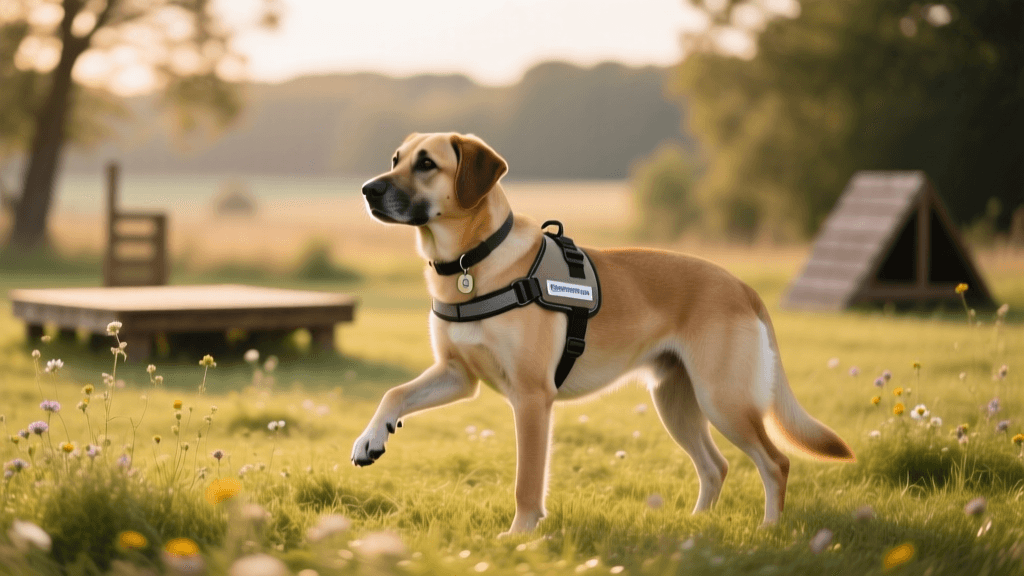
Paw Targeting: Teaching your dog to place their front paws on a low, stable platform (like a sturdy book or a specialized paw pod) encourages them to shift their weight backward. This gentle weight-shifting helps build core and hind-end awareness without requiring the deep joint flexion of a sit.
Weight Shifting: Using a treat, slowly lure your dog's head to the left, then to the right, rewarding them for shifting their weight from one front leg to the other while standing still. This isometric exercise strengthens the shoulder stabilizers safely.
Cognitive Training: The Ultimate Low-Impact Exercise
When physical limitations restrict your dog's ability to exercise, cognitive training becomes your best tool for tiring them out. Mental fatigue is just as satisfying to a dog as physical fatigue, and it carries zero risk of joint degradation. The American Kennel Club frequently highlights the importance of mental enrichment for senior and mobility-impaired dogs to prevent depression and cognitive decline.
Scent Work and Nosework
Nosework is arguably the best sport for a dog with OA. It involves hiding a specific scent (like birch, anise, or clove essential oils) and allowing the dog to search for it. The dog works at their own pace, mostly at a slow walk or stand, utilizing their olfactory system rather than their musculoskeletal system. A 20-minute nosework session in the living room can tire a dog out as much as a two-mile hike, making it an indispensable tool for the OA dog owner.
Shaping and Puzzle Toys
Free-shaping with a clicker encourages the dog to think critically and offer behaviors to earn a reward. You can shape behaviors like look at that, chin rest, or interact with a cardboard box. Additionally, utilizing high-quality puzzle toys, snuffle mats, and lick mats slows down feeding time and provides prolonged, low-impact mental engagement.
Essential Gear for OA Training in 2026
Having the right equipment is non-negotiable when training a dog with compromised joints. Here is a look at the essential gear that supports safe training sessions.
- Orthopedic Training Mats: Look for mats with a non-slip bottom and at least two inches of high-density memory foam. This provides a designated, safe place for your dog to go to during training.
- Lift-Assist Harnesses: A harness with a sturdy top handle (such as the Ruffwear Web Master) allows you to support your dog's hindquarters when navigating stairs, getting into the car, or standing up from a lying position.
- Non-Slip Footwear or Rugs: Slipping on hardwood floors can cause micro-tears in the joint capsule. Use canine grip socks, paw wax, or lay down interlocking foam floor tiles in your primary training area.
Traditional vs. OA-Adapted Training Comparison
To visualize the necessary shifts in your training approach, review the comparison table below.
| Training Element | Traditional Approach | OA-Adapted Approach (2026) |
|---|---|---|
| Resting Cue | Sit or Down on any surface | Stand-Stay or Settle on an orthopedic mat |
| Recall Finish | Front Sit with sudden braking | Recall to a Stand or Hand Target |
| Physical Exercise | Fetch, agility, long hikes | Leash walks, hydrotherapy, scent work |
| Trick Training | Roll over, jump, weave | Nose touch, chin rest, weight shifting |
| Mental Fatigue | Secondary to physical exercise | Primary focus via puzzles and shaping |
Recognizing Subtle Signs of Pain During Sessions
Even with the best modifications and advanced 2026 pain management protocols, you must remain vigilant for signs that your dog is uncomfortable. Dogs are stoic and will often hide pain to please their owners. According to guidelines supported by the WSAVA Global Pain Council, subtle behavioral changes are often the first indicators of chronic pain flare-ups.
Stop the training session immediately if you notice:
- Excessive panting when the room is not warm.
- Lip licking, yawning, or avoiding eye contact (calming signals indicating stress or discomfort).
- Reluctance to take treats or taking them with excessive force (snatching).
- Trembling in the hind legs or shifting weight constantly while standing.
- A sudden decrease in enthusiasm or a desire to leave the training area.
Conclusion
A diagnosis of canine osteoarthritis does not mean the end of your dog's training journey; it simply marks the beginning of a more thoughtful, empathetic approach. By leveraging modern veterinary treatments responsibly, modifying core obedience commands, embracing low-impact proprioception tricks, and prioritizing cognitive enrichment, you can keep your dog's mind sharp and their spirits high. Always consult with your veterinarian or a certified canine rehabilitation therapist before starting a new exercise regimen, and remember that in 2026, successful training is measured not by physical perfection, but by the comfort, confidence, and joy of your canine companion.
hannah-wickes
All our authors care for dogs every day — read more of their work on the authors page.