Managing Canine OA at Home: 2026 Bed, Ramp, and Routine Guide
Discover the best 2026 home modifications, orthopedic beds, and ramp metrics to support your dog's mobility and manage canine osteoarthritis daily.
Navigating Life with Canine Osteoarthritis in 2026
Osteoarthritis (OA) is a degenerative joint disease that affects approximately 20% of adult dogs and over 80% of senior dogs. As our canine companions age, the cartilage that cushions their joints wears down, leading to inflammation, stiffness, and chronic pain. However, living with a dog diagnosed with OA in 2026 looks vastly different than it did a decade ago. While veterinary medicine has provided incredible breakthroughs in pain management, the day-to-day quality of life for your dog relies heavily on your home environment and daily routines.
According to the American Kennel Club, managing canine OA requires a multimodal approach. This means combining veterinary treatments with physical therapy, weight management, and strategic environmental modifications. In this comprehensive guide, we will explore the exact home setups, bedding metrics, ramp inclines, and daily routines you need to implement to keep your arthritic dog comfortable, mobile, and happy in 2026.
The 2026 Medical Baseline: Why Home Modifications Still Matter
Before diving into home setups, it is crucial to understand the current veterinary landscape. In 2026, the gold standard for canine OA pain management often includes anti-NGF (Nerve Growth Factor) monoclonal antibodies, such as bedinvetmab. These monthly injections have revolutionized OA care by specifically targeting the pain signals associated with joint degeneration, offering profound relief without the systemic side effects of traditional NSAIDs.
However, this medical success introduces a unique behavioral challenge: because your dog feels significantly less pain, they may attempt to jump, run, and play like they did in their youth. This false sense of security can lead to severe mechanical stress on already compromised joints. The WSAVA Global Pain Council emphasizes that pain relief must always be paired with environmental control to prevent dogs from overexerting themselves. Your home must act as a protective barrier, gently restricting high-impact movements while encouraging safe, low-impact mobility.
Essential Home Modifications for Joint Protection
1. Flooring and Traction Solutions
Slippery floors are the enemy of arthritic joints. When a dog loses traction on hardwood, tile, or laminate, their legs splay outward, placing immense torque on the hip and shoulder joints. To correct this, you must create "traction highways" throughout your home.
- Low-Pile Runners: Use carpet runners with a natural rubber backing in high-traffic areas like hallways and living rooms. Avoid thick, plush rugs that can catch claws and cause tripping.
- Interlocking EVA Foam Mats: For play areas or feeding stations, high-density EVA foam tiles (often used in home gyms) provide excellent grip and slight shock absorption. Ensure they are textured to prevent slipping.
- Paw Grip Pads: If rugs are not an option, consider applying veterinary-grade, non-toxic paw grip pads to your dog's paw pads, or use traction socks with silicone soles for indoor wear.
2. The Math of Mobility: Ramps and Stairs
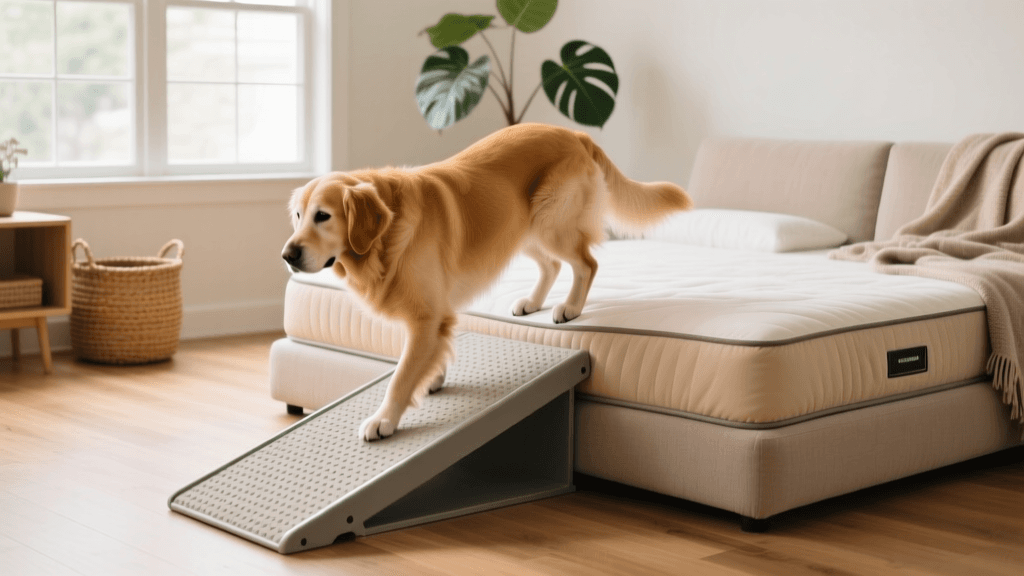
Jumping on and off furniture or into vehicles causes repetitive micro-trauma to arthritic joints. Ramps are essential, but not all ramps are created equal. The critical metric for a safe ramp is the incline ratio. For a dog with OA, the ideal slope is a 1:4 ratio (for every 1 inch of vertical height, you need 4 inches of ramp length). A 1:3 ratio is acceptable for smaller dogs or those with mild OA, but steeper inclines should be strictly avoided.
| Ramp Type | Incline Ratio | Best Use Case | 2026 Average Cost |
|---|---|---|---|
| Telescoping Aluminum | 1:3 to 1:4 | Vehicle loading (SUVs, trucks); high weight capacity. | $120 - $180 |
| High-Density Foam Stairs | N/A (Stepped) | Couch and bed access for small to medium breeds. | $60 - $90 |
| Multi-Fold Wooden Ramp | 1:4 (Adjustable) | Indoor furniture access; wide base for large breeds. | $150 - $250 |
| Fixed Rubber-Coated | 1:3 | Short porch steps or low-clearance vehicle trunks. | $80 - $110 |
Pro Tip: Always look for ramps with a high-traction surface, such as sandpaper-like grip tape or ridged rubber. A smooth plastic surface is useless if your dog's paws slip while climbing.
3. Orthopedic Bedding: Decoding the Specs
The term "orthopedic" is not strictly regulated in the pet industry, meaning many beds marketed as such are simply stuffed with cheap polyfill that flattens within weeks. In 2026, true orthopedic support requires specific foam metrics.
- Foam Density: Look for high-density memory foam with a minimum density of 3 lbs/ft³. This ensures the foam will not bottom out under your dog's weight, keeping their joints suspended above the hard floor.
- Thickness Requirements: Small to medium breeds (under 40 lbs) require at least 4 inches of solid support foam. Large and giant breeds (over 40 lbs) need a minimum of 6 to 8 inches to prevent joint compression.
- Bolsters and Edge Support: Dogs with OA often prefer resting their heads or leaning against edges to relieve spinal pressure. Beds with firm, high-density bolsters provide structural support for the neck and spine.
- Waterproof Liners: Senior dogs with OA may experience secondary incontinence or have accidents due to mobility issues. A removable, 100% waterproof inner liner protects the expensive foam core from urine damage and odors.
Assistive Harnesses and Slings
For dogs with severe hind-end weakness or hip dysplasia exacerbated by OA, a rear-lift assist harness is a life-changing tool. These harnesses feature padded handles that allow you to support your dog's pelvic region while they navigate stairs, load into the car, or stand up from a lying position. When selecting a harness in 2026, prioritize models with wide, neoprene-padded straps that distribute weight evenly across the abdomen and thighs, avoiding localized pressure points that could restrict circulation.
Daily Routine Adjustments for the Arthritic Dog
The "Sniffari" and Modified Exercise
Exercise remains vital for maintaining muscle mass, which acts as a secondary support system for arthritic joints. However, the type of exercise must change. Replace long, continuous walks with multiple short, 10-to-15-minute outings spread throughout the day.
Incorporate "Sniffaris"—walks where the primary goal is mental enrichment through scent work rather than physical distance. Sniffing lowers a dog's heart rate, provides immense mental stimulation, and tires them out without requiring them to pound the pavement. Avoid activities that involve sudden stops, sharp turns, or jumping, such as fetch or frisbee.
Feeding and Hydration Stations
While elevated food bowls are popular, they are not universally recommended for every senior dog. For dogs with severe neck or shoulder OA, a slightly elevated bowl (raised 4 to 6 inches off the floor) can reduce the strain of bending down. However, for large, deep-chested breeds at risk for Gastric Dilatation-Volvulus (bloat), floor-level feeding remains the safest option according to the American Veterinary Medical Association. Always consult your veterinarian before altering your feeding station setup, and ensure water bowls are placed on every level of your home to encourage frequent hydration without stair climbing.
Tracking Mobility with 2026 Technology
One of the most significant advancements in 2026 is the integration of biometric tracking for senior pets. Modern smart collars and wearable health monitors now track metrics like Resting Heart Rate (RHR), Respiratory Rate (RR), and sleep quality indices. A sudden increase in nighttime restlessness or a shift in RHR can be an early indicator that your dog's OA is flaring up, often before you notice visible limping. By syncing this data with your smartphone, you can provide your veterinarian with objective, long-term mobility and pain data, allowing for precise adjustments to their treatment plan.
Conclusion
Managing canine osteoarthritis is a marathon, not a sprint. By combining the advanced veterinary pain management available in 2026 with thoughtful, biomechanically sound home modifications, you can drastically improve your dog's daily comfort. Invest in proper ramp inclines, high-density orthopedic bedding, and traction solutions, and adapt your daily routines to prioritize joint preservation. Your dog has spent their life bringing you joy; adapting your home to their changing needs is the ultimate way to return the favor.
priya-sutaria
All our authors care for dogs every day — read more of their work on the authors page.