Decoding Canine Calming Signals: 2026 Stress Relief Guide
Learn to decode canine calming signals like whale eye and lip licking. Discover 2026 stress relief techniques and top products for dog anxiety.
The Hidden Language of Canine Anxiety
Dogs do not possess spoken language, but they are constantly communicating their internal emotional and physiological states through a complex vocabulary of body language. In the veterinary and behavioral science communities of 2026, there has been a massive paradigm shift: we no longer view anxiety merely as a behavioral inconvenience, but as a critical physiological health issue. Chronic stress in dogs triggers a cascade of hormonal imbalances that can lead to systemic inflammation, gastrointestinal disorders, and a compromised immune system. To protect your dog's long-term wellbeing, you must become fluent in their silent language.
Originally popularized by canine behaviorist Turid Rugaas, the concept of 'calming signals' refers to the subtle appeasement gestures dogs use to de-escalate tension, communicate discomfort, and self-soothe. Recognizing these early warning signs is the cornerstone of preventive mental healthcare. By the time a dog exhibits overt signs of distress—such as growling, lunging, or attempting to flee—they have already been pushed far beyond their threshold. The key to true holistic wellness lies in identifying the micro-expressions that occur minutes, or even hours, before a full-blown stress response takes over.
The Physiology of Unrecognized Stress
When a dog perceives a threat or feels overwhelmed, their sympathetic nervous system activates, releasing cortisol and adrenaline. While this 'fight or flight' response is life-saving in acute emergencies, chronic activation is deeply damaging. According to the American Kennel Club, prolonged exposure to elevated cortisol levels can alter a dog's gut microbiome, exacerbate allergies, and accelerate cognitive decline in senior dogs. Furthermore, chronic stress suppresses the production of serotonin and dopamine, leaving the dog in a perpetual state of hypervigilance. Understanding calming signals allows you to intervene before this toxic hormonal cascade begins, preserving both your dog's mental peace and their physical health.
5 Crucial Calming Signals You Must Recognize
To effectively advocate for your dog's wellbeing, you must learn to spot the subtle cues that indicate rising anxiety. Here are the five most common, yet frequently misunderstood, calming signals:
1. Whale Eye (Half-Moon Eye)
When a dog turns its head away from a stressor but keeps its eyes fixed on it, the whites of the eyes (the sclera) become prominently visible in a crescent or 'half-moon' shape. This is a profound indicator of discomfort and is frequently seen when a dog feels trapped, is being hugged against its will, or is guarding a resource. Whale eye is a polite request for space; ignoring it often leads to a defensive bite.
2. Contextual Lip Licking
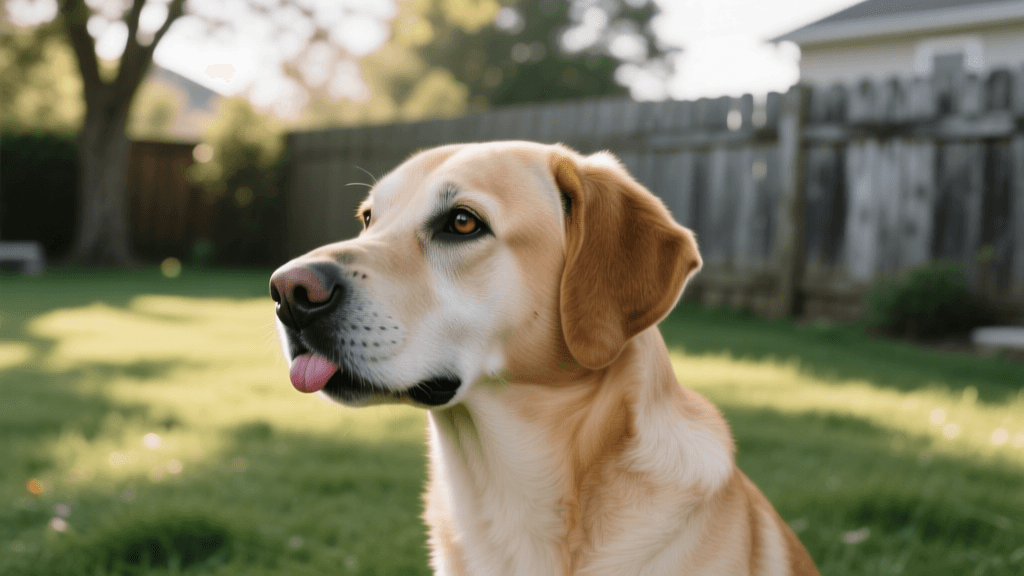
While lip licking is normal when a dog is anticipating food or cleaning its face, rapid, repetitive 'fly-catching' licks in the absence of food is a classic appeasement signal. Dogs often exhibit this when being scolded, when approached too quickly by strangers, or when visiting the veterinary clinic. It is a self-soothing mechanism meant to pacify the perceived threat.
3. Excessive Yawning
A tired dog yawns to get oxygen, but an anxious dog yawns to release tension and signal non-aggression. If your dog is yawning repeatedly during a training session, a grooming appointment, or a loud family gathering, they are not bored or sleepy—they are cognitively overloaded and asking for a break.
4. Sudden Ground Sniffing
Sniffing is a primary way dogs gather information, but an abrupt, intense fixation on the ground when another dog or person approaches is a deliberate avoidance tactic. By sniffing the ground, the dog is politely signaling that they do not wish to engage and are attempting to diffuse a potentially confrontational encounter.
5. Body Freezing
Freezing is one of the most critical and dangerous signals to miss. When a dog becomes completely rigid and still, they are processing an intense level of fear or stress. This is the final warning before a dog feels forced to fight. The ASPCA emphasizes that a freezing dog should never be forced into interaction or physically manipulated, as they are in a state of acute psychological paralysis.
2026 Interventions: Tech and Holistic Stress Relief
Recognizing the signals is only the first step. In 2026, the market offers highly advanced, scientifically backed tools to help monitor and mitigate canine stress. The gold standard for measuring autonomic nervous system balance is Heart Rate Variability (HRV). A high HRV indicates a relaxed, parasympathetic state, while a low HRV indicates sympathetic dominance (stress). Modern biometric wearables now track this metric in real-time, allowing owners to correlate environmental triggers with physiological stress responses.
Below is a comparison of the top stress-relief interventions available this year, ranging from biometric tracking to synthetic pheromone therapy:
| Product / Intervention | Primary Mechanism | Best Use Case | 2026 Estimated Cost |
|---|---|---|---|
| PetPace Health 2.0 Smart Collar | Biometric HRV, Pulse, & Stress Tracking | Data-driven anxiety monitoring and identifying hidden stress triggers | $14.95/mo + Hardware |
| Adaptil Calm Optimum Diffuser | Synthetic Dog Appeasing Pheromone Complex | Establishing a baseline of calm in the home environment | $55.00 / 30-day refill |
| ThunderEase Calming Collar | Continuous Body-Heat Activated Pheromones | On-the-go anxiety relief for travel, storms, or vet visits | $38.00 / single collar |
| L-Theanine & Tryptophan Chews | Neurotransmitter Support & Cortisol Reduction | Pre-event loading for known stressful situations (e.g., fireworks) | $28.00 / 60-count tub |
Actionable Protocols for De-escalation
When you observe your dog displaying calming signals, your immediate response can mean the difference between a dog that builds resilience and one that develops chronic anxiety. Follow these actionable protocols to de-escalate the situation:
- Advocate and Create Distance: If your dog shows whale eye or lip licking when approached by a stranger or another dog, immediately increase the physical distance between them and the stressor. You are your dog's primary advocate; do not force them to 'say hello' if their body language is screaming 'no'.
- Implement Decompression Walks: Also known as 'Sniffaris', these walks prioritize olfactory enrichment over physical exercise. Sniffing lowers a dog's heart rate and engages the parasympathetic nervous system. Allow your dog to dictate the pace and direction of the walk, letting them process environmental scents to naturally burn off anxious energy.
- Utilize the 'Find It' Game: If your dog begins to freeze or fixate on a trigger, toss a handful of high-value treats into the grass and cue 'Find it.' This simple behavioral protocol forces the dog to disengage visually from the stressor, lowers their head (a naturally calming posture), and redirects their brain from the emotional amygdala to the problem-solving prefrontal cortex.
- Establish a Safe Haven: Pair an Adaptil Calm Optimum diffuser with a covered, sound-dampened crate or a designated quiet room. Train your dog to retreat to this space voluntarily when they feel overwhelmed, ensuring that family members and guests know this zone is strictly off-limits for human interaction.
Embracing a Proactive Approach to Canine Mental Health
The veterinary community, including initiatives championed by organizations like Fear Free Pets, continues to stress that behavioral health is inseparable from physical health. By learning to decode the subtle, polite whispers of canine calming signals, you prevent your dog from having to shout their discomfort through reactive behaviors. Utilizing 2026's advanced biometric tracking alongside holistic environmental management ensures that your dog not only lives a longer life but experiences a profoundly higher quality of life. Listen to what your dog is telling you; their wellbeing depends on it.
aaron-whyte
All our authors care for dogs every day — read more of their work on the authors page.