Decoding Dog Pain Signals In 2026: Grimace Scale & Trackers
Learn to decode subtle canine osteoarthritis pain signals in 2026 using the Canine Grimace Scale and Whistle Go Health trackers for better wellbeing.
The Silent Epidemic: Canine Osteoarthritis in 2026
Dogs are evolutionary masters of disguise. In the wild, showing weakness or pain made an animal a target for predators or a liability to the pack. Today, this deeply ingrained survival instinct means that our beloved pets often suffer in silence, masking their discomfort until it becomes debilitating. As we navigate the veterinary landscape of 2026, canine osteoarthritis (OA) remains one of the most prevalent yet underdiagnosed conditions affecting our furry companions. Recent veterinary epidemiological data suggests that up to 80% of senior dogs show radiographic signs of osteoarthritis, yet only a fraction receive adequate pain management.
Because dogs cannot verbally articulate their discomfort, they rely on a complex matrix of body language, micro-expressions, and behavioral shifts to communicate their physical state. Unfortunately, many pet owners misinterpret these subtle canine communication signals as mere "slowing down" or normal aging. Understanding how to decode these signals is the cornerstone of modern canine health and wellbeing. By combining traditional observational techniques like the Canine Grimace Scale with cutting-edge 2026 wearable technology, owners can proactively identify pain and drastically improve their dog's quality of life.
Mastering the Canine Grimace Scale (CGS)
The Canine Grimace Scale is a scientifically validated tool used by veterinary professionals and trained pet owners to assess acute and chronic pain through facial micro-expressions. According to the World Small Animal Veterinary Association (WSAVA), recognizing facial tension is one of the most reliable indicators of underlying discomfort in canines. When a dog is experiencing joint pain from osteoarthritis, their facial muscles involuntarily contract in specific patterns.
The Five Facial Action Units of the CGS
To effectively use the CGS at home, you must observe your dog when they are resting or moving gently, avoiding times when they are highly stimulated or panting heavily. Evaluate the following five areas:
- Orbital Tightening: A pain-free dog has wide, relaxed eyes. A dog in pain will exhibit squinting, a narrowed palpebral fissure, or an overall "tense" look around the eyes.
- Ear Position: Relaxed ears sit in their natural anatomical position. Pain causes the ears to flatten against the head, pull backward, or widen at the base due to muscle tension.
- Muzzle Bulge: Look closely at the whisker pads and lips. A dog experiencing pain will often have a bulging or tense muzzle, with the lips pulled back slightly or the whiskers bunched together.
- Head Position: Dogs with chronic pain, particularly in the cervical spine or shoulders, will often hold their head lower than their shoulder line or exhibit a stiff, guarded neck posture.
- Overall Facial Expression: The cumulative effect of these micro-tensions results in a "worried," anxious, or glazed expression, entirely devoid of the soft, relaxed look of a comfortable dog.
"The face never lies. While a dog might force itself to wag its tail or eat a treat to appease its owner, the micro-tensions around the eyes and muzzle provide an unfiltered window into their true neurological pain state." — Veterinary Behaviorist Consensus, 2026.
Behavioral Communication Shifts: Beyond the Limp
While a pronounced limp is an obvious communication signal of pain, osteoarthritis often presents as a bilateral, low-grade ache that doesn't cause a traditional limp. Instead, the dog communicates through avoidance behaviors and changes in daily routines. The American Kennel Club (AKC) emphasizes that behavioral changes are often the first and most accurate indicators of chronic joint discomfort.
Below is a comparison chart to help you differentiate between normal senior aging and active osteoarthritis pain signals:
| Behavioral Scenario | Normal Aging Communication | Osteoarthritis Pain Signal |
|---|---|---|
| Navigating Stairs | Takes stairs slower, but maintains a steady, willing pace without hesitation. | Hesitates at the bottom/top, bunny-hops, or refuses entirely; vocalizes when lifted. |
| Greeting Owners | Wags tail enthusiastically, approaches with a relaxed, albeit slower, gait. | Stays in bed, offers a low tail wag, exhibits orbital tightening when attempting to stand. |
| Sleeping Patterns | Sleeps deeply for longer stretches, wakes up refreshed. | Frequent repositioning, inability to get comfortable, restless pacing at night. |
| Grooming Habits | Coat may look slightly less pristine due to reduced flexibility. | Obsessive licking of specific joints (carpus, stifle), neglected hindquarter hygiene. |
Leveraging 2026 Wearable Tech: Whistle Go Health Monitor
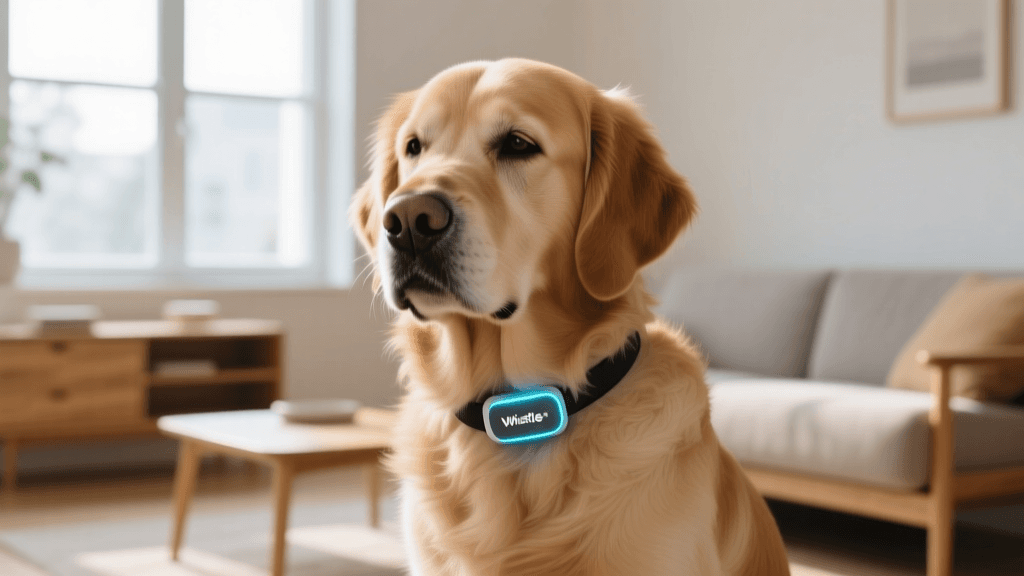
In 2026, canine communication is no longer limited to what the human eye can see. The integration of biometric sensors into everyday dog wearables has revolutionized how we detect hidden pain. The latest iteration of the Whistle Go Health Monitor, featuring its 2026 firmware update, is specifically calibrated to detect the physiological markers of chronic pain and stress.
Key Biometric Signals Tracked by Whistle Go
- Nighttime Restlessness Index: Dogs with OA pain struggle to maintain deep REM sleep due to joint throbbing when lying still. The Whistle Go accelerometer tracks micro-wakes and repositioning events. An increase in nighttime restlessness is often the very first signal of a pain flare-up, preceding visible limping by several days.
- Resting Heart Rate Variability (HRV): Chronic pain keeps the canine nervous system in a state of sympathetic overdrive (fight or flight). A declining HRV trend on your Whistle Go dashboard is a strong indicator of systemic stress and unmanaged pain.
- Scratch and Itch Index: While primarily used for allergy tracking, localized obsessive licking and chewing at a painful joint is frequently miscategorized by older devices as "scratching." The 2026 AI algorithm in the Whistle Go app now differentiates between hind-leg scratching and targeted joint-licking, alerting you to potential localized joint inflammation.
Actionable Advice: Set up custom "Pain Flare Alerts" in the Whistle Go app. Configure the system to notify you if your dog's nighttime restlessness exceeds their 30-day baseline by 20%, or if their resting respiratory rate during sleep elevates, which often correlates with acute pain episodes.
Environmental Modifications for Pain-Free Communication
When a dog communicates pain through avoidance (e.g., refusing to jump on the couch), it is critical to adapt the environment rather than forcing the behavior. Responding positively to your dog's physical boundaries builds trust and reduces anxiety-related pain amplification.
- Orthopedic Support: Invest in a high-density, therapeutic bed. In 2026, the Big Barker OrthoCool Therapeutic Bed remains the gold standard, utilizing pressure-mapping memory foam that prevents joints from bottoming out, combined with a cooling gel layer to reduce joint inflammation.
- Mobility Ramps: Use lightweight, high-traction ramps for vehicle entry and furniture access. Ensure the ramp has a gradual incline (ideally a 4:1 ratio) to minimize the mechanical load on the carpal and shoulder joints.
- Flooring Traction: Hardwood and tile floors are disastrous for dogs with compromised stifles and hips. Use interlocking foam mats or specialized canine grip-socks to prevent micro-slips that cause acute pain spikes.
Creating a Multimodal Pain Management Plan
Decoding your dog's pain signals is only the first step; acting on them requires a comprehensive veterinary approach. Modern 2026 pain management relies on multimodal therapy, targeting pain from multiple physiological angles to minimize side effects.
If your CGS assessments and Whistle Go data indicate chronic discomfort, schedule a veterinary consultation. Your vet will likely recommend a combination of non-steroidal anti-inflammatory drugs (NSAIDs), targeted joint injections like Adequan or Zenrelia (for concurrent allergic inflammation), and daily therapeutic laser treatments. Additionally, integrating high-EPA Omega-3 fatty acids and veterinary-formulated CBD oil can significantly reduce joint effusion and improve your dog's willingness to move.
Conclusion: Listening to the Unspoken
Canine communication is a rich, nuanced language that extends far beyond barks and tail wags. By learning to read the subtle facial tensions of the Canine Grimace Scale, interpreting behavioral avoidance, and utilizing the advanced biometric tracking of 2026 wearables like the Whistle Go Health Monitor, you can become a true advocate for your dog's wellbeing. Pain is not an inevitable consequence of aging; it is a treatable medical condition. Listen to what your dog's body is telling you, and ensure their golden years are as comfortable, joyful, and pain-free as possible.
jonas-cole
All our authors care for dogs every day — read more of their work on the authors page.