Canine Bloat Emergency: Signs, First Aid, and Survival
Learn to recognize the life-threatening signs of canine bloat (GDV). Discover emergency first aid steps, prevention tips, and when to rush to the vet.
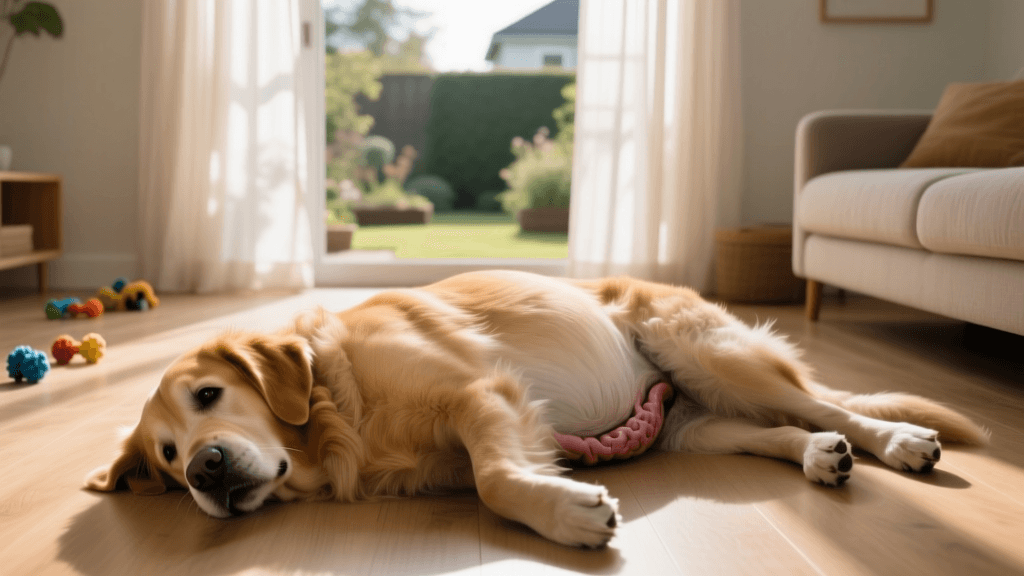
Understanding Gastric Dilatation-Volvulus (GDV)
Gastric Dilatation-Volvulus (GDV), commonly referred to as canine bloat, is one of the most terrifying and rapidly fatal emergencies a dog owner can face. Unlike a simple upset stomach, GDV is a catastrophic mechanical and physiological event. It occurs when a dog's stomach fills with gas, food, or fluid (dilatation) and subsequently twists upon itself (volvulus). This twisting traps the stomach contents and gas, cutting off blood flow to the stomach wall and the spleen. Within a matter of hours, this leads to severe tissue necrosis, systemic shock, and cardiovascular collapse. According to the American Kennel Club (AKC), GDV is the second leading cause of death in dogs, surpassed only by cancer. Understanding the mechanics of this condition and recognizing the early warning signs is the single most critical factor in saving your dog's life.
Which Dogs Are Most at Risk?
While any dog can technically develop bloat, the anatomy of deep-chested, large, and giant breeds places them at a significantly higher risk. The deep chest cavity allows the stomach more room to swing and twist. Breeds most commonly affected include Great Danes, Standard Poodles, Irish Setters, Gordon Setters, Weimaraners, Saint Bernards, and Basset Hounds. However, owners of mixed breeds and smaller deep-chested dogs must also remain vigilant, as GDV does not exclusively discriminate by pedigree.
Recognizing the Early Warning Signs of Bloat
The onset of GDV is incredibly rapid. A dog can go from seemingly healthy to critical condition in less than two hours. Because time is tissue, you must be able to identify the subtle early signs before the dog enters irreversible shock. Watch closely for the following symptoms, especially after a large meal or vigorous exercise:
- Unproductive Retching: This is the hallmark sign of bloat. The dog will attempt to vomit repeatedly but will only produce small amounts of white foam or nothing at all.
- Distended, Tight Abdomen: The stomach swells with trapped gas. If you gently tap the dog's side, it may sound hollow, much like a drum. The abdomen will feel unusually hard and tense to the touch.
- Extreme Restlessness and Pacing: The dog will be unable to get comfortable. They may repeatedly lie down and stand back up, pace frantically, or adopt a 'praying' posture with their front legs extended and rear end in the air.
- Excessive Drooling (Ptyalism): Because the dog cannot swallow properly or vomit, saliva accumulates and drips from the mouth in thick, heavy strings.
- Pale or Discolored Gums: As the twisted stomach cuts off circulation and the body enters hypovolemic shock, the gums will lose their healthy pink color, turning pale white, grey, or even blue/purple.
- Rapid Heart Rate and Weak Pulse: The cardiovascular system works in overdrive to compensate for the dropping blood pressure.
Bloat vs. Upset Stomach: A Comparative Guide
It can be difficult for an untrained eye to differentiate between severe indigestion and GDV. Use the following comparison chart to help assess the severity of your dog's condition. When in doubt, always treat the situation as a life-threatening emergency.
| Symptom Category | Mild Upset Stomach / Indigestion | GDV / Bloat Emergency |
|---|---|---|
| Vomiting | Produces undigested food, liquid, or yellow bile | Unproductive retching; only white frothy foam or nothing |
| Abdominal Feel | Soft, may be mildly tender or gurgling | Hard, tight, severely distended, drum-like sound when tapped |
| Behavior | Lethargic, hiding, sleeping more than usual | Frantic pacing, unable to settle, whining, looking at abdomen |
| Gum Color | Normal, healthy bubblegum pink | Pale, white, grey, or blue/purple (cyanosis) |
| Capillary Refill | Under 2 seconds (press gums, color returns quickly) | Over 3 seconds or completely delayed (signs of severe shock) |
| Onset Speed | Gradual, or shortly after eating something unusual | Rapid, sudden deterioration within 30 to 90 minutes |
The Golden Hour: Immediate Emergency Actions
If you suspect your dog is experiencing bloat, your immediate actions will dictate their chances of survival. There is no at-home cure for GDV, and waiting to see if the dog 'gets better' is a fatal mistake.
What NOT to Do
- Do NOT induce vomiting: The stomach is twisted and blocked. Forcing the dog to vomit will not empty the stomach and can lead to esophageal rupture or aspiration pneumonia.
- Do NOT offer food or water: Adding anything to the stomach will only increase the pressure and exacerbate the dilatation.
- Do NOT attempt to pass a stomach tube yourself: While veterinarians use orogastric tubes to relieve gas pressure, doing this without proper training and equipment can easily puncture the esophagus or stomach wall, turning a critical situation into an immediately fatal one.
What You MUST Do
- Call the Emergency Vet Immediately: Alert the nearest open emergency veterinary clinic that you are en route with a suspected GDV. This allows the veterinary team to prepare the surgical suite, oxygen cages, and IV fluids before you arrive.
- Transport Safely and Quickly: Keep the dog as calm as possible during the car ride. If the dog is showing signs of shock (pale gums, cold extremities), keep them warm with a blanket. Drive safely but expediently.
- Bring Medical Records: If you have them handy, grab your dog's medical history, especially noting any pre-existing conditions or current medications, though do not let this delay your departure.
Veterinary Interventions and Financial Costs
Upon arrival at the veterinary emergency hospital, the medical team will move instantly. Treatment occurs in two overlapping phases: stabilization and surgical intervention. First, the vet will establish large-bore IV catheters to administer aggressive fluid therapy and corticosteroids to combat shock. They will attempt to pass a stomach tube to release the trapped gas. If the twist prevents the tube from passing, the vet will use a large-bore needle to perform a trocarization, piercing the stomach through the abdominal wall to vent the gas.
Once the dog's cardiovascular status is marginally stabilized, emergency surgery is mandatory. The surgeon will open the abdomen, untwist the stomach (derotation), evaluate the stomach wall and spleen for necrotic tissue (which may require partial or full removal), and flush the abdominal cavity. The average costs for a GDV emergency are substantial and owners must be financially prepared:
- Emergency Exam and Triage: $150 - $250
- Diagnostics (X-rays, Bloodwork, ECG): $300 - $600
- Stabilization (IV fluids, pain meds, venting): $400 - $800
- Emergency Surgery (Derotation and Gastropexy): $3,000 - $6,000
- Splenectomy (if the spleen is necrotic and must be removed): $800 - $1,500
- Post-Operative ICU Care (24-72 hours monitoring for arrhythmias): $1,500 - $3,500
- Total Estimated Cost: $6,000 to $12,000+
Because of these exorbitant costs, comprehensive pet insurance that covers emergency and hereditary conditions is highly recommended for owners of at-risk breeds.
Preventive Measures and Prophylactic Gastropexy
While you cannot entirely eliminate the risk of the stomach dilating, you can prevent the fatal 'volvulus' (twisting) through a surgical procedure called a gastropexy. During a gastropexy, the surgeon permanently tacks the wall of the stomach to the inner abdominal wall. If the stomach fills with gas in the future, it cannot physically twist, turning a lethal emergency into a manageable, albeit uncomfortable, medical event that can be treated with stomach tubing and medication.
When to Consider a Gastropexy
Many veterinary surgeons recommend performing a prophylactic (preventive) gastropexy at the same time as a spay or neuter procedure for high-risk breeds. This eliminates the need for a second major surgery and significantly reduces the overall cost, typically adding only $400 to $800 to the standard spay/neuter bill. Laparoscopic gastropexy is also available, offering a minimally invasive approach with a much faster recovery time.
Daily Management and Feeding Protocols
In addition to surgery, daily management plays a role in reducing the risk of the initial dilatation phase. Implement the following protocols:
- Multiple Small Meals: Feed your dog two to three smaller meals throughout the day rather than one massive daily portion to prevent sudden stomach overloading.
- Use Slow Feeder Bowls: Dogs that inhale their food swallow excessive amounts of air. Slow feeder bowls or puzzle toys force the dog to eat at a safer, measured pace.
- Avoid Elevated Bowls: Contrary to older veterinary advice, recent studies cited by the Washington State University College of Veterinary Medicine suggest that raised food bowls may actually increase the risk of GDV in large breeds. Feed your dog at floor level.
- Enforce Rest Periods: Restrict vigorous exercise, running, and roughhousing for at least one hour before and one hour after meals.
- Monitor Water Intake Post-Exercise: Do not allow a panting, overheated dog to gulp massive quantities of water immediately after intense exercise. Offer small, frequent sips instead.
Conclusion
Canine bloat is a ruthless adversary that demands immediate, decisive action. By familiarizing yourself with the subtle early warning signs, understanding the critical do's and don'ts of emergency first aid, and discussing preventive surgical options with your primary veterinarian, you can build a vital safety net for your deep-chested companion. In the fight against GDV, knowledge and preparation are your dog's greatest lifelines.
tom-renshaw
All our authors care for dogs every day — read more of their work on the authors page.