Senior Dog Joint Health: The Ultimate Mobility Care Guide
Discover essential senior dog joint health tips. Learn about mobility supplements, orthopedic beds, and exercise routines to keep your aging pup comfortable.
Understanding Joint Degeneration in Senior Dogs
As our canine companions transition into their golden years, typically between the ages of 7 and 11 depending on their breed and size, their bodies undergo significant changes. One of the most prevalent and impactful of these changes is the degeneration of joint cartilage, commonly known as osteoarthritis (OA) or degenerative joint disease (DJD). According to the American Veterinary Medical Association (AVMA), osteoarthritis affects up to 80% of dogs over the age of 8. This progressive condition causes inflammation, pain, and a gradual loss of mobility, severely impacting a senior dog's quality of life if left unmanaged.
Managing joint health in senior dogs requires a multimodal approach. Relying on a single treatment is rarely sufficient; instead, a combination of veterinary medicine, targeted nutrition, environmental modifications, and tailored exercise yields the best results. This comprehensive guide will walk you through the actionable steps you can take to support your senior dog's mobility, complete with specific product recommendations, dosage guidelines, and estimated costs.
Recognizing the Subtle Signs of Joint Pain
Dogs are notoriously stoic animals. In the wild, showing pain makes an animal a target, so our domesticated dogs have retained the instinct to hide their discomfort. By the time a senior dog is actively limping, the joint disease is often quite advanced. As a proactive owner, you must look for the subtle behavioral shifts that indicate chronic pain:
- Reluctance to perform previously enjoyed activities: Hesitating before jumping into the car, onto the couch, or navigating stairs.
- Changes in gait and posture: A 'bunny-hopping' gait in the hind legs, a stiff stride, or a hunched back.
- Altered grooming habits: Decreased grooming leading to a scruffy coat, or conversely, obsessive licking and chewing at specific joints (often the carpus/wrist or stifle/knee).
- Behavioral changes: Increased irritability, withdrawal from family interactions, or panting excessively when resting.
- Muscle atrophy: Noticeable thinning of the thigh muscles (quadriceps) due to decreased weight-bearing on the affected hind limbs.
Veterinary Interventions and Prescription Medications
The cornerstone of managing moderate to severe osteoarthritis is veterinary intervention. The World Small Animal Veterinary Association (WSAVA) Global Pain Council emphasizes that chronic pain must be treated aggressively and consistently. Never administer human pain medications like ibuprofen or acetaminophen to your dog, as these are highly toxic and can be fatal.
Non-Steroidal Anti-Inflammatory Drugs (NSAIDs)
Veterinary-specific NSAIDs such as Carprofen (Rimadyl), Meloxicam (Metacam), and Grapiprant (Galliprant) are the first line of defense. They work by blocking the enzymes that produce prostaglandins, which are responsible for inflammation and pain. Cost: Typically $40 to $90 per month, depending on the dog's weight and the specific medication.
Monoclonal Antibodies (Anti-NGF)
A recent breakthrough in veterinary medicine is bedinvetmab (Librela). This monthly injectable monoclonal antibody targets Nerve Growth Factor (NGF), a key driver of pain in osteoarthritis. Unlike NSAIDs, Librela is not metabolized by the liver or kidneys, making it an exceptionally safe option for senior dogs with underlying organ disease. Cost: Approximately $75 to $150 per monthly injection, administered at the clinic.
Polysulfated Glycosaminoglycans (PSGAGs)
Injectable medications like Adequan Canine help inhibit cartilage breakdown and stimulate the production of new joint fluid. A typical loading dose involves injections twice a week for four weeks, followed by a maintenance schedule. Cost: Around $60 to $100 for a multi-dose vial.
The Best Joint Supplements for Senior Dogs
While prescription medications manage pain, joint supplements aim to support cartilage health and provide mild, natural anti-inflammatory benefits. When selecting a supplement, look for products that have undergone independent testing for quality and bioavailability. The American Kennel Club (AKC) recommends starting supplements early in the senior years, or even in the late adult years for large breeds, to proactively support joint structures.
Key Ingredients to Look For:
- Glucosamine Hydrochloride (HCl) & Chondroitin Sulfate: The building blocks of cartilage. They help retain water in the joint matrix, providing shock absorption.
- Omega-3 Fatty Acids (EPA and DHA): Derived from fish oil or green-lipped mussel, Omega-3s are potent natural anti-inflammatories. The therapeutic dose for joint health is generally 300mg of combined EPA/DHA per 10kg (22 lbs) of body weight.
- ASU (Avocado/Soybean Unsaponifiables): A natural vegetable extract shown to protect cartilage from degradation and work synergistically with glucosamine.
- UC-II (Undenatured Type II Collagen): Works with the immune system to prevent the destruction of joint cartilage.
Top Recommended Joint Supplements
| Supplement Brand | Key Active Ingredients | Best For | Approx. Monthly Cost (50lb Dog) |
|---|---|---|---|
| Nutramax Dasuquin Advanced | Glucosamine, Chondroitin, ASU, EPA/DHA, Boswellia | Severe OA & Post-Surgery Recovery | $65 - $80 |
| VetriScience GlycoFlex Stage III | Green Lipped Mussel, Glucosamine, MSM, DMG | Active Seniors & Moderate Stiffness | $45 - $55 |
| Zesty Paws Advanced Hip & Joint | OptiMSM, Glucosamine, Chondroitin, Turmeric | Budget-Conscious Owners & Mild OA | $25 - $30 |
| Welactin 3X Canine Omega-3 | High-concentration EPA/DHA Fish Oil | Dogs needing pure anti-inflammatory support | $35 - $45 |
Home Modifications and Orthopedic Support
Your home environment can either be an obstacle course or a supportive haven for a senior dog with compromised joints. Making a few strategic, relatively low-cost modifications can drastically reduce daily strain on your dog's hips, knees, and spine.
Orthopedic Bedding
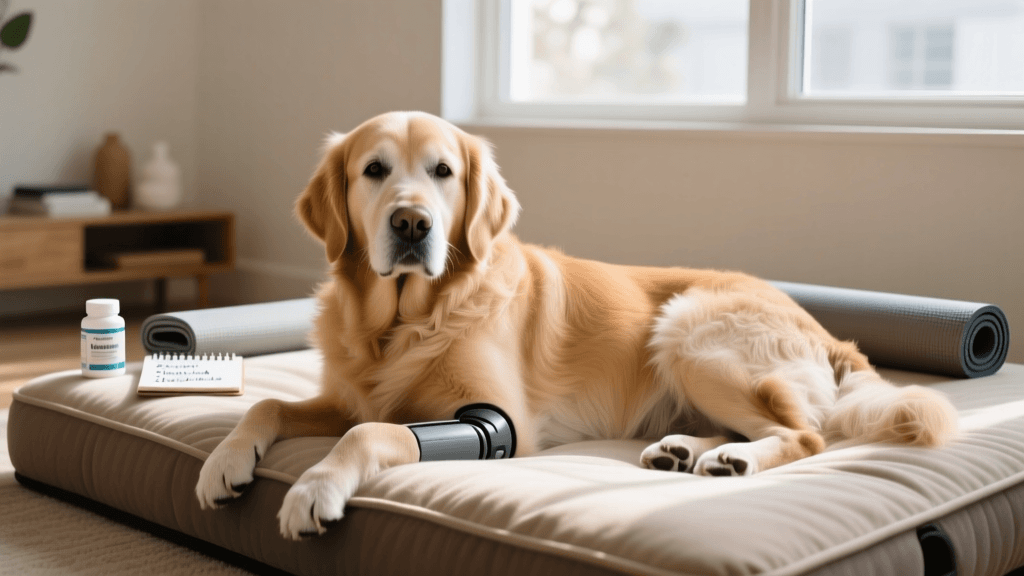
Standard stuffed dog beds flatten out quickly, leaving your dog's heavy joints resting directly on the hard floor. Invest in a high-quality orthopedic bed made from human-grade memory foam. The Big Barker 7" Orthopedic Dog Bed ($250 - $330) is widely considered the gold standard for large breed seniors, as its foam is clinically proven to prevent pressure points and is guaranteed not to flatten for 10 years. For medium or small dogs, the Furhaven Orthopedic Memory Foam Bed ($40 - $70) offers excellent support on a budget.
Ramps and Stairs
Jumping into an SUV or onto a high bed generates a concussive force on a dog's front shoulders and spine that can be up to four times their body weight upon landing. Use a ramp to eliminate this impact. The PetSafe Happy Ride Telescoping Pet Ramp ($100 - $130) is lightweight, adjustable, and features a high-traction surface to prevent slipping. For indoor furniture, foam pet stairs like the Best Pet Supplies PetStairz ($60 - $90) provide a gentle incline.
Flooring Traction
Hardwood, tile, and laminate floors are notoriously slippery for senior dogs with weakened hindquarters. Slipping can lead to catastrophic injuries like torn cruciate ligaments or hip fractures. Lay down interlocking foam play mats, yoga mats, or non-slip area rugs in high-traffic zones and near your dog's bed and food bowls. Alternatively, apply paw-grip pads like Musher's Secret Paw Wax ($15) or use traction socks with rubberized soles to help them gain purchase on slick surfaces.
Exercise and Physical Therapy for Aging Joints
A common misconception is that senior dogs with arthritis should stop exercising to 'save' their joints. In reality, complete rest leads to muscle atrophy. Muscles act as the primary shock absorbers for the skeletal system; when they weaken, the joints take the brunt of the physical load. The goal is controlled, low-impact exercise.
Modify Your Walking Routine
Instead of one long, exhausting 45-minute walk, break the exercise down into three or four 10-to-15-minute 'sniffaris' throughout the day. Allow your dog to set the pace, and avoid walking on hot asphalt or uneven, rocky terrain. Use a front-clip harness (like the Front Range Harness by Ruffwear, $40) to distribute pressure evenly across the chest rather than pulling on the neck and spine.
Hydrotherapy
If your budget and location permit, canine hydrotherapy is one of the most effective treatments for senior joint care. The buoyancy of the water supports the dog's weight, eliminating impact on the joints, while the water's resistance safely builds muscle mass. An underwater treadmill session typically costs between $50 and $80 per session. Alternatively, swimming in a warm, safe, and easily accessible body of water provides excellent cardiovascular and muscular conditioning.
Canine Massage and Passive Range of Motion (PROM)
Learn basic PROM exercises from your veterinarian or a certified canine rehabilitation therapist. Gently flexing and extending your dog's joints while they are lying on their side helps maintain joint capsule flexibility and stimulates synovial fluid production. Pair this with gentle daily massage to increase blood flow to stiff muscles and promote relaxation.
Conclusion: A Proactive Approach to Senior Care
Caring for a senior dog with joint issues requires patience, observation, and a willingness to adapt. By combining veterinary pain management, high-quality nutritional supplements, strategic home modifications, and mindful exercise, you can significantly slow the progression of osteoarthritis. Remember that senior dogs may not be able to hike mountains with you anymore, but with the right mobility care plan, they can still enjoy comfortable, joyful, and pain-free golden years by your side.
tom-renshaw
All our authors care for dogs every day — read more of their work on the authors page.