Identifying Canine Appeasement Gestures in Rescue Dogs: 2026
Learn to identify canine appeasement gestures in rescue dogs. Our 2026 guide decodes stress signals, preventing misunderstandings and building trust.
The Evolution of Canine Behavioral Science in 2026
As we navigate through 2026, the veterinary behavior community has overwhelmingly solidified its stance against outdated dominance-based training models. Today, the gold standard for understanding and rehabilitating rescue dogs revolves around LIMA (Least Intrusive, Minimally Aversive) principles and a deep, empathetic understanding of canine communication. For rescue dog owners, decoding the subtle language of appeasement is no longer just a niche interest—it is a fundamental requirement for ensuring a safe, trusting, and harmonious household.
When you adopt a rescue dog, you are often bringing home an animal with a complex history. Many of these dogs have learned that direct confrontation is dangerous, leading them to rely heavily on appeasement gestures to navigate their world. Misinterpreting these signals as 'guilt,' 'stubbornness,' or 'submission' can severely damage the human-canine bond and inadvertently escalate a dog's anxiety.
What Exactly Are Appeasement Gestures?
Appeasement gestures are a suite of visual and physical signals dogs use to communicate peaceful intentions, de-escalate potential conflict, and express mild to moderate stress. Unlike aggressive posturing, which is designed to increase distance through intimidation, appeasement signals are designed to increase distance through polite negotiation. According to the ASPCA's comprehensive guide on canine body language, recognizing these early warning signs is the most effective way to prevent behavioral fallout and reduce the likelihood of fear-based biting incidents.
In the modern 2026 behavioral paradigm, we view these gestures not as signs of weakness, but as sophisticated emotional regulation tools. A dog exhibiting appeasement is actively trying to keep the peace. It is our responsibility as caretakers to listen.
7 Critical Appeasement Signals to Watch For
To truly understand your rescue dog, you must become fluent in their non-verbal vocabulary. Here are the seven most common appeasement and stress-diffusing signals you will encounter:
1. Yawning and Lip Licking
While yawning and lip licking are normal physiological responses to tiredness and hunger, in a social or stressful context, they are classic displacement behaviors. If your dog yawns repeatedly while being hugged, or licks their lips rapidly when a stranger approaches, they are signaling internal conflict and asking for space. Cortisol spikes trigger these self-soothing actions.
2. The 'Whale Eye' (Half-Moon Eye)
When a dog turns their head away from a stressor but keeps their eyes fixed on it, the whites of their eyes (the sclera) become visible in a crescent shape. This 'whale eye' is a profound indicator of anxiety and resource guarding. It means the dog is highly uncomfortable but feels they cannot safely look away or retreat.
3. Head Turning and Avoidance
In human culture, direct eye contact is a sign of confidence and respect. In canine culture, a direct, sustained stare is a threat. When a rescue dog turns their head away from you, another dog, or a camera, they are using a polite appeasement signal to say, 'I am not a threat, and I find this interaction overwhelming.' Forcing a dog to make eye contact in 2026 is considered a major behavioral faux pas.
4. Ground Sniffing (Displacement Behavior)
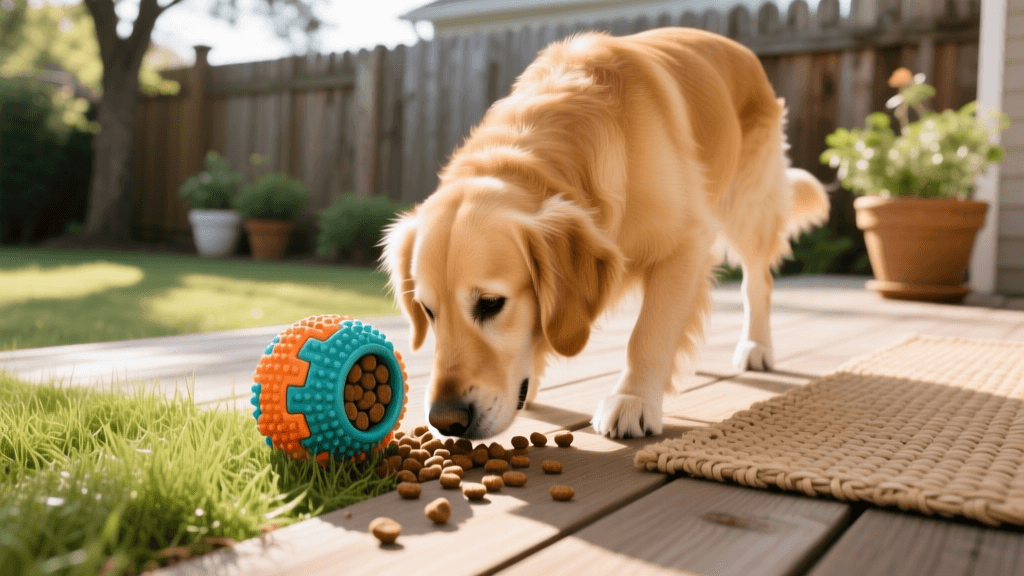
If you call your rescue dog and they suddenly become intensely interested in a completely barren patch of grass, they are likely exhibiting a displacement behavior. This sudden sniffing is an avoidance tactic used to diffuse the tension of the recall or to avoid a direct, head-on approach, which they may perceive as confrontational.
5. The Tension-Diffusing Play Bow
While the play bow (front elbows down, rear end up) is universally recognized as an invitation to play, it is also frequently used as an appeasement gesture to diffuse tension. If a dog is being scolded or approached by an overly boisterous dog, they may drop into a play bow to signal, 'Please calm down, I mean no harm, let us reset this interaction peacefully.'
6. Sudden Scratching or Shake-Offs
Have you ever watched a dog get up from a stressful veterinary exam or a tense encounter with another dog and immediately shake their entire body as if wet? This 'shake-off' is a physiological mechanism to reset the nervous system and shed residual adrenaline. Similarly, sudden, out-of-context scratching is a self-soothing mechanism indicating mild psychological discomfort.
7. Curved Approaches and Lowered Posture
Polite dogs do not walk in straight lines toward one another. A rescue dog attempting to appease a nervous human or another dog will approach in a wide arc, lowering their body posture, softening their gaze, and sometimes wagging their tail in a low, sweeping motion. This curved approach minimizes their physical profile and signals peaceful intentions.
Appeasement vs. Aggression: A 2026 Comparison Chart
One of the most dangerous mistakes a dog owner can make is confusing fear-based appeasement with aggression, or vice versa. The American Kennel Club's expert resources on dog communication emphasize that understanding the emotional root of the behavior dictates the correct human response. Below is a structured comparison to help you differentiate these states:
| Signal Category | Physical Manifestations | Underlying Emotional State | Correct Owner Response |
|---|---|---|---|
| Appeasement | Lip licking, yawning, head turning, curved approach | Mild to moderate stress; seeking peace and distance | Give space, soften your own posture, avoid direct eye contact |
| Fear/Anxiety | Tucked tail, pinned ears, trembling, whale eye | High stress; flight instinct activated, feeling trapped | Remove the trigger immediately, do not force interaction, provide a safe retreat |
| Aggression | Stiff body, hard stare, raised hackles, deep growl | Defensive or offensive threat; preparing to bite if pushed | Retreat calmly and immediately, do not punish the growl, consult a behaviorist |
Common Mistakes Owners Make When Ignoring These Signals
Despite the advancements in canine behavioral science, many well-meaning owners still fall into the trap of punishing early warning signs. The most egregious error is punishing a growl. A growl is a clear, vocalized communication of discomfort. If you scold a dog for growling, you do not remove their fear; you simply remove their ability to warn you. This leads to the dreaded 'bites out of nowhere' scenario, where the dog has learned that subtle appeasement signals and vocal warnings are ignored or punished, leaving biting as their only remaining option.
Another common mistake is the 'flooding' technique—forcing a fearful rescue dog to endure a stressful situation (like being held by a stranger) until they 'get over it.' In 2026, veterinary behaviorists universally condemn flooding, as it leads to learned helplessness and severe psychological trauma, exacerbating the very fear you are trying to cure.
Actionable Steps: The 3-Second Petting Consent Test
How do you interact with a rescue dog displaying appeasement signals without causing further stress? The answer lies in the 3-Second Petting Consent Test, a staple of modern force-free handling:
- Step 1: The Invitation. Do not lean over the dog. Stand sideways, soften your knees, and offer the back of your hand at their chest level (not over their head).
- Step 2: The 3-Second Pet. If the dog approaches and sniffs, gently pet their chest or shoulder for exactly three seconds.
- Step 3: The Assessment. Stop petting and remove your hand. Observe the dog's reaction.
- Step 4: The Verdict. If the dog leans in, nudges your hand, or offers a soft, relaxed posture, you have consent to continue. If the dog turns their head away, licks their lips, yawns, or steps back, the interaction is over. Respect their boundary immediately.
Modern Tools for Monitoring Canine Stress
The year 2026 has brought incredible advancements in canine biometric tracking. While observing body language is paramount, modern smart collars equipped with Heart Rate Variability (HRV) monitors and respiratory rate sensors can provide objective data about your rescue dog's stress levels. By correlating your dog's HRV drops with specific environmental triggers (like the arrival of guests or loud urban noises), you can proactively manage their environment before they are forced to escalate from subtle appeasement gestures to overt panic.
Conclusion
Decoding canine appeasement gestures is the cornerstone of modern, empathetic dog ownership. By recognizing the subtle yawns, head turns, and lip licks of your rescue dog, you validate their feelings and build a foundation of profound trust. In 2026, we no longer demand blind obedience; we foster a two-way conversation. Listen to your dog's whispers, so they never feel the need to shout.
anouk-beaumont
All our authors care for dogs every day — read more of their work on the authors page.