Best Puzzle Toys To Satisfy Your Dog Foraging Drive
Discover how puzzle toys satisfy your dog's natural foraging instincts. Compare top enrichment feeders to reduce boredom and destructive behavior.
The Psychology of Foraging: Why Dogs Need to Work for Food
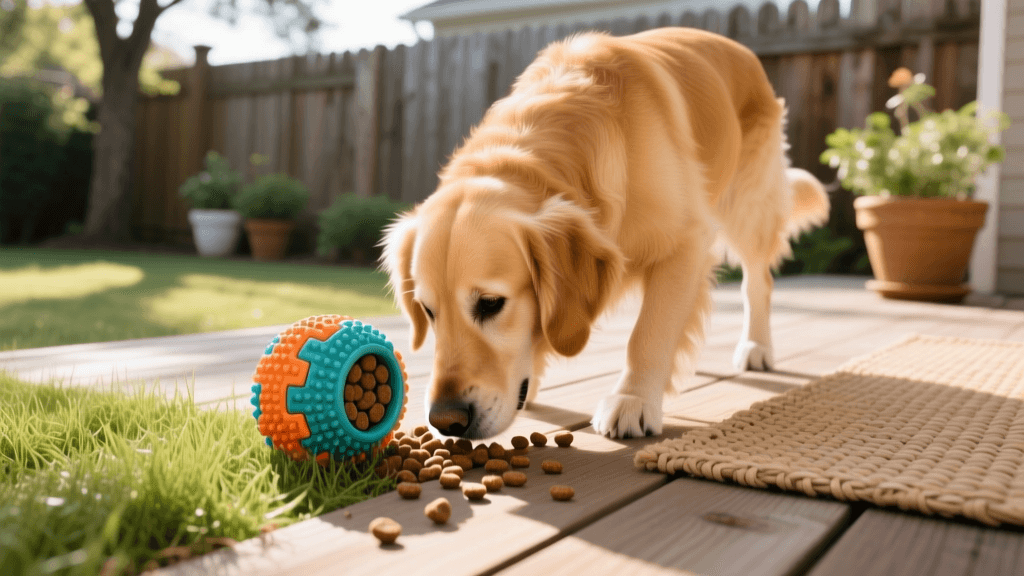
Before the advent of kibble served in stainless steel bowls, dogs spent up to 80% of their waking hours searching for, capturing, and consuming food. This deeply ingrained evolutionary trait is known as the foraging drive. When we remove the "hunt" from your dog's daily routine by handing them a bowl of food in seconds, we inadvertently create a psychological void. This void often manifests as destructive chewing, excessive barking, or hyperactivity.
In the wild, a canine's daily routine revolves around the "seeking" circuit of the brain. Neuroscientists have identified this seeking system as a primary emotional driver in mammals. When a dog sniffs out a scent trail, tracks it, and finally consumes the reward, their brain is flooded with neurochemicals that promote satisfaction and emotional stability. Modern domestication has largely stripped this process away. By simply pouring kibble into a bowl, we are bypassing millions of years of evolutionary programming. This sudden surplus of unspent mental energy is a leading cause of behavioral issues, including resource guarding, excessive licking, and escape attempts.
According to the ASPCA, environmental enrichment is critical for canine mental health. By understanding that your dog is biologically hardwired to solve problems for sustenance, you can shift your perspective from seeing mealtime as a chore to viewing it as a prime training and enrichment opportunity.
"Dogs are opportunistic scavengers and hunters. Denying them the chance to use their nose and brain to find food is like asking a human to sit in an empty room all day."
How Puzzle Toys Mimic Natural Canine Behaviors
Puzzle toys and interactive feeders bridge the gap between domestic life and wild instincts. They engage a dog's primary senses—smell, sight, and touch—while requiring cognitive problem-solving. When a dog figures out how to slide a compartment or extract peanut butter from a rubber crevice, their brain releases dopamine, the "feel-good" neurotransmitter. This not only tires them out mentally (which is often more exhausting than a physical walk) but also builds confidence and reduces anxiety.
Experts at Fear Free Pets strongly advocate for food puzzles, noting that they can significantly reduce separation anxiety and noise phobias by redirecting the dog's focus and providing a positive outlet for nervous energy.
Buyer's Guide: Top Puzzle Toys for Different Foraging Styles
Not all dogs forage the same way. Scent hounds prefer sniffing, while terriers prefer digging and manipulating objects. Here is a curated review of the best products on the market, categorized by the specific instinct they satisfy.
1. Outward Hound Nina Ottosson Dog Brick (Best for Beginners)
Price: $15.99 | Dimensions: 12.5 x 9 x 2 inches | Difficulty: Level 2 (Intermediate)
The Dog Brick is a staple in the canine behaviorist community. It features sliding blocks and flip lids that require your dog to use their paws and nose to uncover hidden treats. It is excellent for dogs who are just beginning to understand that their actions yield rewards. The removable bone pieces also allow you to adjust the difficulty as your dog's cognitive skills improve. Cleaning is simple: just wipe it down with a damp cloth and mild soap.
2. KONG Classic Dog Toy (Best for Chewers and Stuffing)
Price: $14.99 - $19.99 (depending on size) | Dimensions: Varies (Medium is 3.5 x 2.25 inches) | Difficulty: Adjustable
The KONG Classic is less of a traditional puzzle and more of an extraction toy. It satisfies the instinct to gnaw and extract marrow from bones. By stuffing it with a mix of kibble, wet food, and freezing it, you can keep a dog occupied for up to an hour. It is highly recommended by the American Kennel Club (AKC) for crate training and alleviating boredom-induced destruction. It is also top-rack dishwasher safe for easy hygiene maintenance.
3. Snuffle Mat by PAW5 (Best for Scent Hounds)
Price: $39.00 | Dimensions: 17.5 x 17.5 inches | Difficulty: Level 1 (Sensory)
For breeds like Beagles, Bloodhounds, and Basset Hounds, the nose is their primary window to the world. The PAW5 Snuffle Mat mimics the experience of foraging for seeds and insects in tall grass. You simply sprinkle dry kibble into the thick, fleece strands. It slows down fast eaters and provides immense olfactory stimulation, which is proven to lower a dog's heart rate and promote calmness. Made from upcycled materials, it is fully machine washable.
4. West Paw Toppl (Best for Interactive Meal Feeding)
Price: $21.95 - $25.95 | Dimensions: Large is 3 x 3 x 3 inches | Difficulty: Intermediate to Advanced
The Toppl is a modern alternative to the KONG, featuring a wider opening and inner prongs that trap food. Its true genius lies in its modularity: you can interlock a large and small Toppl together to create a complex, 3D puzzle that requires serious manipulation. It is made from Zogoflex, a durable, non-toxic, and dishwasher-safe material, making it highly hygienic for daily meal replacement.
Comparison Chart: Matching the Toy to Your Dog's Instinct
Selecting the right enrichment tool requires understanding your dog's specific breed traits and behavioral tendencies. Use the table below to match your dog's profile with the ideal product.
| Product | Primary Instinct Targeted | Best Suited Breeds / Profiles | Material & Durability |
|---|---|---|---|
| Nina Ottosson Dog Brick | Cognitive Problem Solving | Herding breeds, Poodles, curious pups | BPA-Free Phthalate-Free Plastic |
| KONG Classic | Chewing and Extraction | Power chewers, anxious dogs, Retrievers | Natural Red Rubber (Extreme in Black) |
| PAW5 Snuffle Mat | Olfactory Foraging | Scent hounds, senior dogs, fast eaters | Upcycled Fleece and Cotton |
| West Paw Toppl | Manipulation and Licking | Terriers, working breeds, food-motivated dogs | Zogoflex (Dishwasher Safe Rubber) |
Tips for Introducing Enrichment Toys to Your Dog
If you hand a complex puzzle to a novice dog, they may become frustrated and give up, defeating the purpose of the enrichment. To ensure success, follow these behavioral guidelines:
- Start Easy: Leave puzzle compartments wide open and use high-value treats (like boiled chicken or freeze-dried liver) so the dog immediately understands the game.
- Supervise Initial Sessions: Watch your dog's body language. If they are throwing the toy or chewing it aggressively out of frustration, the difficulty is too high. Step in and help them succeed.
- Rotate the Toys: Dogs habituate quickly. Keep a rotation of 3 to 4 different puzzle toys and swap them out every few days to maintain novelty and mental engagement.
- Account for Calories: Remember that the treats inside the puzzle count toward your dog's daily caloric intake. Use a portion of their regular kibble as the reward to prevent obesity.
- Use the Premack Principle: If your dog is highly motivated by the outdoors, use a puzzle toy as a prerequisite. Ask them to interact with the snuffle mat for five minutes before earning the reward of a backyard sniffari. This reinforces the idea that calm, focused work leads to high-value environmental rewards.
Frequently Asked Questions
Can puzzle toys replace daily walks?
No. While mental enrichment is incredibly tiring and vital for behavioral health, dogs still require physical exercise for cardiovascular health, joint mobility, and muscle maintenance. Think of puzzle toys as a supplement to, not a replacement for, physical activity.
Are plastic puzzle toys safe for aggressive chewers?
If your dog is a destructive chewer who splinters hard plastics, avoid rigid puzzle boards like the Dog Brick. Instead, opt for heavy-duty rubber extraction toys like the black KONG Extreme or the West Paw Toppl, which are designed to withstand intense jaw pressure.
What if my dog completely ignores the puzzle toy?
Disinterest usually stems from one of two issues: the puzzle is too difficult, or the reward inside isn't valuable enough. Try "seeding" the area around the puzzle with a few loose, smelly treats (like dried minnows or freeze-dried chicken) to draw their nose toward the toy. Gradually move the treats closer to, and eventually inside, the puzzle compartments to build their confidence and understanding of the game.
How do I clean stuffed toys like the KONG or Toppl?
Both the KONG Classic and West Paw Toppl are top-rack dishwasher safe. For hand washing, use warm soapy water and a bottle brush to remove stubborn, dried peanut butter or wet food from the deep crevices to prevent bacterial growth.
jonas-cole
All our authors care for dogs every day — read more of their work on the authors page.