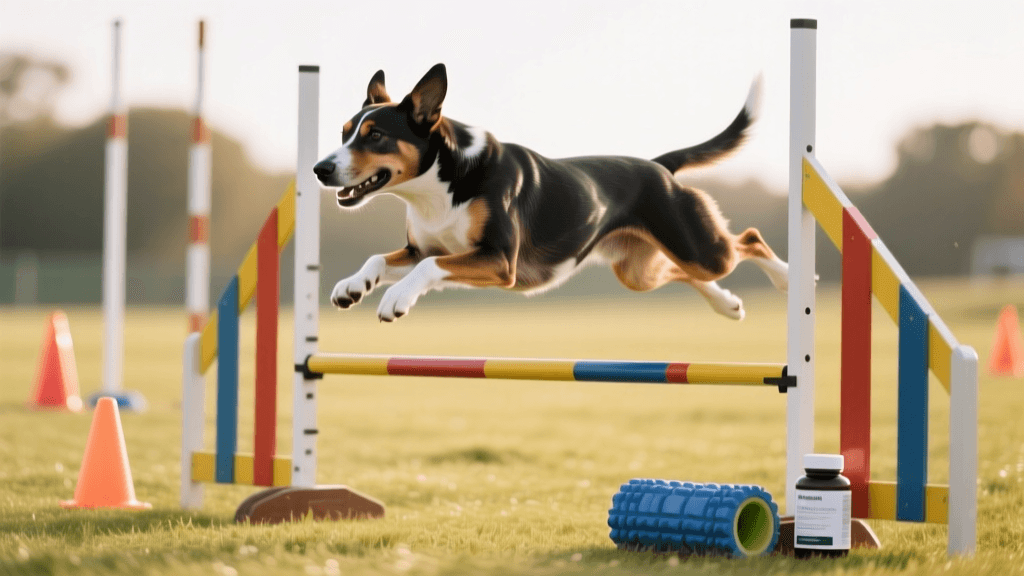
Best Joint Supplements For Dog Agility Competitions 2026
Discover the top joint supplements for agility dogs in 2026. Learn how to protect your canine athlete's joints, improve recovery, and boost performance.
The Biomechanical Demands of Canine Agility in 2026
Canine agility is one of the most thrilling and physically demanding dog sports in the world. As we navigate the 2026 competition season, the speed, precision, and athleticism required from our canine partners have reached unprecedented levels. According to the American Kennel Club's agility guidelines, dogs must navigate complex courses featuring A-frames, dog walks, weave poles, and high-speed jumps, often completing runs in under 40 seconds. While this showcases the incredible bond and training between handler and dog, it also places immense biomechanical stress on the canine musculoskeletal system.
Every time an agility dog launches off a takeoff point for a jump, their front limbs absorb forces equivalent to several times their body weight upon landing. Similarly, the lateral spinal flexion required to navigate twelve weave poles at full speed creates significant torque on the intervertebral discs and facet joints. Over time, this repetitive micro-trauma can lead to cartilage degradation, synovial inflammation, and early-onset osteoarthritis. For the 2026 competitor, proactive joint health management is no longer optional; it is a fundamental pillar of a successful sports medicine protocol.
Essential Joint Ingredients for the Modern Canine Athlete
The landscape of veterinary sports medicine has evolved significantly. In 2026, the focus has shifted from reactive pain management to proactive cellular protection and cartilage matrix preservation. When selecting a joint supplement for an agility dog, you must look beyond basic glucosamine and seek out clinically proven, multi-modal formulations.
1. UC-II (Undenatured Type II Collagen)
UC-II collagen has become a gold standard in 2026 for managing joint inflammation. Unlike traditional collagen peptides that act as building blocks, undenatured Type II collagen works via oral tolerance, interacting with the gut-associated lymphoid tissue to modulate the immune system's attack on joint cartilage. This is particularly beneficial for agility dogs experiencing autoimmune-mediated joint inflammation following intense competition weekends.
2. Omega-3 Fatty Acids (EPA and DHA)
High concentrations of Eicosapentaenoic acid (EPA) and Docosahexaenoic acid (DHA) are critical for disrupting the inflammatory cascade. Modern veterinary formulations now utilize nano-emulsified omega-3s, which boast absorption rates up to 80% higher than traditional fish oils, ensuring that the active anti-inflammatory compounds reach the synovial fluid rapidly after a strenuous run.
3. Green-Lipped Mussel (Perna canaliculus)
Sourced from the pristine waters of New Zealand, Green-Lipped Mussel extract provides a unique matrix of glycosaminoglycans (GAGs), ETA (eicosatetraenoic acid), and amino acids. It is highly regarded for its ability to inhibit both the cyclooxygenase (COX) and lipoxygenase (LOX) inflammatory pathways, making it a powerful natural alternative to NSAIDs for post-competition recovery.
4. Hyaluronic Acid (HA)
Hyaluronic acid is the primary component of synovial fluid, responsible for joint lubrication and shock absorption. Oral supplementation with high-molecular-weight HA has been shown in recent 2026 veterinary studies to improve joint effusion and reduce friction during the extreme flexion and extension required on the A-frame and teeter-totter.
2026 Joint Supplement Comparison for Canine Athletes
Choosing the right product can be overwhelming given the saturated market. Below is a comparison of three top-tier joint supplements highly recommended by veterinary sports medicine specialists for active agility dogs in 2026.
| Product Profile | Key Active Ingredients | Best Use Case | Form | Est. Monthly Cost (50lb Dog) |
|---|---|---|---|---|
| Advanced Clinical Joint Matrix | UC-II Collagen, Nano-Emulsified EPA/DHA, Boswellia Serrata | Senior agility dogs or dogs with existing osteoarthritis | Flavored Chew | $65.00 |
| Performance Synovial Support | Green-Lipped Mussel, High-MW Hyaluronic Acid, MSM, Vitamin C | Peak-performance dogs needing rapid post-trial recovery | Pump Liquid | $52.00 |
| Proactive Cartilage Defense | Glucosamine HCl, Chondroitin Sulfate, Manganese Ascorbate | Young, developing dogs in foundation agility training | Soft Chew | $40.00 |
Note: Always consult with your canine sports medicine veterinarian before introducing new supplements, especially if your dog is currently taking prescription NSAIDs or other medications.
Integrating Supplements with Physical Conditioning
Supplements alone cannot compensate for poor physical conditioning or inadequate warm-up routines. The American College of Veterinary Sports Medicine and Rehabilitation emphasizes that a holistic approach combining nutritional support with targeted physical therapy yields the best outcomes for canine athletes.
The 2026 Agility Warm-Up Protocol
Before your dog ever touches the first jump bar, a minimum 15-minute dynamic warm-up is mandatory. This increases synovial fluid viscosity, warms the muscle bellies, and prepares the nervous system for rapid firing.
- Brisk Trotting (5 mins): Encourage a steady, ground-covering trot on a flat, forgiving surface to increase core body temperature.
- Figure-Eights and Spins (3 mins):Use a lure to guide your dog through tight figure-eights and left/right spins to mobilize the spinal column and warm up the lateral stabilizing muscles.
- Play Bows and Stretching (3 mins): Encourage play bows to dynamically stretch the hamstrings and shoulder extensions.
- Proprioceptive Cues (4 mins): Have your dog perform slow, controlled paws-up on a raised disc or mat to engage the core and stabilize the major joints.
Post-Run Cool-Down and Recovery
Immediately after a run, do not simply crate your dog. A 10-minute cool-down walk allows lactic acid to dissipate and heart rates to normalize. Once back at the crate, apply a cooling coat if the ambient temperature is high, and administer your dog's post-run recovery supplement. For dogs competing in multi-day trials, utilizing portable canine massage tools or booking a session with a certified canine rehabilitation therapist between runs can significantly reduce delayed onset muscle soreness (DOMS) and joint stiffness.
Recognizing Early Signs of Joint Stress
Agility dogs are notorious for masking pain; their drive to work and please their handlers often overrides physical discomfort. As a responsible handler, you must become an expert in reading your dog's subtle biomechanical changes. The FDA's guidelines on animal health and supplements remind owners to monitor their pets closely for any adverse reactions or changes in health status when starting new regimens, but monitoring extends to the dog's physical performance as well.
Watch for these subtle indicators of joint fatigue or early-stage injury during the 2026 season:
- Weave Pole Entry Hesitation: A slight stutter step or avoidance of the left-shoulder weave entry often indicates cervical or thoracic spine discomfort.
- Shortened Stride on the Dog Walk: If your dog begins to take choppy, shortened steps on the descent ramp, they may be experiencing shoulder or carpal joint pain from the impact of the downward slope.
- Refusal of the Teeter-Totter: The sudden jolt when the teeter board hits the ground sends a shockwave through the front limbs. Reluctance here is a primary red flag for elbow or shoulder micro-instabilities.
- Changes in Crate Behavior: A dog that suddenly struggles to stand up after resting in their crate between runs, or exhibits a 'bunny hop' gait when first stepping out, requires immediate veterinary evaluation.
Final Thoughts for the 2026 Competition Season
Success in dog agility is measured not just by the ribbons and titles earned, but by the longevity and quality of life of our canine partners. The 2026 competition season offers incredible opportunities to showcase the athleticism of our dogs, but it demands an unwavering commitment to their physical well-being. By investing in high-quality, scientifically backed joint supplements, adhering to strict dynamic warm-up protocols, and maintaining a vigilant eye for subtle signs of biomechanical stress, you can ensure your agility dog remains sound, happy, and ready to conquer the course for years to come. Remember, the greatest victory in canine sports is a healthy dog at the end of the day.
anouk-beaumont
All our authors care for dogs every day — read more of their work on the authors page.