How to Train Your Dog for Camping and RV Adventures
Discover essential training tips for camping and RV travel with your dog. Learn recall, settle commands, and gear prep for safe outdoor adventures.
Why Specialized Travel Training is Crucial
Embarking on an RV road trip or a backcountry camping adventure with your dog is a dream for many pet owners. However, the great outdoors presents unique distractions, hazards, and environmental stressors that your dog does not encounter in your fenced backyard or local neighborhood. According to expert advice from REI Co-op, preparing your dog for the sights, sounds, and smells of the wilderness requires targeted behavioral conditioning long before you pack the car. Without specialized travel training, a dog that is perfectly obedient at home may become reactive to wildlife, terrified of RV generators, or prone to bolting out of a tent flap.
Core Commands for the Great Outdoors
1. The Bulletproof Emergency Recall
In a campground or on a hiking trail, a reliable recall can save your dog's life. The emergency recall differs from a standard 'come' command; it must be paired with an exceptionally high-value reward and a distinct auditory cue, such as an Acme 211.5 training whistle.
- Step 1: Introduce the whistle in a low-distraction indoor environment. Blow one short blast and immediately feed a high-value treat like freeze-dried beef liver.
- Step 2: Move to a fenced yard. Use a 30-foot Biothane long line to ensure safety. Blow the whistle, and if the dog turns toward you, enthusiastically reward them.
- Step 3: Practice in increasingly distracting environments. Never use the emergency recall whistle for mundane tasks or to call the dog for a bath; reserve it strictly for life-saving moments and pair it with a jackpot reward of 5 to 10 small treats.
2. The 'Place' Command for RVs and Tents
Space is at a premium in an RV or a camping tent. Teaching your dog to go to a specific mat and settle is vital for maintaining sanity in close quarters. Select a portable, durable mat, such as the Ruffwear Highlands Dog Bed (measuring roughly 36 by 24 inches), which provides a familiar scent and texture regardless of your location.
To train this, lure your dog onto the mat with a chew toy, like a Kong stuffed with frozen peanut butter. Use the cue 'Place' and reward heavily for all four paws on the mat. Gradually increase the duration from 10 seconds to 30 minutes while you cook meals or read in the tent. This behavioral conditioning creates an off-switch for your dog in highly stimulating outdoor environments.
3. Threshold and Doorway Manners
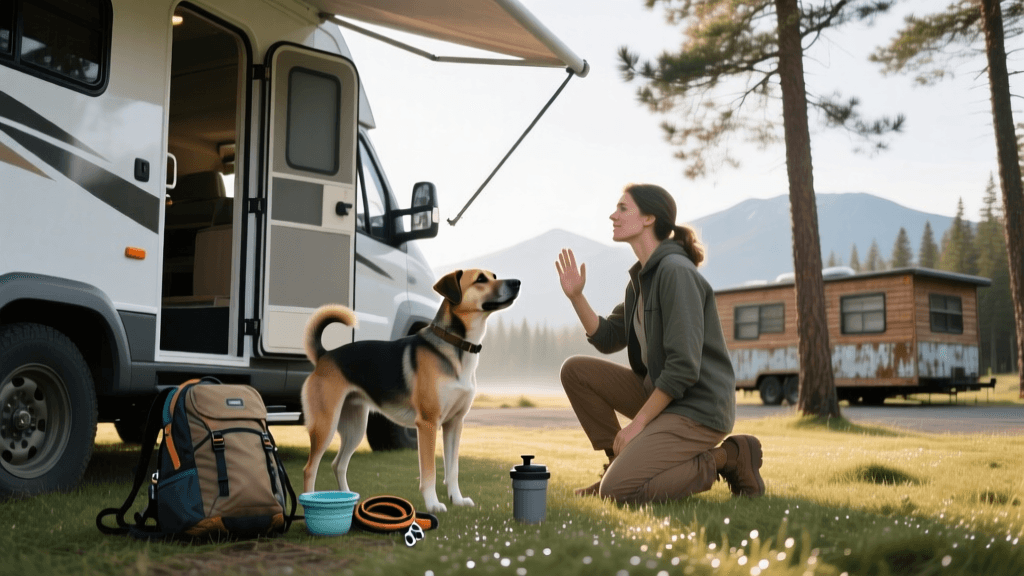
RV doors and tent zippers are notorious escape routes. A dog that bolts out the door can easily spook neighboring campers or dart into a busy campground road. Train a strict 'Wait' command at every threshold. Open the RV door an inch; if the dog pushes forward, close it immediately. Repeat until the dog steps back and makes eye contact. Only release them with an 'Okay!' cue once they are sitting calmly.
4. Crate Conditioning for RV Transit
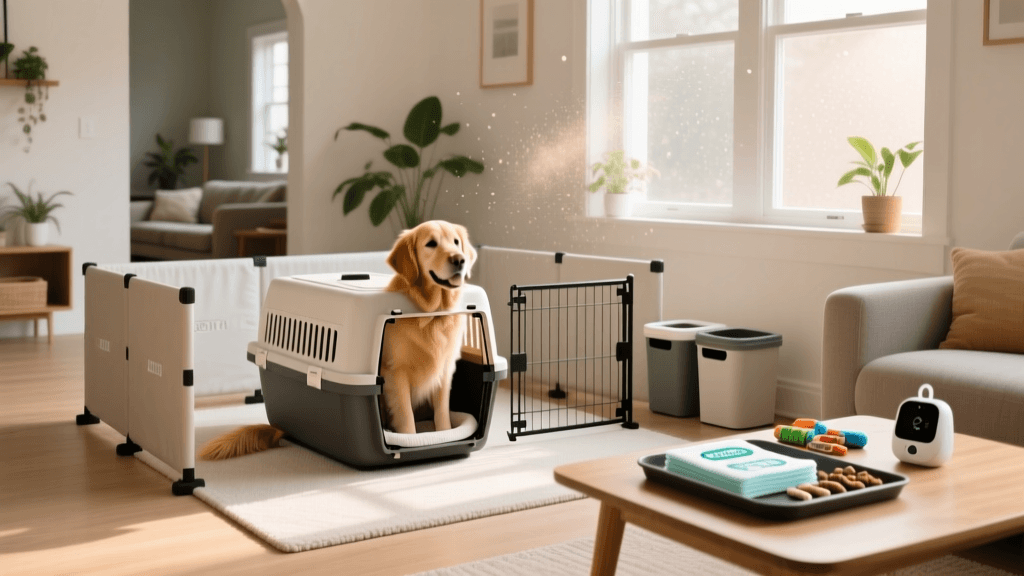
If you are traveling in a motorhome or towing a fifth wheel, your dog must never roam freely while the vehicle is in motion. Unrestrained pets can become dangerous projectiles during sudden stops and can severely injure themselves or the driver. Therefore, crate conditioning is a non-negotiable aspect of RV travel training. Invest in a crash-tested kennel, such as a Gunner or Ruff Land Performance Kennel, and secure it to the vehicle's tie-down points.
To build a positive association, feed your dog their daily meals inside the crate while the RV is parked. Leave the door open and scatter high-value chews, like yak cheese or bully sticks, inside. Once the dog enters willingly, practice closing the door for short intervals while you sit nearby reading a book. Gradually increase the duration and begin turning on the RV's engine to accustom the dog to the vibration and diesel rumble. By the time you hit the highway, the crate should be viewed as a secure, mobile sanctuary rather than a punishment zone.
Desensitizing Your Dog to Campground Stimuli
Campgrounds are noisy. The hum of a Honda EU2200i generator, the snapping of tent poles, and the smell of neighboring campfires can trigger anxiety. Create a desensitization protocol at home. Play YouTube videos of RV generators and campground ambiance at a low volume while feeding your dog their daily meals. Gradually increase the volume over two weeks. Practice setting up your tent in the living room or backyard, rewarding your dog for interacting calmly with the zippers and nylon fabric.
Additionally, practice handling your dog's paws and wiping them down with a damp microfiber towel or a MudBuster portable paw cleaner. Campgrounds are often muddy, and teaching your dog to tolerate paw-cleaning at the tent door or RV step prevents dirt and debris from ruining your travel space. Pair the paw-wiping process with a lick mat smeared with plain pumpkin puree to keep the dog occupied and relaxed during the cleanup routine.
Essential Travel Training Gear Compared
Selecting the right gear is a fundamental part of your travel training strategy. Below is a comparison of common restraint and training tools used in outdoor travel settings.
| Gear Type | Estimated Cost | Best Use Case | Training Utility |
|---|---|---|---|
| 30-Foot Biothane Long Line | $35 - $55 | Recall practice in open fields | High: Allows safe distance training without tangling in brush. |
| Portable Tie-Out Stake and Cable | $25 - $40 | Basecamp containment while cooking | Low: Good for management, but never use for active training or unsupervised crating. |
| GPS Tracking Collar (e.g., Garmin) | $250 - $700 | Off-leash hiking in deep wilderness | Medium: Provides peace of mind but does not replace active recall training. |
| Crash-Tested Travel Crate (e.g., Gunner) | $500 - $800 | Safe RV or vehicle transit | High: Conditions the dog to view the crate as a safe, mobile den. |
The 8-Week Pre-Trip Training Timeline
To ensure your dog is truly ready for the rigors of travel, follow this structured timeline:
- Weeks 1-2: Focus on indoor 'Place' command and doorway threshold manners. Introduce the emergency recall whistle indoors.
- Weeks 3-4: Move 'Place' and recall training to the backyard. Begin desensitization to camping audio (generators, zippers, wildlife sounds).
- Weeks 5-6: Take a practice trip to a local park or a friend's driveway. Sleep in the tent or RV for one night to test the dog's reaction to confined sleeping spaces.
- Weeks 7-8: Introduce the long line in a wooded area. Practice the emergency recall around mild distractions like squirrels or distant joggers.
Adhering to Trail and Campground Etiquette
Responsible travel training also means respecting the environment and fellow travelers. The National Park Service B.A.R.K. Ranger guidelines emphasize Bagging waste, Always wearing a leash, Respecting wildlife, and Knowing where to go. Training your dog to ignore wildlife, such as deer, elk, or groundhogs, is a critical component of the 'Leave It' command. If your dog has a high prey drive, keep them on a 6-foot leash at all times and use a front-clip harness, like the Ruffwear Front Range, to reduce pulling when they spot a squirrel.
Furthermore, the American Veterinary Medical Association (AVMA) recommends ensuring your pet's microchip information is updated and carrying a physical copy of their rabies vaccination certificate, as many campgrounds and RV parks require proof of vaccination upon check-in.
Conclusion
Traveling with your dog should be a joyous, bonding experience, not a stressful exercise in damage control. By investing time in specialized travel training, mastering the emergency recall, enforcing threshold manners, and desensitizing your dog to the unique stimuli of the wilderness, you pave the way for countless safe and memorable adventures. Pack your long line, stock up on freeze-dried liver, and hit the road with confidence.
beth-carrasco
All our authors care for dogs every day — read more of their work on the authors page.