Best Calming Products for Dogs With Separation Anxiety
Discover the best calming beds, pheromone diffusers, and treat dispensers to help manage your dog's separation anxiety and understand their stress signals.
Understanding the Psychology of Canine Separation Anxiety
Separation anxiety is one of the most distressing behavioral issues a dog can experience, and consequently, one of the most challenging for pet parents to manage. Unlike humans, who can rationalize a temporary parting, dogs are obligate social animals. When left alone, a dog suffering from separation anxiety does not simply feel bored; they experience a profound, neurochemical panic response. According to the ASPCA, separation anxiety is triggered when dogs become intensely upset because of separation from their primary attachment figures. This panic manifests in destructive behavior, excessive vocalization, and physiological stress.
To effectively address this, we must look beyond basic obedience and understand the canine brain. When a dog experiences isolation panic, their amygdala triggers a massive release of cortisol and adrenaline. This fight-or-flight response is why anxious dogs will chew through drywall or break teeth on window frames—they are literally trying to escape a perceived life-threatening situation. As a senior behavioral writer for Paws-Tales, I always emphasize that punishing a dog for these behaviors is not only ineffective but deeply harmful. Instead, we must combine systematic desensitization training with scientifically backed calming products that help lower the dog's baseline arousal levels.
Identifying True Separation Anxiety vs. Under-Stimulation
Before investing in calming products, it is crucial to differentiate true separation anxiety from general boredom or under-stimulation. While both can result in a destroyed living room, the underlying psychology and timing of the behaviors are vastly different.
- Timing of Destruction: Bored dogs often chew on items that smell like their owners or seek out entertainment (like raiding the trash) at any time. Anxious dogs typically destroy exit points (doors, windows, doorframes) or items heavily scented with their owner immediately upon departure.
- Vocalization: A bored dog may bark at passing cars or squirrels. A dog with separation anxiety will exhibit continuous, frantic howling, whining, or barking that begins within minutes of the owner leaving and does not stop until exhaustion sets in.
- House Soiling: Even fully house-trained dogs may urinate or defecate indoors when experiencing a panic attack due to the loss of sphincter control during extreme stress.
- Pacing and Drooling: Hypersalivation and repetitive, obsessive pacing in circular patterns are classic physiological signs of acute anxiety.
Top Calming Products: A Buyer's Guide for Anxious Dogs
No single product will cure separation anxiety on its own. However, when paired with a behavioral modification protocol, specific tools can significantly reduce a dog's cortisol levels and provide a sense of security. Here is a curated buyer's guide to the most effective, science-backed calming products on the market.
1. Pheromone Diffusers: Adaptil Calm Home Diffuser
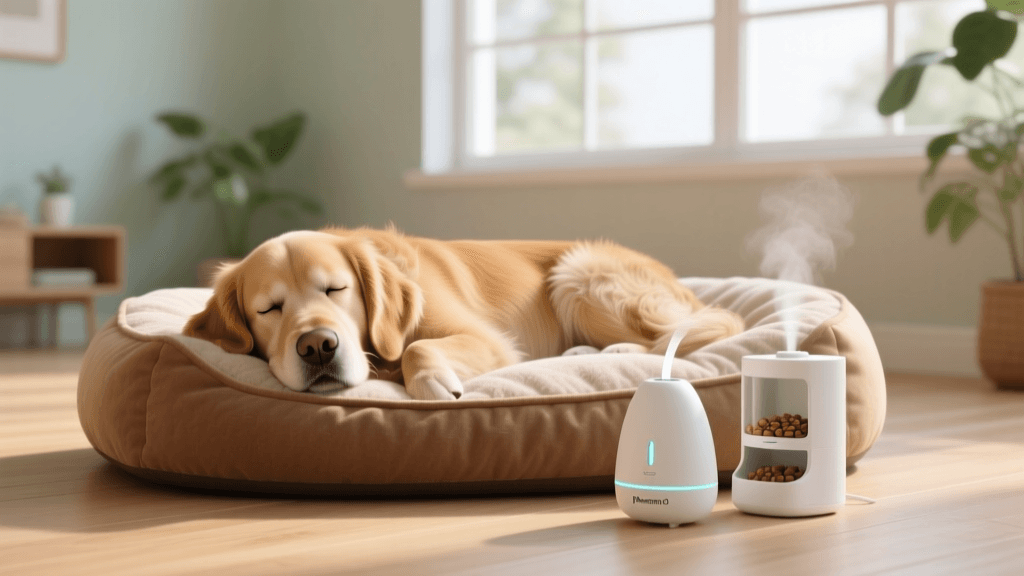
The Science: Adaptil utilizes a synthetic replica of the Dog-Appeasing Pheromone (DAP), which is naturally produced by nursing mother dogs to signal safety and comfort to their puppies. Olfactory processing in dogs is directly linked to the limbic system, the brain's emotional center. By introducing DAP into the environment, you can biologically lower your dog's heart rate and reduce stress-related behaviors.
Product Details: The Adaptil Calm Home Diffuser plugs directly into a standard wall outlet. One refill lasts approximately 30 days and covers up to 700 square feet. Cost: $25 - $30 for the starter kit. Pro-Tip: Plug the diffuser into the room where your dog spends the most time or where their safe space is located. Do not plug it behind furniture or under shelves, as the pheromones rise with heat and need clear air circulation.
2. Deep Pressure & Denning: Best Friends by Sheri The Original Calming Donut Bed
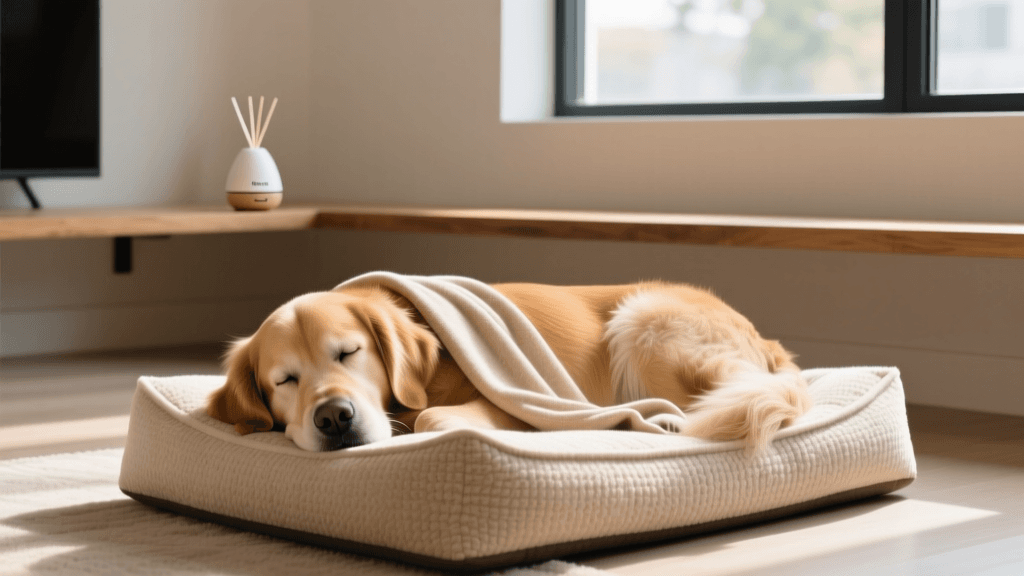
The Science: Dogs have a natural instinct to seek out enclosed, den-like spaces when they feel vulnerable. Furthermore, the raised edges of a donut bed provide a form of Deep Pressure Therapy (DPT). Similar to the effect of a Thundershirt, gentle, continuous pressure on the dog's nervous system stimulates the release of dopamine and serotonin while lowering cortisol.
Product Details: Made from ultra-soft shag fur that mimics a mother's coat, this bed encourages nesting. The 23-inch diameter is ideal for small to medium dogs (up to 25 lbs), while the 36-inch version accommodates larger breeds. Cost: $45 - $75 depending on size. Pro-Tip: Place an unwashed t-shirt you have worn recently in the center of the bed. Your familiar scent combined with the physical embrace of the raised rim creates a powerful dual-calming effect.
3. Cognitive Engagement & Endorphin Release: KONG Classic & LickiMat Soother
The Science: Licking and chewing are self-soothing behaviors for dogs. The repetitive motion of licking stimulates the release of endorphins in the canine brain, acting as a natural tranquilizer. Engaging a dog in a high-value, long-lasting food puzzle before departure shifts their brain from a state of panic to a state of focused, rewarding foraging.
Product Details: The KONG Classic ($15) can be stuffed with a mixture of plain pumpkin puree, plain Greek yogurt, and kibble, then frozen for 4 to 6 hours. The LickiMat Soother ($10) features textured nubs that slow down consumption and maximize the licking time. Pro-Tip: Introduce these tools while you are still home. If you only bring out the frozen KONG right as you walk out the door, the toy becomes a predictor of your departure, which can actually trigger the anxiety response earlier.
4. Remote Monitoring & Reassurance: Furbo 360 Dog Camera
The Science: Understanding your dog's specific stress signals is critical for timing your training correctly. Subtle signs of anxiety include lip licking, yawning, 'whale eye' (showing the whites of the eyes), and panting when it is not hot. Monitoring these micro-expressions allows you to gauge your dog's threshold.
Product Details: The Furbo 360 features a rotating 1080p HD camera, two-way audio, and a treat-tossing mechanism. It also includes a 'Dog Activity Alert' that notifies your phone if your dog is pacing or barking excessively. Cost: $199 - $249. Pro-Tip: Use the two-way audio cautiously. For some dogs, hearing their owner's voice without being able to find them causes increased frustration and confusion. Test your dog's reaction to the audio feature during short absences first.
Product Comparison Chart
| Product Name | Category | Best For | Est. Cost | Primary Behavioral Benefit |
|---|---|---|---|---|
| Adaptil Calm Diffuser | Pheromone | General environmental anxiety | $25 - $30 | Lowers baseline arousal via olfactory limbic pathways |
| Best Friends Donut Bed | Calming Bed | Dogs seeking security/dens | $45 - $75 | Deep Pressure Therapy (DPT) and nesting comfort |
| KONG Classic / LickiMat | Enrichment | Pre-departure distraction | $10 - $15 | Endorphin release through repetitive licking/chewing |
| Furbo 360 Camera | Monitoring | Tracking stress thresholds | $199 - $249 | Identifies subtle stress signals and pacing patterns |
Integrating Products with Desensitization Training
It is a common misconception that purchasing a calming bed or a pheromone diffuser will instantly resolve a dog's panic disorder. As noted by the American Kennel Club (AKC), behavioral modification requires systematic desensitization and counterconditioning. Products should be viewed as supportive scaffolding that makes the training process easier for the dog to process.
Here is a practical, actionable protocol for integrating these products into your daily routine:
- Create the Safe Zone: Set up the Adaptil diffuser and the Calming Donut Bed in a quiet, low-traffic room. This area should only be used for positive experiences. Feed your dog their meals here and offer high-value chews.
- Desensitize Departure Cues: Dogs with separation anxiety often panic at 'pre-departure cues' like picking up keys, putting on shoes, or jingling a leash. Perform these actions randomly throughout the day without actually leaving the house. This breaks the psychological association between the cue and the isolation.
- Micro-Absences: Once your dog is relaxed in their safe zone with a frozen LickiMat, step outside the front door for exactly three seconds, then return calmly. Do not make a fuss upon re-entering. Gradually increase the time to 10 seconds, 30 seconds, 1 minute, and eventually 10 minutes over the course of several weeks.
- Monitor and Adjust: Use the Furbo camera to watch your dog's body language. If they abandon the LickiMat and begin pacing at the 2-minute mark, your training session was too long. Return to 1-minute absences and build up more slowly.
The experts at Fear Free Pets emphasize that managing separation anxiety is a marathon, not a sprint. Pushing a dog past their anxiety threshold floods their brain with stress hormones, rendering any learning impossible. By utilizing calming products to keep the dog under their threshold, you allow their cognitive brain to remain engaged and receptive to training.
Final Thoughts on Behavioral Management
Understanding your dog's separation anxiety requires immense empathy and a willingness to look at the world through their highly social, emotionally driven perspective. They are not acting out of spite, nor are they trying to punish you for leaving. They are experiencing a genuine psychological crisis. By investing in scientifically backed calming products like pheromone diffusers, deep-pressure beds, and endorphin-releasing puzzles, you are providing your dog with the biological tools they need to self-soothe. Combine these tools with a patient, structured desensitization protocol, and you will gradually help your canine companion build the confidence they need to feel safe, secure, and relaxed—even when you are not in the room.
marcus-aldridge
All our authors care for dogs every day — read more of their work on the authors page.