How to Calculate Your Dog's Exact Daily Caloric Needs
Learn how to calculate your dog's daily caloric needs, manage portion sizes, and prevent obesity with our expert feeding guide and calorie chart.

The Silent Epidemic of Canine Obesity
Canine obesity is widely considered one of the most significant, yet preventable, health crises in modern veterinary medicine. According to data from the Association for Pet Obesity Prevention, over 55% of dogs in the United States are classified as overweight or obese. This excess weight is not merely a cosmetic issue; it drastically increases the risk of osteoarthritis, type 2 diabetes, cardiovascular disease, and certain cancers, ultimately reducing a dog's lifespan by up to two and a half years.
As a responsible dog owner, transitioning from guesswork to precision feeding is the single most effective step you can take for your dog's long-term health. This comprehensive guide will walk you through the exact mathematics of canine caloric needs, practical feeding strategies, and actionable tools to manage your dog's weight effectively.
Understanding RER and MER: The Foundation of Canine Nutrition
To feed your dog accurately, you must understand two fundamental veterinary nutrition concepts: Resting Energy Requirement (RER) and Maintenance Energy Requirement (MER).
Resting Energy Requirement (RER)
RER represents the baseline calories your dog's body needs to perform basic physiological functions at rest, such as breathing, digestion, and cellular repair. It is calculated using a formula based on metabolic body size rather than simple linear weight.
Maintenance Energy Requirement (MER)
MER is the total number of calories your dog needs daily to maintain their current weight, factoring in their activity level, age, and reproductive status. MER is calculated by multiplying the RER by a specific life-stage or activity multiplier.
Step-by-Step Calorie Calculation Guide
Let us break down the math into an actionable, step-by-step process.
Step 1: Convert Weight to Kilograms
Veterinary formulas use the metric system. Divide your dog's weight in pounds by 2.2 to get their weight in kilograms. For example, a 30-pound dog weighs approximately 13.6 kg.
Step 2: Calculate the RER
The standard formula for RER is: 70 x (body weight in kg)^0.75.
For our 13.6 kg dog: 70 x (13.6)^0.75 = 70 x 7.13 = 499 kcal/day.
Step 3: Apply the MER Multiplier
Next, multiply the RER by the appropriate factor from the table below to find the daily caloric target.
| Life Stage / Status | MER Multiplier | Example (Based on 499 RER) |
|---|---|---|
| Neutered Adult | 1.6 | 798 kcal/day |
| Intact Adult | 1.8 | 898 kcal/day |
| Weight Loss | 1.0 - 1.2 | 499 - 598 kcal/day |
| Senior / Inactive | 1.2 - 1.4 | 598 - 698 kcal/day |
| Puppy (under 4 mos) | 3.0 | 1497 kcal/day |
| Puppy (4 to 12 mos) | 2.0 | 998 kcal/day |
If our 30-pound dog is a neutered adult with a normal activity level, his target is roughly 798 calories per day.
Practical Feeding Strategies: Beyond the Math
Knowing the target calorie count is only half the battle. Executing a precise feeding strategy requires the right tools and habits.
1. Ditch the Measuring Cup for a Digital Gram Scale
Studies have shown that using standard measuring cups can result in caloric variances of up to 20% per meal. A cup of kibble can weigh anywhere from 80 to 120 grams depending on the kibble size and how it settles in the cup. Invest in a digital kitchen scale (typically costing between $15 and $25). Check the kcal/kg on your dog food bag, and weigh out the exact grams needed for the day. Divide this into two or more meals to aid digestion and maintain stable blood sugar levels.
2. The 10% Treat Rule
Treats are a common culprit in canine weight gain. Veterinary nutritionists universally recommend the 10% Rule: treats and toppers should never exceed 10% of your dog's total daily caloric intake. For our 798 kcal/day dog, the treat allowance is strictly 80 calories. A single commercial dental chew can contain over 100 calories, instantly blowing the daily budget. Instead, opt for low-calorie, high-fiber alternatives like baby carrots, green beans, or apple slices.
3. Implement Enrichment Feeding
Dogs are natural foragers. Eating from a bowl in two minutes provides zero mental stimulation. Allocate a portion of your dog's daily kibble into puzzle toys, snuffle mats, or frozen Kongs. Slow feeders (costing $10 to $20) not only prevent dangerous bloat in deep-chested breeds but also increase satiety by slowing down the eating process.
Common Feeding Mistakes to Avoid
Even well-intentioned owners can fall into dietary traps that sabotage their dog's health.
Free-Feeding (Ad Libitum)
Leaving a bowl of kibble out all day is a recipe for disaster. Dogs are opportunistic eaters; many will eat past the point of satiety simply because the food is available. Free-feeding also makes it impossible to track daily caloric intake or notice early signs of illness, as a sudden drop in appetite is often the first symptom of canine disease.
The 'Table Scrap' Trap
A single tablespoon of cheese or a piece of fatty meat from the dinner table can contain upwards of 100 calories. For a small breed dog requiring only 400 calories a day, this single scrap represents 25% of their daily energy requirement. Furthermore, human foods are often high in sodium and fat, which can trigger gastrointestinal upset or, in severe cases, life-threatening pancreatitis.
Ignoring the Caloric Impact of Toppers
Many owners use broths, wet food toppers, or oils (like salmon or coconut oil) to entice picky eaters. While these can be beneficial, they are incredibly calorie-dense. One tablespoon of olive oil or salmon oil contains roughly 120 calories. If you use toppers, you must mathematically subtract those calories from the base kibble allowance to maintain the daily MER.
Decoding Pet Food Labels for Caloric Density
To translate your dog's caloric needs into actual food volume, you must read the pet food label correctly. The U.S. Food and Drug Administration (FDA) mandates that pet food labels include a caloric statement, usually expressed as kcal/cup and kcal/kg. Always use the kcal/kg metric when using a digital scale for maximum accuracy. If you are feeding a 'weight management' formula, be aware that these foods are often lower in fat but higher in fiber. They allow you to feed a larger volume of food for fewer calories, keeping your dog feeling full without exceeding their MER.
Monitoring Progress and Adjusting the Diet
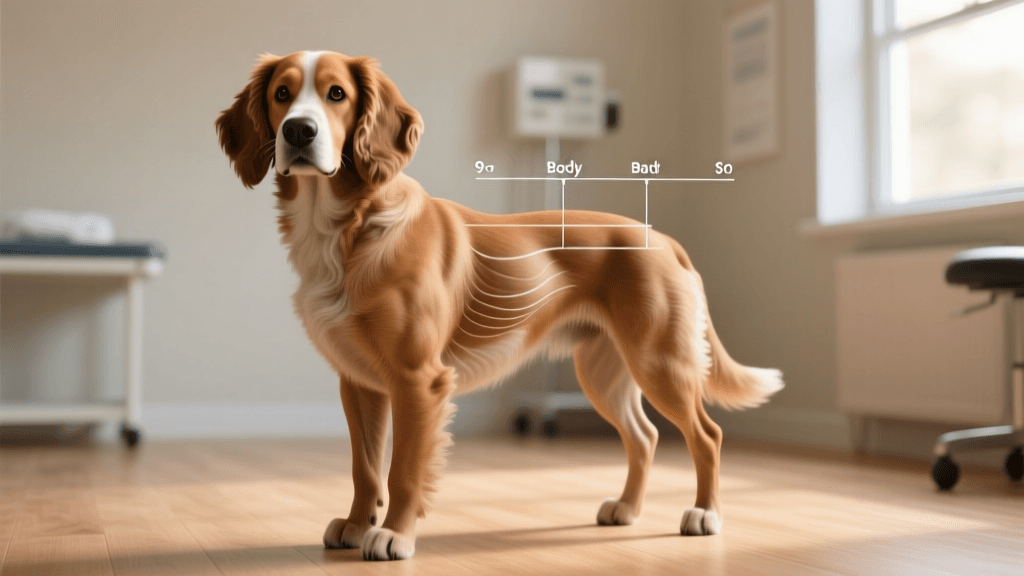
A dog's metabolism is not static. Factors like seasonal activity changes, aging, and spaying/neutering will alter their caloric requirements. You should evaluate your dog's Body Condition Score (BCS) every two to four weeks. The WSAVA Global Nutrition Committee provides excellent visual BCS charts. You should be able to easily feel your dog's ribs without pressing hard, and they should have a visible abdominal tuck when viewed from the side. If your dog is gaining weight, reduce their daily MER by 10%. If they are losing weight too rapidly or acting lethargic, increase it by 10% and consult your veterinarian.
Proper nutrition is the cornerstone of preventive veterinary care. By taking the time to calculate and measure your dog's daily intake, you are actively adding healthy, vibrant years to their life.
Conclusion
Managing your dog's nutrition does not require a degree in veterinary science, but it does require consistency, precision, and a willingness to look past the marketing on the front of the food bag. By calculating their exact RER and MER, utilizing a digital gram scale, and adhering to the 10% treat rule, you can protect your dog from the devastating effects of obesity. Start weighing your dog's meals today, and take proactive control of their long-term health and wellbeing.
aaron-whyte
All our authors care for dogs every day — read more of their work on the authors page.