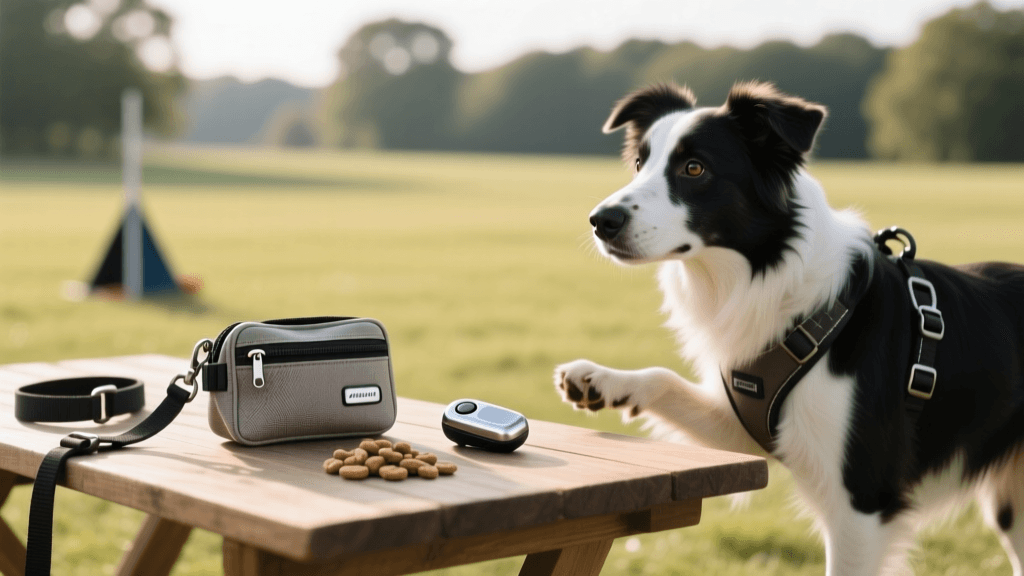
Build a Budget-Friendly DIY Dog Agility Course Today
Learn how to build a DIY dog agility course at home for under fifty dollars. Train your pup with budget-friendly obstacles and expert tips.
The Hidden Costs of Commercial Agility Gear
Dog agility is a thrilling, high-energy sport that strengthens the bond between you and your canine companion. However, outfitting your backyard with professional-grade agility equipment can easily cost hundreds, if not thousands, of dollars. For pet parents practicing budget-friendly dog care, this price tag can be a major roadblock. Fortunately, you do not need to break the bank to enjoy the physical and mental benefits of this incredible sport. By utilizing inexpensive materials from your local hardware store and a bit of weekend elbow grease, you can construct a fully functional, safe, and highly effective DIY dog agility course right in your own backyard. In this comprehensive guide, we will walk you through exactly how to build your own obstacles, compare the costs to commercial alternatives, and provide expert training tips to get your dog navigating the course like a champion.
Why Agility Training is Worth the Effort
Before we grab our tools, it is important to understand why agility is such a phenomenal activity for dogs. According to the American Kennel Club (AKC), agility is a fast-paced, exciting sport that requires dogs to navigate an obstacle course against the clock. But beyond the competitive aspect, agility provides profound benefits for everyday pets. It offers intense physical exercise, which is crucial for burning off excess energy and preventing destructive behaviors at home. Furthermore, the mental stimulation required to memorize courses and follow directional cues tires out a dog's brain just as much as a long run tires their legs. For high-drive breeds like Border Collies, Australian Shepherds, and Jack Russell Terriers, agility is often the ultimate outlet for their natural instincts. Even mixed breeds and older dogs can enjoy modified, low-impact agility routines that keep their joints mobile and their minds sharp.
Step-by-Step Guide to Building DIY Agility Equipment
Building your own equipment is the cornerstone of budget-friendly dog care. Below, we outline how to create the four most essential agility obstacles for under fifty dollars total.
1. The PVC Agility Jump
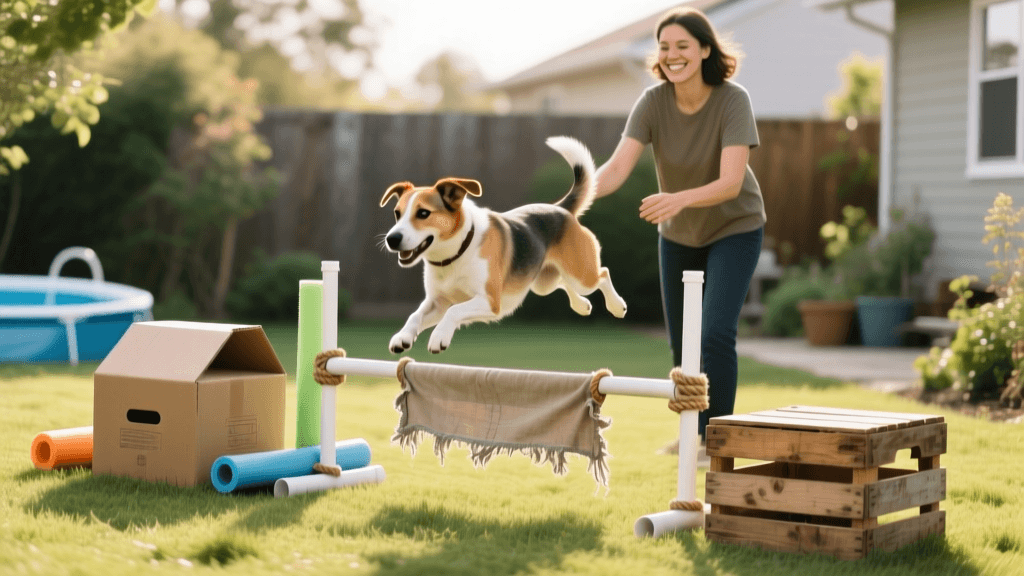
Jumps are the most common obstacle on any course. To build a sturdy, adjustable PVC jump, head to your local hardware store. You will need two 36-inch lengths of 3/4-inch PVC pipe for the uprights, two 18-inch lengths for the base, four T-connectors, and two elbow joints. For the jump bar, use a lightweight 48-inch PVC pipe or a wooden dowel. Connect the base pieces to the T-connectors, attach the uprights, and use the remaining T-connectors at the top to hold the jump bar. To make the bar adjustable, you can drill holes at various heights along the uprights and use small pegs or bolts to support the crossbar. Total cost: approximately $12 to $15.
2. The Weave Poles
Weave poles require precision, both in construction and training. Standard regulations require poles to be spaced exactly 24 inches apart. For a budget-friendly set of six poles, purchase six 30-inch lengths of 1/2-inch PVC pipe and six metal stakes or rebar pieces. Drive the metal stakes into your lawn, leaving about 6 inches exposed, and slide the PVC pipes over them. This allows the poles to have a slight give when your dog bumps them, which is safer for their spine and shoulders. If you are training on concrete or indoors, mount the PVC pipes into a 2x4 wooden plank using pipe straps, ensuring the 24-inch spacing is strictly maintained. Total cost: approximately $15.
3. The DIY Chute or Tunnel
Commercial tunnels are made of heavy-duty nylon and can cost upwards of a hundred dollars. For a budget alternative, visit a local thrift store, dollar store, or online marketplace for a children's pop-up play tunnel. These are usually priced between $10 and $15. They are lightweight, collapsible, and perfectly sized for small to medium dogs. For larger breeds, you can purchase a 10-foot section of flexible corrugated drainage pipe from a landscaping supply store for about $20. Anchor the ends with sandbags or heavy bricks to prevent the tunnel from collapsing or rolling while your dog is inside.
4. The Pause Box
The pause box is a designated square area where your dog must stop and hold a sit or down position for a set amount of time, usually five seconds. You do not need to build a physical structure for this. Simply use bright blue painter's tape to mark out a 3-foot by 3-foot square on your patio, driveway, or indoor flooring. Total cost: around $5 for a roll of tape.
Cost Comparison: Commercial vs. DIY Agility Gear
To truly appreciate the savings of the budget-friendly dog care approach, let us look at the numbers. The table below compares the average cost of purchasing entry-level commercial equipment versus building it yourself.
| Obstacle Type | Commercial Cost (Entry-Level) | DIY Cost (Hardware Store) | Total Savings |
|---|---|---|---|
| Agility Jump | $60 - $120 | $12 - $15 | Up to $105 |
| Weave Poles (Set of 6) | $100 - $250 | $15 - $20 | Up to $230 |
| Tunnel / Chute | $80 - $150 | $10 - $20 | Up to $130 |
| Pause Box | $30 - $50 | $5 (Painter's Tape) | Up to $45 |
| Full Course Total | $270 - $570 | $42 - $60 | Up to $510 |
How to Train Your Dog on the DIY Course
Having the equipment is only half the battle; teaching your dog to use it safely and enthusiastically is where the real work begins. The Humane Society of the United States strongly advocates for positive reinforcement training, which involves rewarding desired behaviors with high-value treats, praise, or toys.
Start with a single obstacle. For the jump, begin with the bar resting on the ground. Lure your dog over the bar using a piece of boiled chicken or a hot dog sliver, and reward them the moment all four paws cross the plane. Gradually raise the bar in one-inch increments as your dog gains confidence. Never force or drag your dog over an obstacle, as this creates fear and aversion.
For the weave poles, use the channel method or wire guide method if you have access to guides, but for a strict budget, the luring method works best for beginners. Hold a treat close to your dog's nose and guide them through the poles in a weaving motion. Keep training sessions incredibly short—no more than 10 to 15 minutes at a time. The ASPCA notes that dogs learn best in short, focused bursts, and ending on a positive note ensures they remain excited for the next session.
Crucial Safety Guidelines for Home Agility
When practicing budget-friendly dog care, safety should never be compromised to save a few dollars. Always inspect your DIY equipment before every use. Check PVC pipes for cracks or sharp edges that could scratch your dog's skin or eyes. Ensure all metal stakes are fully driven into the ground so your dog cannot trip or impale themselves.
The surface you train on is equally critical. Avoid setting up your course on slippery surfaces like hardwood floors, smooth tiles, or wet concrete. Slipping while jumping or weaving can lead to severe ligament tears, such as a cranial cruciate ligament (CCL) rupture, which requires expensive surgical intervention. Grass, dirt, or interlocking rubber gym mats are the safest options.
Finally, consider your dog's age and physical development. Puppies under the age of 12 to 18 months have open growth plates. Forcing young dogs to perform high-impact jumps or tight weaves can cause permanent orthopedic damage. Stick to flatwork, tunnels, and ground-level poles until your veterinarian clears your dog for full-impact activities.
Final Thoughts on Budget Dog Training
You do not need a massive budget to provide your dog with world-class enrichment and training. By embracing the DIY ethos, you can build a complete agility course for the price of a few bags of premium dog food. Not only will you save hundreds of dollars, but the process of building and training on the course will forge an unbreakable bond between you and your furry best friend. Grab your PVC pipes, stock up on high-value treats, and start enjoying the incredible sport of agility right in your own backyard.
aaron-whyte
All our authors care for dogs every day — read more of their work on the authors page.