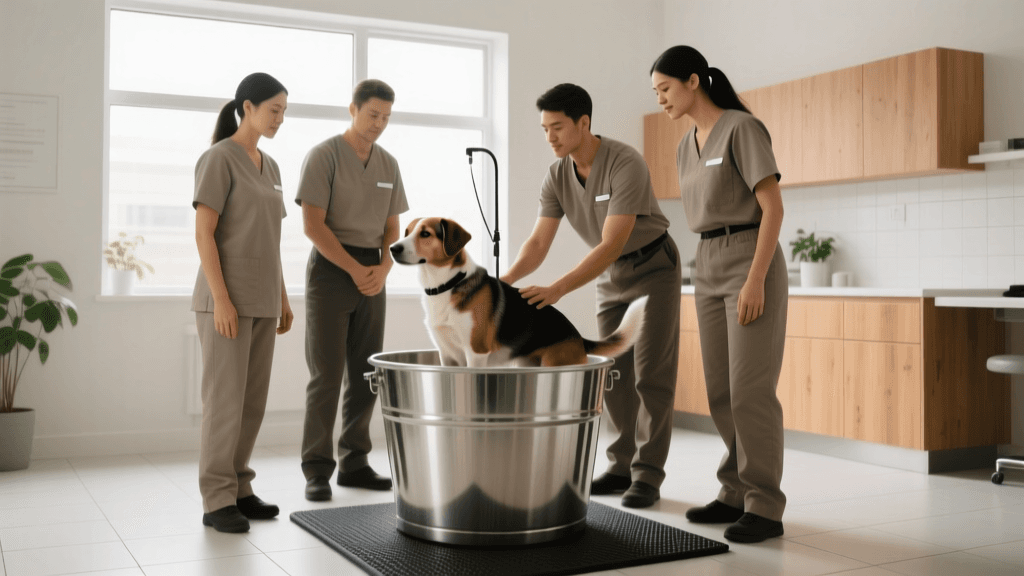
Dog Bucket Training: Your 2026 Cooperative Care Guide
Discover how bucket training transforms dog grooming and vet care into a bonding experience. Learn 2026 cooperative care techniques for stress-free husbandry.
The Evolution of Canine Husbandry in 2026
The landscape of canine healthcare and grooming has undergone a massive paradigm shift. As of 2026, the veterinary and behavioral communities overwhelmingly reject forceful restraint in favor of consent-based handling. At the forefront of this movement is cooperative care, a methodology that empowers dogs to actively participate in their own medical and grooming routines. Rather than viewing nail trims, ear cleanings, or veterinary exams as a battleground, modern dog owners are turning these necessary health procedures into profound bonding opportunities.
One of the most effective and widely adopted techniques in this space is bucket training. Originally popularized by elite animal trainers and zookeepers, bucket training has now become a staple in households worldwide. By teaching a dog to rest their chin or paws on a designated target (the bucket) in exchange for continuous rewards, owners can perform complex husbandry tasks while the dog remains relaxed, still, and happy. This guide will walk you through the science, equipment, and step-by-step process of implementing bucket training to elevate your dog's health and deepen your mutual bond.
What Exactly is Bucket Training?
Bucket training is a form of target training where a dog learns to place a specific body part—usually the chin or the front paws—onto a raised, stable object (like a bucket or a specialized grooming stand) and hold that position. While the dog maintains contact with the target, they receive a continuous stream of high-value rewards, typically delivered via a lick mat or a specialized treat pouch.
The magic of bucket training lies in its built-in "opt-out" mechanism. If the dog becomes uncomfortable, anxious, or simply tired, they can lift their head or step away from the bucket. This immediate cessation of the procedure and the reward stream communicates to the dog that they have agency and control over their own body. According to the Fear Free initiative, giving animals a sense of control drastically reduces Fear, Anxiety, and Stress (FAS), leading to better health outcomes and a stronger human-animal bond.
The Neurobiology of Bonding and Cooperative Care
Why does cooperative care build such a strong relationship between you and your dog? The answer lies in neurobiology. When a dog is forcibly restrained for a nail trim, their brain releases cortisol and adrenaline, triggering a fight-or-flight response. Over time, the dog begins to associate you, the grooming tools, and the handling environment with terror.
Conversely, when a dog voluntarily participates in bucket training and receives continuous positive reinforcement, their brain releases dopamine and oxytocin. Oxytocin, often called the "bonding hormone," is released in both the dog and the human during positive, cooperative interactions. By 2026, veterinary behaviorists recognize that reducing chronic stress through cooperative care doesn't just make grooming easier; it actively supports the dog's immune system, improves cardiovascular health, and fosters a deep, enduring trust. You are no longer the enforcer of unpleasant tasks; you become the provider of rewards and the respectful guardian of their bodily autonomy.
Essential 2026 Equipment for Bucket Training
Setting up a successful bucket training station requires a few specific tools. While you can start with a household item, investing in purpose-built equipment will yield better stability and hygiene. Below is a comparison of the most popular bucket training setups available in 2026.
| Equipment Type | Best For | Est. 2026 Cost | Pros & Cons |
|---|---|---|---|
| Adjustable Aluminum Grooming Bucket | Medium to Large Dogs | $55 - $85 | Pros: Height adjustable, non-slip base, easy to sanitize. Cons: Bulky to store, higher upfront cost. |
| Heavy-Duty Rubber Feed Tub | Small to Medium Dogs | $15 - $25 | Pros: Inexpensive, lightweight, unbreakable. Cons: Fixed height, less stable for leaning dogs. |
| Silicone Lick Mat Insert (Suction) | All Dogs (Treat Delivery) | $12 - $20 | Pros: Keeps dog focused forward, slows treat consumption. Cons: Requires frequent cleaning, suction can fail on textured buckets. |
| Magnetic Silicone Treat Pouch | All Dogs (Active Feeding) | $30 - $45 | Pros: Attaches to any metal bucket, allows rapid treat delivery. Cons: Only works on metal surfaces. |
For most pet owners starting out in 2026, a heavy-duty rubber feed tub paired with a suction-cup silicone lick mat is the most accessible and cost-effective entry point. As noted in the ASPCA's dog care guidelines, ensuring your grooming environment is safe, stable, and equipped with non-toxic materials is foundational to preventive health care.
Step-by-Step Bucket Training Protocol
Patience is the cornerstone of cooperative care. Do not rush these steps; spend at least a week on each phase before moving to the next. Keep training sessions short—no more than 3 to 5 minutes at a time.
Step 1: Targeting the Chin
Place the bucket on the floor or a stable surface at your dog's chest height. Smear a high-value, dog-safe paste (like plain pumpkin puree or peanut butter without xylitol) onto a lick mat attached to the front of the bucket. Encourage your dog to investigate. The moment their chin or nose touches the mat, use a marker word like "Yes!" and let them eat. Repeat this until the dog eagerly rests their chin on the mat to access the food.
Step 2: Building Duration and Stillness
Once your dog is reliably targeting the mat, begin to delay your marker word. Wait one second before saying "Yes!" and allowing them to eat. Gradually increase this duration to three seconds, then five, then ten. The goal is for the dog to learn that keeping their chin still on the bucket is what "turns on" the flow of rewards. If they lift their head, the licking stops. When they put their chin back down, the licking resumes.
Step 3: Introducing the Opt-Out (Consent)
This is the most critical step for bonding. Allow your dog to lift their head and step away from the bucket. When they do, do not scold them or force them back. Simply remove the treat source or stop the interaction for a moment. Then, gently guide them back or wait for them to offer the behavior again. This teaches the dog that they are never trapped. Knowing they can leave actually makes them far more likely to stay.
Step 4: Adding the Husbandry Stimulus
With your dog happily resting their chin on the bucket, introduce a mild handling stimulus. Gently touch their shoulder while they eat. If they stay on the bucket, mark and reward heavily. Next session, touch their paw. Then, introduce a soft brush to their back. Eventually, you will progress to handling their toes, introducing the sound of nail clippers, and eventually performing actual nail trims or ear cleanings while they remain voluntarily stationed on the bucket.
Reading Canine Consent and Body Language
Cooperative care requires you to become fluent in canine body language. While on the bucket, your dog is communicating with you constantly. A relaxed posture, soft eyes, and a gently wagging tail indicate that your dog is comfortable and consenting to the procedure.
However, if you notice "whale eye" (showing the whites of their eyes), lip licking, yawning, stiffening of the spine, or a sudden freeze, these are early indicators of stress. If you see these signs, you have pushed too far, too fast. Immediately stop the procedure, allow the dog to step away from the bucket, and end the session on a positive note. Respecting these subtle signals is how you build unbreakable trust. As highlighted by behaviorists featured in the AKC's training resources, honoring a dog's communication prevents the escalation of fear into defensive aggression.
Troubleshooting Common Roadblocks
- The dog won't stay still: Your rate of reinforcement is likely too low. Use a softer, more spreadable treat on the lick mat so it takes longer to consume, or switch to a magnetic pouch where you can feed pea-sized treats every 1-2 seconds.
- The dog gets frustrated and paws at the bucket: This usually happens if the criteria for the reward are unclear. Lower your expectations. Go back to Step 1 and reward simply for touching the bucket, ignoring duration for a few sessions.
- The dog is terrified of the nail clper: Desensitize the tool separately from the bucket. Leave the clippers on the floor near their food bowl. Once they are neutral to the sight of the clippers, practice touching the clippers to their nails without actually cutting, rewarding heavily on the bucket.
Conclusion: A Lifetime of Trust
Bucket training is more than just a clever grooming hack; it is a profound commitment to your dog's mental and emotional wellbeing. By embracing the 2026 standards of cooperative care, you are actively reducing your dog's lifetime stress burden, preventing veterinary and grooming trauma, and forging a relationship built on mutual respect and consent. The time you invest in teaching your dog to rest their chin on a bucket will pay dividends every time you visit the vet, every time you trim their nails, and every time your dog looks at you, knowing their voice is heard and their boundaries are respected.
aaron-whyte
All our authors care for dogs every day — read more of their work on the authors page.