Omega-3 for Dogs in 2026: Algal vs Fish Oil Dosing Guide
Discover the 2026 veterinary guidelines for Omega-3 EPA and DHA dosing in senior dogs, comparing algal oil and wild fish oil for joint and brain health.
The Evolution of Canine Omega-3 Supplementation in 2026
As we navigate the landscape of canine nutrition in 2026, the conversation surrounding Omega-3 fatty acids has evolved significantly. Pet parents and veterinary nutritionists are no longer simply asking if dogs need Omega-3s; the focus has shifted to sourcing, bioavailability, and precise therapeutic dosing. For senior dogs facing osteoarthritis, cognitive decline, and chronic inflammation, the right Omega-3 profile can dramatically alter their quality of life. However, the 2026 supplement market presents a new dilemma: should you stick to traditional wild fish oil, or transition to the increasingly popular, sustainably harvested algal oil? Understanding the nuances of these sources and their specific EPA and DHA concentrations is critical for optimizing your senior dog's health.
EPA vs. DHA: Understanding the Canine Mechanisms
Omega-3 fatty acids are not a monolith. The two most critical long-chain polyunsaturated fatty acids for canine health are Eicosapentaenoic Acid (EPA) and Docosahexaenoic Acid (DHA). Dogs lack the enzymatic efficiency to convert Alpha-Linolenic Acid (ALA)—found in plant sources like flaxseed and chia—into usable EPA and DHA. According to VCA Hospitals, direct supplementation of EPA and DHA is mandatory for therapeutic benefits.
- EPA (Eicosapentaenoic Acid): Primarily responsible for modulating the inflammatory response. It is the cornerstone of managing canine osteoarthritis, reducing joint swelling, and improving mobility in aging dogs.
- DHA (Docosahexaenoic Acid): Crucial for neurological function, retinal health, and cellular membrane integrity. In senior dogs, DHA is heavily utilized to support cognitive function and slow the progression of Canine Cognitive Dysfunction Syndrome (CDS).
While plant-based oils are heavily marketed, they remain fundamentally inadequate for senior dogs requiring targeted anti-inflammatory and neuroprotective support.
Algal Oil vs. Wild Fish Oil: A 2026 Market Comparison
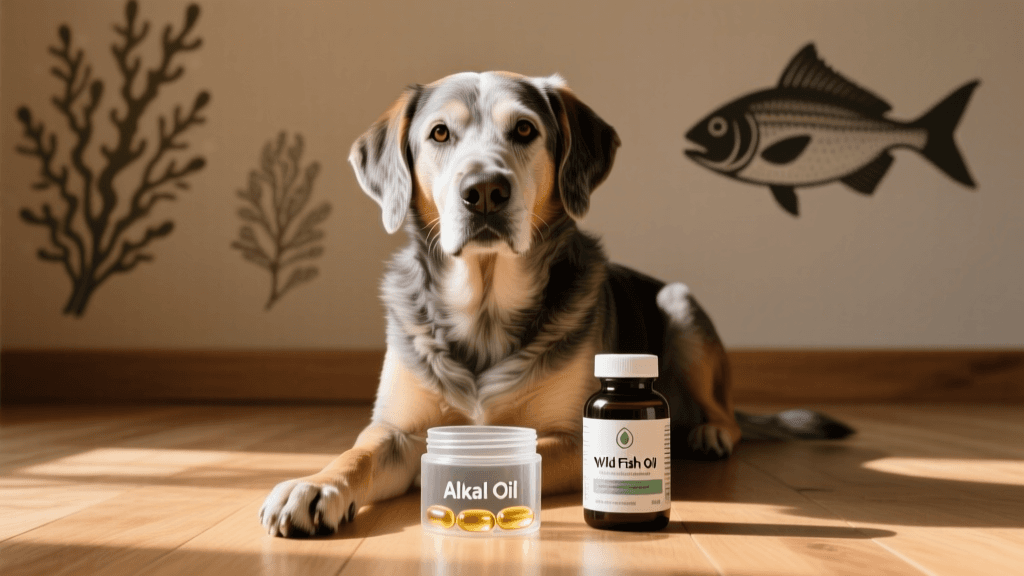
Historically, wild-caught salmon or sardine oil has been the gold standard for canine Omega-3 supplementation. However, as of 2026, marine algal oil has captured a massive share of the premium veterinary market. Fish do not naturally produce Omega-3s; they accumulate them by consuming marine algae. Algal oil bypasses the fish entirely, harvesting the Omega-3s directly from the primary producer.
This direct sourcing offers distinct advantages in the modern era. With rising concerns over oceanic microplastics and heavy metal bioaccumulation in marine food webs, algal oil provides a controlled, sterile, and highly concentrated alternative. Furthermore, advanced fermentation techniques utilized in 2026 allow manufacturers to tailor the EPA-to-DHA ratios in algal oil specifically for canine cognitive and joint therapies, something that is impossible to control in wild-caught fish oil.
Comparison Table: Algal Oil vs. Wild Fish Oil for Senior Dogs
| Feature | Wild Salmon / Fish Oil | Marine Algal Oil (2026 Formulations) |
|---|---|---|
| Primary Source | Marine fish (salmon, sardines, anchovies) | Fermented marine microalgae |
| EPA/DHA Profile | Naturally higher in EPA | Customizable; often higher in DHA |
| Heavy Metal Risk | Moderate (requires rigorous distillation) | Virtually Zero (grown in controlled vats) |
| Microplastic Risk | Low to Moderate (depends on sourcing) | Zero |
| Sustainability | Variable (overfishing concerns) | Highly Sustainable (renewable fermentation) |
| Average Cost per 1000mg EPA/DHA | $0.12 - $0.18 | $0.22 - $0.35 |
2026 Veterinary Dosing Guidelines for Senior Dogs
Determining the correct dose of Omega-3s is where many pet parents fall short. A standard maintenance dose found on the back of a generic supplement bottle is rarely sufficient for a senior dog battling active inflammation or cognitive decline. According to the American Kennel Club, therapeutic dosing requires significantly higher concentrations of combined EPA and DHA to achieve clinical results.
In 2026, veterinary nutritionists calculate dosages based on Metabolic Body Weight (MBW), rather than linear body weight, to account for the metabolic differences between small and large breeds. The formula for MBW is the dog's weight in kilograms raised to the power of 0.75 (kg^0.75).
Targeted Dosing for Osteoarthritis and Joint Inflammation
For senior dogs suffering from osteoarthritis, the therapeutic goal is to saturate the cellular membranes with EPA to outcompete pro-inflammatory Omega-6 fatty acids. Foundational peer-reviewed research available via the National Institutes of Health establishes that high-dose EPA protocols significantly reduce lameness and the need for NSAIDs.
- Therapeutic Target: 50 to 75 mg of combined EPA+DHA per kilogram of metabolic body weight.
- Example Calculation: A 30 kg (66 lb) Labrador has a metabolic body weight of approximately 12.8 kg. At 75 mg/kg MBW, this dog requires roughly 960 mg of combined EPA and DHA daily specifically for joint management.
Targeted Dosing for Cognitive Decline (CDS)
For aging dogs showing signs of canine cognitive dysfunction—such as disorientation, altered sleep-wake cycles, or decreased interaction—the focus shifts heavily toward DHA, which readily crosses the blood-brain barrier.
- Therapeutic Target: 50 to 100 mg of combined EPA+DHA per kilogram of metabolic body weight, with a formulation that features a higher DHA-to-EPA ratio.
- Algal Oil Advantage: Because 2026 algal formulations can be naturally skewed toward higher DHA concentrations, they are increasingly the preferred choice for veterinary neurologists managing senior cognitive decline.
How to Select a High-Quality Supplement in 2026
The supplement aisle is saturated, but not all oils are biologically active or safe. When evaluating an Omega-3 product for your senior dog, apply these strict criteria:
- Triglyceride Form: Ensure the label specifies that the Omega-3s are in the natural triglyceride (TG) form. Ethyl ester (EE) forms are cheaper to manufacture but have significantly lower bioavailability and absorption rates in the canine digestive tract.
- Third-Party Testing: Look for certifications from independent organizations that test for oxidation and purity. A high-quality oil will readily provide a Certificate of Analysis (CoA) showing peroxide values (ideally under 5 mEq/kg) and anisidine values, ensuring the oil has not gone rancid.
- Packaging: Omega-3s are highly susceptible to oxidative damage from light and oxygen. Only purchase oils packaged in dark, opaque glass bottles or UV-blocking aluminum. Pump dispensers that utilize nitrogen-flushing technology to prevent air from entering the bottle are the gold standard in 2026.
Safe Introduction and Storage Practices
Introducing a concentrated fat source to a senior dog's diet must be done gradually to avoid gastrointestinal upset, pancreatitis flare-ups, or steatorrhea (fatty stools).
- Titration Schedule: Start with 25% of the target therapeutic dose for the first five days. Increase to 50% for the next five days, and finally reach the full 100% therapeutic dose by day fifteen. This allows the dog's gallbladder and pancreatic enzymes to adapt to the increased lipid load.
- Storage: Despite marketing claims, liquid fish and algal oils should always be refrigerated after opening. The cold temperature drastically slows the oxidation process. If the oil develops a sharp, acrid, or overly 'rotten fish' odor, the lipids have oxidized and the bottle must be discarded immediately, as rancid oil promotes cellular inflammation rather than reducing it.
- Meal Integration: Always mix the oil thoroughly into a meal containing dietary fats to stimulate optimal bile release and absorption. Pumping it directly into the mouth is not recommended due to the risk of aspiration and the loss of the oil to the sides of the bowl.
Conclusion
The science of canine Omega-3 supplementation has matured immensely. As of 2026, pet owners have access to purer, more sustainable, and highly targeted options like marine algal oil, alongside rigorously tested wild fish oils. By moving away from generic maintenance doses and utilizing metabolic body weight calculations, you can provide your senior dog with precise, therapeutic levels of EPA and DHA. Whether your goal is to soothe aching arthritic joints or support aging cognitive pathways, selecting a high-quality, properly stored triglyceride-form oil is one of the most impactful investments you can make in your dog's golden years.
jonas-cole
All our authors care for dogs every day — read more of their work on the authors page.