Breed-Specific Dog Training: Selecting the Right Gear and Methods
Discover how to select the best training gear and methods based on your dog's breed group. Compare tools for herding, sporting, and terrier breeds.
Why Breed Selection Dictates Training Success
When embarking on the journey of canine obedience and behavioral conditioning, many owners make the critical mistake of applying a one-size-fits-all approach. However, a dog's genetic lineage profoundly impacts its learning style, drive, and environmental sensitivities. Selecting the right training methodology—and the appropriate gear to support it—requires a deep understanding of breed-specific traits. A Border Collie’s intense visual stimulation drive requires vastly different management than a Bloodhound’s olfactory obsession or a Pug’s companion-oriented focus. By aligning your training strategy with your dog’s ancestral purpose, you can dramatically reduce frustration, accelerate learning, and build a more harmonious bond.
According to the American Kennel Club (AKC) Training Hub, recognizing breed-specific instincts is the foundation of effective behavioral conditioning. Whether you are teaching basic obedience, advanced tricks, or complex socialization techniques, tailoring your approach to your dog's genetic blueprint is essential for long-term success.
Decoding Breed Groups: Drives and Motivations
Sporting Breeds (Retrievers, Pointers, Spaniels)
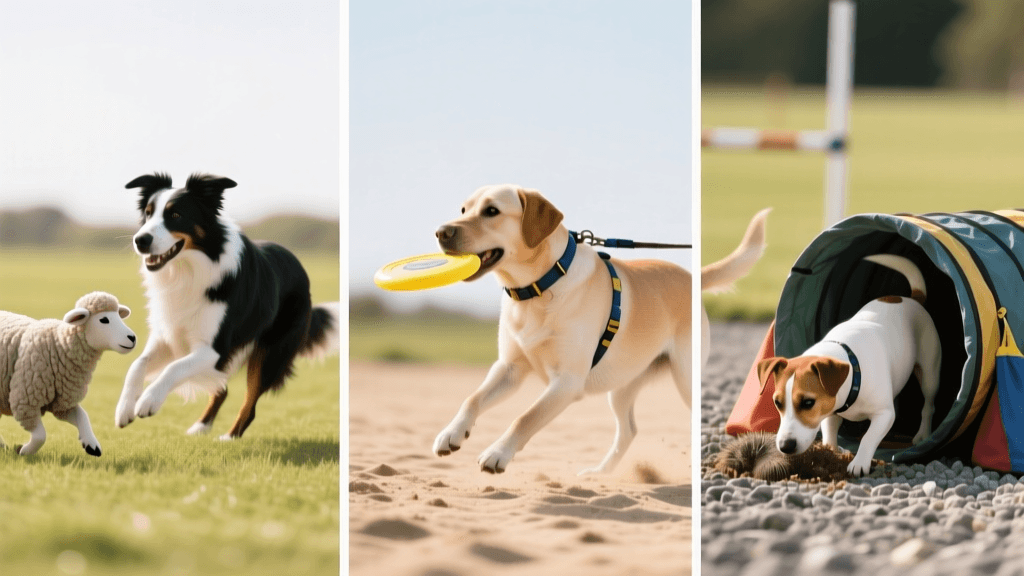
Sporting breeds were developed to work closely with human hunters, meaning they typically possess high biddability, stamina, and a strong desire to carry objects. Their primary motivations are often a mix of food rewards and toy-based retrieval. When training a Golden Retriever or a Labrador, incorporating a 'retrieve' as a reward for a successful 'stay' or 'recall' is often more powerful than a simple treat. However, their high energy levels mean they require structured physical outlets to prevent hyperactivity from derailing focus during training sessions.
Herding Breeds (Collies, Shepherds, Cattle Dogs)
Herding dogs are characterized by their intense 'eye-stalk-chase' sequence and high environmental sensitivity. They are motion-reactive and incredibly intelligent, which means they learn bad habits just as quickly as good ones. Training a herding breed requires a focus on impulse control and mental fatigue rather than just physical exhaustion. If you do not give a herding dog a 'job,' they will invent one—often resulting in undesirable behaviors like nipping at heels or chasing cars.
Terrier Breeds (Jack Russells, Airedales, Bull Terriers)
Terriers were bred to work independently, hunting and dispatching vermin underground. Consequently, they are famously stubborn, highly independent, and possess a massive prey drive. Traditional repetitive obedience drills often lead to terrier boredom and disengagement. Instead, terriers thrive on gamified training, scent work, and activities that allow them to express their natural digging and hunting instincts in a controlled environment.
Essential Training Gear by Breed Group
Selecting the correct training tools is just as important as the methodology. Here is a breakdown of actionable gear recommendations, complete with measurements and estimated costs, to optimize your training sessions.
1. Gear for Sporting Breeds
- Primary Tool: Rabbitgoo No-Pull Dog Harness (Estimated Cost: $22). This harness features 4 adjustment points and a front-clip D-ring. The front-clip is crucial for sporting breeds that tend to pull toward environmental distractions like birds or squirrels.
- Secondary Tool: 30-Foot Biothane Long Line (Estimated Cost: $35, 5/8-inch width). Biothane is waterproof and dirt-proof, making it perfect for field training and practicing reliable recalls in open spaces without the drag and weight of cotton lines.
2. Gear for Herding Breeds
- Primary Tool: Squishy Face Studio Flirt Pole (Estimated Cost: $32, 36-inch pole). This is indispensable for teaching 'drop it,' 'leave it,' and impulse control. Safety Note: Keep the lure on the ground to prevent orthopedic injuries in puppies under 15 months of age.
- Secondary Tool: Dog Gone Smart Treat Pouch (Estimated Cost: $20). Herding dogs require high-repetition marking and rewarding. A wide-mouth pouch allows for rapid treat delivery to maintain their intense focus.
3. Gear for Terrier Breeds
- Primary Tool: Sniffiz SmellyMatty Snuffle Mat (Estimated Cost: $40). Terriers need to use their noses to burn mental energy. Hiding freeze-dried beef liver in the mat's deep fleece folds simulates foraging and satisfies their hunting drive.
- Secondary Tool: Jolly Ball (Estimated Cost: $25, 10-inch diameter). Made from durable, puncture-resistant polyethylene, this allows terriers to bite, push, and chase without destroying the toy, channeling their prey drive safely.
Breed Training Comparison Chart
| Breed Group | Primary Motivation | Ideal Training Method | Recommended Gear | Est. Gear Cost |
|---|---|---|---|---|
| Sporting | Retrieval & Praise | Marker/Reward with Toy Integration | Front-Clip Harness, Biothane Line | $57.00 |
| Herding | Mental Stimulation & Movement | Impulse Control & Shaping | Flirt Pole, High-Capacity Treat Pouch | $52.00 |
| Terrier | Prey Drive & Scent | Gamification & Scent Work | Snuffle Mat, Puncture-Proof Ball | $65.00 |
| Toy | Companionship & Food | Short-Interval Luring | Clicker, Small-Volume Treat Pouch | $18.00 |
Structuring Training Sessions: Timings and Measurements
A common pitfall in behavioral conditioning is misjudging a dog's attention span based on human endurance rather than canine cognitive limits. Session length and environmental measurements must be scaled to the breed.
Session Timelines
- Toy Breeds (e.g., Maltese, Chihuahuas): 3 to 5 minutes per session, 3 times a day. Toy breeds can experience rapid drops in blood sugar and attention. Keep sessions brief, highly rewarding, and strictly indoors during the initial learning phases.
- Terrier Breeds (e.g., Rat Terrier, Cairn): 5 to 10 minutes per session. Terriers will actively choose to walk away if they feel the session is repetitive. End the session before the dog loses interest, leaving them wanting more.
- Sporting & Herding Breeds (e.g., Vizsla, Australian Shepherd): 15 to 20 minutes of intense cognitive work, followed by a 5-minute physical decompression break. These breeds can handle longer durations but require a clear 'release' cue (like 'All Done!') to signal the end of the job.
Distance and Measurement Progressions
When teaching a reliable recall or 'stay,' distance must be increased methodically. For a high-drive Sporting breed, start your recall training on a 30-foot Biothane line at a distance of just 10 feet. Reward heavily with a tennis ball toss. Increase the distance by exactly 5 feet per week, only moving further when the dog achieves a 90% success rate at the current distance. Attempting a 30-foot recall on day one will result in the dog learning they can ignore the cue when far away.
Expert Guidelines and Behavioral Conditioning
Regardless of the breed you have selected, modern veterinary and behavioral science universally advocates for reward-based methods over aversive techniques. The ASPCA Dog Training Guidelines emphasize that positive reinforcement is not only more humane but significantly more effective for long-term behavioral retention across all breed groups. Using fear or pain (such as shock collars) is particularly detrimental to sensitive Herding breeds and can trigger aggressive defensive responses in Terriers.
Furthermore, the American Veterinary Society of Animal Behavior (AVSAB) strongly recommends early, positive socialization protocols tailored to the breed's developmental fear periods. For example, Livestock Guardian breeds require careful, positive exposure to novel stimuli before 12 weeks of age to prevent lifelong territorial aggression, whereas Golden Retrievers generally require less intensive socialization to remain friendly with strangers.
Final Thoughts on Breed-Specific Selection
Ultimately, successful dog training is an exercise in empathy and preparation. By researching your dog's breed group, investing in the correct specialized gear, and respecting their unique cognitive timelines, you set the stage for a lifetime of cooperation. Whether you are managing the intense prey drive of a Jack Russell with a snuffle mat or teaching a Border Collie impulse control via a flirt pole, aligning your methods with your dog's genetics is the ultimate key to unlocking their full potential.
anouk-beaumont
All our authors care for dogs every day — read more of their work on the authors page.