Best No Pull Dog Harness 2026: Blue-9 Balance Review
Discover how the Blue-9 Balance Harness stops dog pulling in 2026. Read our expert review, fitting guide, and loose-leash training tips for strong pullers.
Transforming Your Daily Walks in 2026
For many dog owners, the daily walk is less of a relaxing stroll and more of an extreme sport. If you share your life with a strong, enthusiastic puller, you already know the shoulder strain, the frustration, and the guilt of watching your dog cough and gag at the end of the leash. As we navigate the busy walking seasons of 2026, the pet industry has seen a massive shift toward ergonomic, force-free walking equipment. Among the myriad of options available, the Blue-9 Balance Harness has cemented its reputation as the gold standard for professional dog trainers and dedicated pet owners alike. In this comprehensive review, we will explore why this specific no-pull harness outperforms the competition, how to fit it correctly, and the exact training protocol you need to achieve loose-leash walking.
The Biomechanics of Pulling: Why Collars Fail
Before diving into the solution, it is vital to understand why traditional neck collars are not just ineffective for pullers, but actively dangerous. A dog's neck is anatomically similar to a human's, housing the trachea, esophagus, thyroid gland, and cervical spine. When a 60-pound dog hits the end of a leash at full speed, the concentrated force on the neck can lead to severe medical issues.
According to veterinary experts, repetitive pressure on the neck is a leading environmental factor in exacerbating tracheal collapse in dogs, a condition where the cartilage rings of the windpipe weaken and flatten, causing chronic coughing and respiratory distress. Furthermore, neck collars do nothing to redirect a dog's forward momentum. In fact, they often trigger the "opposition reflex," an instinctual response where a dog pushes harder against pressure. To protect your dog's health and regain control, transitioning to a well-designed chest harness is non-negotiable in 2026.
Why the Blue-9 Balance Harness Leads the Market
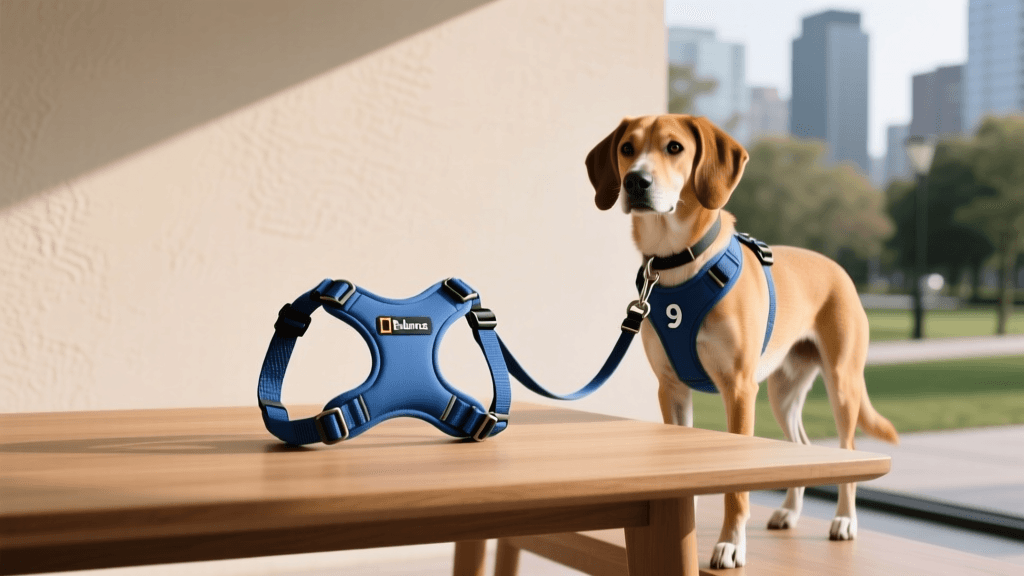
The Blue-9 Balance Harness was designed with input from veterinary behaviorists and biomechanics experts. Unlike cheaper, mass-produced harnesses that restrict a dog's natural gait, the Blue-9 prioritizes anatomical freedom alongside control.
Unrestricted Shoulder Movement
Many popular no-pull harnesses on the market feature a horizontal strap that cuts directly across the dog's chest and shoulders. While these might stop pulling through sheer physical restriction, they alter the dog's natural stride, potentially leading to long-term joint and soft-tissue issues. The Blue-9 utilizes a true Y-strap design on the chest. This configuration bypasses the shoulder joints entirely, allowing for full extension and a natural gait, which is critical for active dogs, agility competitors, and hiking companions.
Six-Point Adjustment System
Dogs come in an infinite variety of shapes, from deep-chested Greyhounds to barrel-chested Bulldogs. The Blue-9 features six independent points of adjustment—two on the neck, two on the chest, and two on the girth. This allows for a highly customized, secure fit that prevents the harness from shifting side-to-side when the dog moves, eliminating chafing and escape risks.
Over-the-Head vs. Buckle Neck
One of the most praised features of the Blue-9 is the buckled neck strap. Many harnesses require you to pull the gear over your dog's head, which can be terrifying for reactive or handling-sensitive dogs. The Blue-9 simply buckles around the neck like a collar, making the gearing-up process calm and stress-free.
2026 No-Pull Harness Comparison Chart
How does the Blue-9 stack up against other popular harnesses in 2026? Below is a comparative analysis of the top three contenders in the no-pull category.
| Feature | Blue-9 Balance Harness | Rabbitgoo No-Pull | Kurgo Tru-Fit Smart |
|---|---|---|---|
| Adjustment Points | 6 (Independent) | 4 | 5 |
| Chest Strap Design | Y-Strap (No restriction) | T-Strap (Mild restriction) | V-Strap (Moderate restriction) |
| Neck Entry | Buckle (Stress-free) | Over-the-head | Over-the-head |
| Leash Attachment | Front & Back D-Rings | Front & Back D-Rings | Front & Back D-Rings |
| Approx. 2026 Price | $48.00 | $25.00 | $35.00 |
While the Rabbitgoo and Kurgo offer budget-friendly alternatives, the Blue-9 remains the undisputed champion for long-term comfort, biomechanical health, and precise fitting.
Step-by-Step Fitting Guide for the Blue-9
A no-pull harness is only effective if it fits correctly. A poorly fitted harness can cause chafing, restrict breathing, or allow the dog to slip out. The Humane Society of the United States emphasizes that proper equipment fitting is a cornerstone of safe dog walking. Follow these steps for the Blue-9:
- Neck Strap: Buckle the neck strap so it sits comfortably around the base of the neck, similar to where a flat collar would rest. You should be able to slide two fingers flat between the strap and your dog's skin.
- Chest Strap: Adjust the chest strap so the Y-junction sits high on the sternum, well above the shoulder joints. It should not rest on the soft tissue of the throat.
- Girth Straps: Wrap the straps around the ribcage, just behind the front elbows. This is where the pulling force is distributed. Ensure the straps are snug but not tight. Again, the two-finger rule applies.
- The Shake Test: Encourage your dog to shake. The harness should remain centered on the spine and should not slide side-to-side or ride up toward the neck.
The 14-Day Front-Clip Training Protocol
It is a common misconception that a no-pull harness will magically train your dog to walk politely. As the American Kennel Club notes, equipment is merely a management tool; true loose-leash walking requires consistent behavioral training. The front D-ring on the Blue-9 is your greatest asset. When a dog pulls forward, the front clip gently redirects their center of gravity, turning their chest back toward you and neutralizing their forward momentum.
Here is a structured, positive-reinforcement protocol to implement in 2026:
Phase 1: Acclimation and Engagement (Days 1-3)
Start in a low-distraction environment, such as your living room or a fenced backyard. Clip your leash to the front chest ring. Do not walk anywhere yet. Simply stand with your dog. The moment they look at you or offer slack in the leash, mark the behavior with a "Yes!" or a clicker, and deliver a high-value treat (like boiled chicken or freeze-dried liver) right at the seam of your pants. This teaches the dog that staying near your leg is highly rewarding.
Phase 2: Redirection and Movement (Days 4-7)
Begin walking in your low-distraction area. Take three steps, then stop. If your dog stays near you and keeps the leash loose, mark and reward. If your dog surges ahead and hits the end of the leash, the front clip will naturally turn them toward you. Do not yank the leash. Simply stand still like a tree. The moment the leash goes slack and the dog reorients toward you, mark, reward, and resume walking. You are teaching them that pulling = the walk stops, while slack leash = the walk continues.
Phase 3: Proofing in High-Distraction Areas (Days 8-14)
Move your training to the sidewalk or a local park. Environmental distractions (squirrels, other dogs, smells) will test your dog's training. Keep your treat pouch fully loaded. If your dog locks onto a distraction and begins to pull, use the front clip to gently guide them in a circle back toward you. Ask for a "sit" or "watch me" command to break their fixation, reward heavily, and proceed. Consistency in this phase is what solidifies the habit for life.
Common Harness Mistakes to Avoid
Even with the best gear, owner errors can undermine progress. Avoid these common pitfalls:
- Using the Front Clip for Tethering: Never tie your dog out at a cafe or park using the front D-ring. If a dog spooks and lunges, the leverage on the front clip can cause the harness to slip or the hardware to fail. Always use the back D-ring for tethering.
- Using It as a Car Harness: The Blue-9 Balance Harness is an exceptional walking tool, but it is not crash-tested for vehicular travel. For car rides, you must use a certified crash-tested harness, such as the Sleepypod Clickit or the Kurgo Tru-Fit, attached to a dedicated seatbelt tether.
- Leaving It On 24/7: Harnesses are for active outings only. Leaving a harness on an unsupervised dog can lead to severe matting, skin infections, or the risk of the straps catching on furniture or fencing, which poses a strangulation hazard.
Maintenance and Longevity
To ensure your Blue-9 harness lasts through years of adventures, proper maintenance is required. Dog gear accumulates dirt, saliva, and environmental allergens. Hand-wash the harness in warm water with a mild, pet-safe detergent every few weeks. Avoid the washing machine, as the agitation can degrade the reflective stitching and weaken the nylon webbing over time. Hang it to air dry away from direct sunlight to preserve the integrity of the plastic buckles and metal D-rings. Inspect the stitching at the stress points monthly, and retire the harness if you notice significant fraying.
Final Verdict on Upgrading Your Daily Walks
Living with a dog should be a joy, and daily walks are the cornerstone of your shared bond and their physical health. In 2026, there is simply no reason to endure the pain and frustration of a pulling dog. The Blue-9 Balance Harness offers an unparalleled combination of biomechanical safety, escape-proof security, and training utility. By pairing this exceptional front-clip harness with a dedicated, positive-reinforcement training protocol, you will transform your daily walks from a daily battle into a peaceful, enjoyable routine for both you and your canine companion.
robin-maitland
All our authors care for dogs every day — read more of their work on the authors page.