Best Teething Toys for Bite Inhibition Training 2026
Discover the best teething toys for puppy bite inhibition training in 2026. Learn redirection techniques and top durable picks to save your furniture.
Mastering Puppy Bite Inhibition with the Right Teething Toys in 2026
Bringing a new puppy home is an exhilarating experience, but it often comes with a painful reality: needle-sharp teeth chewing on your fingers, furniture, and favorite shoes. As of 2026, modern canine behavioral science has shifted entirely away from aversive punishment methods for puppy biting. Instead, certified veterinary behaviorists and professional dog trainers universally advocate for positive redirection and structured bite inhibition training. At the core of this training methodology is the strategic use of teething toys.
Teething toys are not merely pacifiers to keep your puppy quiet; they are essential training tools. When used correctly, they help you teach your puppy what is acceptable to chew, how to soothe their own discomfort, and how to control the force of their jaw. In this comprehensive guide, we will explore the best teething toys for bite inhibition training in 2026, breaking down how to use each one to build a well-mannered, confident adult dog.
The Science of Puppy Teething and Behavioral Conditioning
Puppies go through a rapid developmental phase where their deciduous (baby) teeth erupt and eventually fall out to make way for adult teeth. This process typically begins around three weeks of age and concludes by six months. During this window, a puppy's gums are inflamed, sore, and highly sensitive. Chewing provides counter-pressure that relieves this pain. However, puppies also use their mouths to explore the world, much like human toddlers use their hands.
Bite inhibition is the process of teaching a puppy to control the force of their bite. According to the American Kennel Club (AKC), puppies initially learn bite inhibition from their littermates; if one puppy bites too hard, the other yelps and stops playing. When a puppy transitions to a human home, it is the owner's responsibility to continue this education. By pairing a high-value teething toy with positive reinforcement, you condition the puppy to associate human skin with a gentle, inhibited mouth, while directing their natural chewing drive toward appropriate objects.
Top 4 Teething Toys for Training in 2026
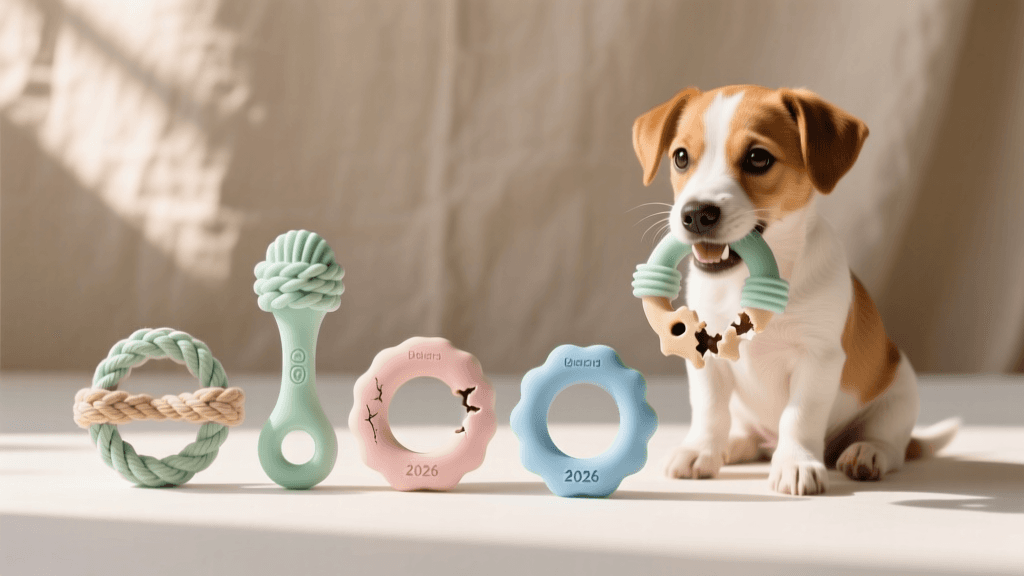
Not all chew toys are created equal, especially when it comes to active training. Flimsy plush toys can be destroyed and ingested, while overly hard materials like antlers or weight-bearing bones can fracture developing puppy teeth. The best training toys in 2026 combine durability, soothing textures, and interactive elements. Below is our comparison chart of the top training-focused teething toys available this year.
| Toy Name | Material | Best Training Use | Durability | Price Range (2026) |
|---|---|---|---|---|
| KONG Puppy Tire | Exclusive Puppy Rubber | Stuffable redirection & crate training | Moderate-High | $14 - $18 |
| Nylabone Puppy Chew Freezer | Thermoplastic Elastomer | Soothing high-arousal biting | High | $10 - $15 |
| Benebone Puppy Wishbone | Nylon & Real Bacon | Independent chewing & jaw relief | High | $12 - $16 |
| Petstages Cool Teething Stick | Cotton & Synthetic Mesh | Texture variety & gum massage | Low-Moderate | $8 - $12 |
1. KONG Puppy Tire: The Ultimate Stuffable Training Tool
The KONG Puppy Tire is a staple in 2026 puppy training kits. Made from a softer, puppy-specific rubber formula, it is gentle on developing teeth while being resilient enough to withstand aggressive chewing. Its primary training value lies in its hollow center. By stuffing the tire with a mixture of wet puppy food, plain pumpkin puree, and low-sodium chicken broth, then freezing it overnight, you create a long-lasting enrichment puzzle. This is the premier tool for teaching a puppy to settle on a mat or build positive associations with a crate.
2. Nylabone Puppy Chew Freezer Dog Toy
When a puppy is in the throes of active tooth eruption, their gums are incredibly sore. The Nylabone Puppy Chew Freezer features a textured thermoplastic elastomer ring that can be soaked in water and frozen. The cold temperature numbs inflamed gums, while the raised bristles help clean teeth. From a training perspective, this toy is best used as an 'interrupter.' When your puppy begins to mouth your hands, presenting this freezing cold toy provides immediate sensory relief, making it a highly rewarding alternative to human skin.
3. Benebone Puppy Wishbone
Ergonomics matter when a puppy is learning to hold and chew an object independently. The Benebone Puppy Wishbone is designed with a wishbone shape that allows puppies to easily grab it with their paws and anchor it to the ground. Infused with real bacon flavor, it is highly enticing. This toy is excellent for teaching the 'go to your bed' command, as it provides a high-value, long-lasting chew that keeps the puppy anchored to their designated resting spot.
4. Petstages Cool Teething Stick
The Petstages Cool Teething Stick utilizes a unique cotton-polyester mesh that retains water and freezes into a crunchy, soothing texture. As the puppy chews, the melting ice helps clean their teeth and massage their gums. Because it is softer and less durable than rubber or nylon, this toy should only be used during supervised training sessions to teach gentle chewing and to provide immediate relief during peak teething discomfort.
Step-by-Step Redirection Training Protocol
Owning the right toy is only half the battle; knowing how to deploy it is where the actual training occurs. The ASPCA emphasizes that consistency and timing are the most critical factors in stopping unwanted chewing and biting. Follow this step-by-step redirection protocol to teach your puppy appropriate bite inhibition.
Step 1: The Interrupt and Redirect
When your puppy's teeth make contact with your skin or clothing, immediately stop all movement. Do not yank your hand away, as this triggers a prey drive response and encourages harder biting. Instead, become a 'boring statue.' Once the puppy releases, calmly present one of your approved teething toys, such as the frozen Nylabone.
Step 2: The 'Trade-Up' Game
If your puppy has already grabbed an inappropriate item, like a shoe or a TV remote, never chase them. Chasing turns the interaction into a game. Instead, approach calmly with a high-value stuffed KONG Puppy Tire. Offer the toy right at their nose. When they drop the forbidden item to take the toy, praise them enthusiastically. This teaches the 'drop it' command organically while reinforcing that giving up inappropriate items results in a superior reward.
Step 3: Rewarding Appropriate Chewing
Puppies need to know when they are doing the right thing. If you see your puppy independently choosing to chew on their Benebone Wishbone or Petstages Teething Stick, quietly approach and offer gentle praise or a small training treat. This reinforces the behavior you want to see repeated, solidifying the toy as a primary source of comfort and reward.
Managing High-Arousal Biting and Overstimulation
Sometimes, a puppy will bite relentlessly, ignoring all teething toys and redirection attempts. According to VCA Animal Hospitals, this is rarely a sign of aggression or dominance; it is almost always a sign of overstimulation, overtiredness, or a lack of impulse control. Puppies require 18 to 20 hours of sleep per day, and a sleep-deprived puppy is a biting machine.
When redirection fails, implement a structured time-out. Calmly pick up the puppy or lead them by their harness into their crate or a quiet puppy-proofed playpen. Provide them with a frozen KONG Puppy Tire to help them decompress. The crate is not a punishment; it is a sleep-inducing environment. Within minutes of being given the soothing toy in a quiet space, an overtired puppy will usually stop biting and fall asleep. This teaches the puppy that when they feel overwhelmed and bitey, the result is a mandatory nap, not a wrestling match.
Common Training Mistakes to Avoid in 2026
As veterinary behaviorism continues to evolve, several outdated training myths have been thoroughly debunked. To ensure your puppy develops proper bite inhibition, avoid the following common pitfalls:
- Using Aversive Sprays: Bitter apple sprays are largely ineffective for active teething pain and can damage the trust between you and your puppy. They do not teach the puppy what to chew, only what not to chew.
- Muzzle Holding or Alpha Rolls: Physically dominating a puppy by holding their mouth shut or pinning them down induces fear and can lead to defensive aggression later in life. Positive redirection is vastly superior and safer.
- Providing 'Decoy' Household Items: Never give a puppy an old shoe or a child's plush toy to chew on. Puppies cannot distinguish between an old $20 sneaker and your brand-new $200 dress shoes. Keep the rules binary: only designated dog toys are for chewing.
- Inconsistent Enforcement: If you allow your puppy to mouth your hands during playtime on Tuesday, but scold them for it on Wednesday, they will become confused and frustrated, leading to an increase in biting behavior.
Conclusion
Navigating the puppy teething phase requires patience, consistency, and the right equipment. By viewing teething toys not just as distractions, but as active training tools, you can effectively teach bite inhibition, protect your belongings, and soothe your puppy's sore gums. Whether you are utilizing a frozen Nylabone for immediate relief or a stuffed KONG for crate conditioning, the strategic use of these top-rated 2026 toys will set the foundation for a polite, well-adjusted adult dog. Remember, every time your puppy chooses a toy over your hand, they are learning a lesson that will last a lifetime.
anouk-beaumont
All our authors care for dogs every day — read more of their work on the authors page.