Greyhound vs Pug vs Bichon: Best Apartment Dogs Compared
Discover whether a Greyhound, Pug, or Bichon Frise is the best apartment dog for you. Compare size, grooming costs, and energy levels in our guide.
The Challenge of Choosing an Apartment Dog
Finding the perfect canine companion when you live in an apartment or condo requires careful consideration of space, noise levels, and landlord restrictions. While many prospective owners assume that only small dogs can thrive in limited square footage, the reality is that a dog's energy level and temperament are far more important than their physical size. According to the American Kennel Club (AKC), some of the best apartment dogs are actually large breeds that possess a calm, low-energy disposition, whereas some small breeds are highly vocal and energetic, making them poor neighbors in shared-wall living spaces.
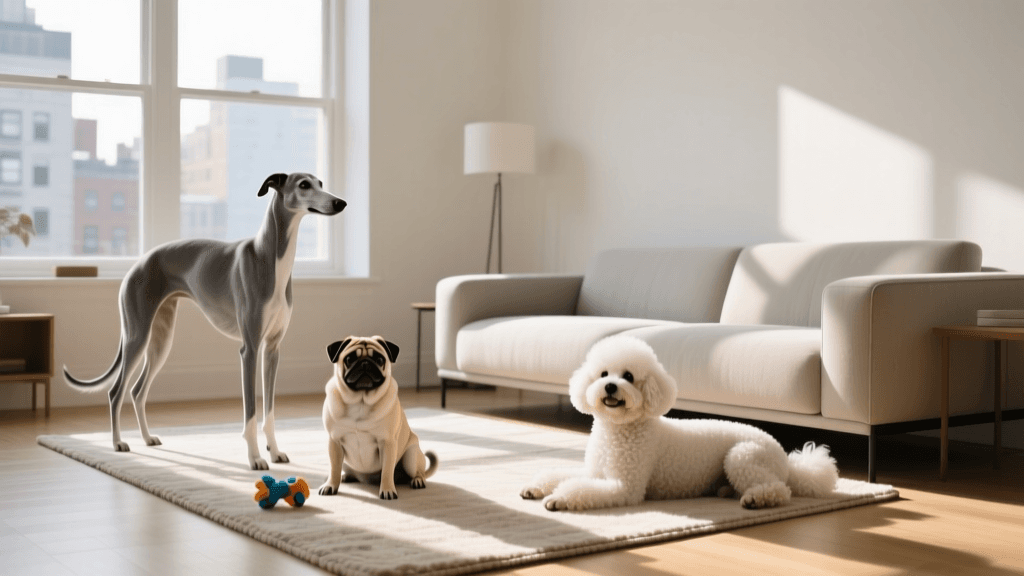
In this comprehensive breed comparison, we are putting three vastly different but highly popular apartment-friendly breeds head-to-head: the retired racing Greyhound, the beloved Pug, and the cheerful Bichon Frise. We will break down their spatial needs, grooming requirements, health considerations, and first-year costs to help you make an informed, financially sound decision for your specific living situation.
At a Glance: Breed Comparison Matrix
Before diving into the nuances of each breed, here is a quick-reference data table comparing the core metrics that impact apartment living.
| Feature | Greyhound (Retired Racer) | Pug | Bichon Frise |
|---|---|---|---|
| Average Weight | 60 - 70 lbs | 14 - 18 lbs | 12 - 18 lbs |
| Energy Level | Low (Sprint & Sleep) | Low to Moderate | Moderate |
| Barking Level | Very Low | Moderate to High | High |
| Grooming Needs | Minimal (Weekly brushing) | Moderate (Facial folds) | High (Professional clipping) |
| Ideal Crate Size | 42-inch or 48-inch | 24-inch | 24-inch |
| Shedding | Low to Moderate | High (Double coat) | Low (Hypoallergenic) |
Deep Dive: The Retired Racing Greyhound
The "45-MPH Couch Potato"
It is a common misconception that Greyhounds require vast acreage to run. In reality, retired racing Greyhounds are famously known as "45-mph couch potatoes." They are sprinters, not endurance runners. A brisk 20-to-30-minute walk twice a day is usually more than enough to keep them physically and mentally satisfied. The rest of the day, they will happily curl up on a dog bed and sleep for up to 18 hours.
Space and Equipment Requirements
Despite their large size, Greyhounds adapt remarkably well to apartments because they are naturally quiet and rarely bark, making them exceptional neighbors. However, their physical build requires specific accommodations:
- Bedding: Greyhounds have very little body fat and prominent joints. They cannot sleep on hard floors. You must invest in a high-quality orthopedic bed or a raised cot (like the Kuranda bed, approx. $120) to prevent pressure sores and joint pain.
- Crating: If you work long hours, a 42-inch or 48-inch wire crate is necessary. Ensure your apartment layout can accommodate this large footprint without blocking walkways.
- Winter Gear: Because they lack an insulating undercoat, Greyhounds get cold easily. You will need to budget for a well-fitted fleece coat or sweater ($30-$50) for winter potty breaks.
"Greyhounds are incredibly sweet, gentle, and quiet dogs. Their lack of barking and tendency to sleep most of the day make them surprisingly ideal for apartment dwellers who work standard hours."
Deep Dive: The Pug
Charming, Clingy, and Compact
Pugs are the quintessential companion dog. They thrive on human interaction and are small enough to easily navigate tight apartment hallways, fit underfoot in small kitchens, and travel in standard pet carriers on public transit. Their exercise needs are modest; a couple of short walks and some indoor play with a snuffle mat or puzzle toy will suffice.
Health and Environmental Considerations
While their small size is an advantage, the Pug's brachycephalic (flat-faced) anatomy presents unique challenges for apartment living, particularly regarding climate control and noise.
- Climate Control Costs: Pugs cannot regulate their body temperature efficiently and are highly susceptible to heatstroke. If your apartment lacks central air conditioning, you must budget for a portable AC unit and keep it running during summer months, which can increase your utility bills by $30 to $60 per month.
- Respiratory Noise: Pugs snore loudly, snort, and wheeze. While this isn't an issue for neighbors through the walls, it is something to consider if you are a light sleeper sharing a studio apartment.
- Facial Fold Care: You must clean their facial wrinkles every 2-3 days using canine wr wipes (approx. $10 per month) to prevent yeast and bacterial infections, which are common in the breed.
Deep Dive: The Bichon Frise
The Hypoallergenic Cheerleader
If your apartment building has strict weight limits (e.g., "No dogs over 25 lbs"), the Bichon Frise is a fantastic contender. They are lively, affectionate, and highly trainable. According to the AKC Bichon Frise Breed Standard, they are known for their merry temperament and adaptability. Furthermore, their hair-like coat makes them a top choice for allergy sufferers living in poorly ventilated apartment units.
The Grooming and Vocalization Factor
The Bichon's primary drawbacks for apartment living are their grooming demands and their tendency to be vocal. They are excellent watchdogs, which translates to barking at footsteps in the hallway, delivery drivers, or neighboring dogs. Early socialization and bark-collar alternatives (like ultrasonic anti-bark devices) are essential.
- Professional Grooming: Bichons do not shed, but their hair grows continuously. You must commit to professional grooming every 4 to 6 weeks. In most urban areas, a bath, blowout, and breed-specific cut will cost between $75 and $120 per session.
- Daily Maintenance: To prevent painful matting, you must brush your Bichon every single day using a high-quality slicker brush and a metal greyhound comb.
- Tear Staining: Bichons are prone to tear staining, requiring daily wiping of the eye area with specialized canine eye wipes to keep their white coats pristine.
Financial Breakdown: First-Year Apartment Dog Costs
Budgeting is a critical part of the decision-making process. The ASPCA's Pet Care Costs guide highlights that initial and annual expenses vary wildly depending on the breed's size and specific health needs. Below is a comparative estimate of first-year expenses for these three breeds in an urban apartment setting.
| Expense Category | Greyhound | Pug | Bichon Frise |
|---|---|---|---|
| Adoption/Purchase Fee | $300 - $500 (Rescue) | $800 - $1,500 (Breeder) | $1,000 - $2,000 (Breeder) |
| Initial Supplies (Crate, Bed, Bowls) | $200 - $250 | $80 - $120 | $80 - $120 |
| Annual High-Quality Food | $600 - $800 | $300 - $400 | $300 - $400 |
| Routine Vet & Preventatives | $400 - $600 | $500 - $800 | $500 - $800 |
| Annual Grooming | $50 (Nails/Baths) | $100 (Occasional baths) | $600 - $1,000 (Monthly) |
| Pet Deposit/Rent Premium | $500 + $50/mo | $300 + $35/mo | $300 + $35/mo |
| Estimated First-Year Total | $2,550 - $3,300 | $2,415 - $4,155 | $3,115 - $5,355 |
Note: Pet deposits and monthly pet rent vary heavily by property management company, but large breeds like Greyhounds sometimes incur higher upfront deposits despite their gentle nature.
Navigating Apartment Logistics and Potty Training
Living on the third floor or higher means that middle-of-the-night potty breaks require a leash, an elevator ride, and a walk outside in the elements. This logistical hurdle impacts breed selection significantly.
Balcony Potty Solutions
If you have a private balcony, you can train small breeds like the Pug or Bichon to use a patch of real grass (such as DoggieLawn or Fresh Patch, costing roughly $30-$40 per month). This is a massive convenience factor for high-rise dwellers. However, you cannot train a 70-pound Greyhound to use a balcony patch; you must be prepared for multiple daily elevator trips and street walks, regardless of the weather.
Elevator Etiquette and Socialization
Apartment dogs must be comfortable in confined, shared spaces. Greyhounds generally handle elevators well if introduced slowly, but their size can make crowded elevator rides awkward. Pugs and Bichons are easily picked up if an elevator becomes too crowded or if a fearful neighbor enters. Regardless of the breed, carrying high-value treats (like Zuke's Mini Naturals) to reward calm behavior in hallways and lobbies is essential for maintaining good standing with your neighbors and landlord.
Making the Final Decision for Your Space
Choosing between a Greyhound, a Pug, and a Bichon Frise ultimately comes down to your lifestyle, budget, and tolerance for specific quirks.
- Choose the Greyhound if: You want a quiet, low-maintenance companion, you don't mind a large dog taking up your sofa, you are committed to daily leashed walks, and you want to avoid high grooming fees.
- Choose the Pug if: You want a deeply affectionate, clingy shadow who will happily binge-watch TV with you, you have reliable air conditioning, and you don't mind snoring or moderate shedding.
- Choose the Bichon Frise if: You or a frequent guest suffers from pet allergies, your apartment has strict weight limits, you have the disposable income for monthly professional grooming, and you are prepared to actively train against alert barking.
By carefully weighing the spatial, financial, and environmental demands of each breed against the reality of your apartment layout and daily schedule, you can ensure a harmonious living situation for both you and your new best friend.
robin-maitland
All our authors care for dogs every day — read more of their work on the authors page.