Best Puppy Breeds for Remote Workers in 2026: Top 5 Picks
Discover the best puppy breeds for remote workers in 2026. Find adaptable, low-barking dogs perfect for your home office setup and daily work routine.
The Rise of the Work-From-Home Dog in 2026
Remote work is no longer a temporary perk; in 2026, it is the standard for millions of professionals worldwide. Working from home offers unparalleled flexibility, but it also presents a unique challenge when you decide to bring a new puppy into your life. The last thing you want is a high-energy herding dog barking at the delivery driver while you are presenting your quarterly review on a video call. Choosing the right breed is critical for maintaining your productivity and ensuring your puppy thrives in a home-office environment.
What Makes a Good Home Office Puppy?
Not all dogs are created equal when it comes to the WFH lifestyle. According to the American Kennel Club (AKC), breed traits heavily influence a dog's daily energy requirements, independence, and vocalization tendencies. For remote workers, the ideal puppy possesses three main traits: low vocalization, moderate to low indoor energy, and a degree of independence. You want a dog that is content to snooze under your desk while you type, rather than one that demands constant physical stimulation or alerts you to every falling leaf outside the window.
Top 5 Puppy Breeds for Remote Workers
1. Cavalier King Charles Spaniel
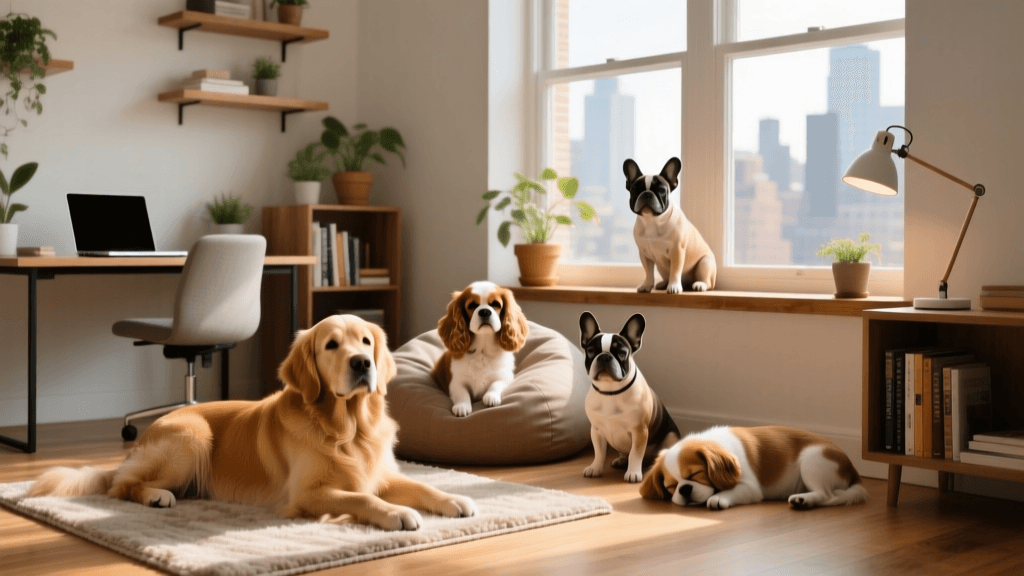
The Cavalier King Charles Spaniel is the quintessential lap dog. Bred for centuries to be companions to royalty, their primary ambition in life is to be as close to their human as possible. In a home office setting, this translates to a dog that will happily curl up on a bed beneath your desk for hours. They are notoriously quiet, rarely barking without a serious reason, and their moderate energy levels are easily satisfied with a morning walk and an evening play session.
2. Greyhound
It might seem counterintuitive to recommend a racing breed for a sedentary home office, but Greyhounds are famously known as '45-mph couch potatoes.' They require a short, intense burst of exercise in the morning—such as a sprint in a fenced yard or a long brisk walk—but once they are indoors, they are exceptionally lazy. A Greyhound puppy will quickly learn that the home office is a place for napping, making them fantastic, quiet co-workers who take up minimal mental bandwidth during your workday.
3. Basset Hound
If your home office is on the ground floor or you work in a house with easy yard access, the Basset Hound is a stellar choice. Known for their laid-back, almost stubborn demeanor, Bassets are not prone to the frantic zoomies that disrupt video calls. They are highly scent-driven, meaning you can keep them occupied during long meetings with snuffle mats and puzzle toys. While they can be vocal if left alone outside, indoors they are generally quiet, preferring to snore softly by your feet.
4. Shih Tzu
Unlike terriers that were bred to hunt and bark at vermin, the Shih Tzu was bred exclusively for companionship. They are alert but not overly yappy, making them suitable for apartment dwellers and remote workers alike. Their small size means they require very little space in your home office, and their exercise needs are minimal. A few short indoor play sessions and a brief outdoor potty break are usually enough to keep a Shih Tzu puppy happy and relaxed while you tackle your inbox.
5. Japanese Chin
The Japanese Chin is a cat-like toy breed that is incredibly quiet, clean, and independent. They are known for their serene demeanor and tend to form a deep bond with one person, often following them from room to room without demanding constant attention. For a remote worker who wants a shadow that doesn't interrupt Zoom calls, the Japanese Chin is an excellent, low-maintenance companion that thrives in a calm, indoor environment.
2026 Home Office Breed Comparison Chart
To help you visualize how these breeds fit into your daily routine, here is a comparison chart based on 2026 veterinary and behavioral standards.
| Breed | Energy Level | Barking Tendency | Space Required | Grooming Needs |
|---|---|---|---|---|
| Cavalier King Charles | Moderate | Low | Low/Medium | Moderate |
| Greyhound | Low (Indoors) | Very Low | Medium | Low |
| Basset Hound | Low | Moderate | Medium | Low |
| Shih Tzu | Low | Low/Moderate | Low | High |
| Japanese Chin | Low | Very Low | Low | Moderate |
Setting Up Your 2026 Home Office for a Puppy
Bringing a puppy into your workspace requires more than just a bed and a water bowl. The modern 2026 home office must be optimized for both human productivity and canine enrichment.
Smart Pet Monitoring
Invest in a smart pet camera like the Furbo 360 or the Petcube Bites 3. These 2026 models feature advanced AI that can differentiate between a dog barking, a dog crying, and normal household noises, sending targeted alerts to your smartwatch so you can check in between meetings. Many also include remote treat-tossing capabilities, allowing you to reward your puppy for staying on their mat without leaving your keyboard.
Enrichment Zones
Create a designated enrichment zone just outside your immediate camera frame. Stock this area with lick mats, frozen Kongs, and interactive puzzle toys like the Outward Hound Nina Ottosson Dog Brick. According to the ASPCA's puppy care guidelines, mental stimulation is just as tiring for a young dog as physical exercise, helping them settle down for longer periods while you focus on deep work.
Acoustic Management
Puppies are easily triggered by sudden noises, which can lead to barking fits during important calls. Use a high-quality white noise machine near the door of your home office to mask the sounds of delivery drivers, neighbors, or hallway traffic. Additionally, training your puppy to associate a specific lo-fi music playlist with quiet time can create a Pavlovian response that encourages sleepiness when you need to focus.
Mastering the Puppy Pomodoro Routine
The traditional Pomodoro technique involves working for 25 minutes and resting for 5. However, for a remote worker with a new puppy, a modified 50/10 schedule is far more effective in 2026. Work intently for 50 minutes while your puppy engages with a chew toy or naps. Then, use the 10-minute break to take the puppy outside for a structured potty break and a quick training session.
This routine aligns perfectly with the housetraining requirements of young dogs, preventing indoor accidents and ensuring your puppy gets the frequent outdoor exposure they need without fragmenting your workday into unmanageable chunks. By the time your puppy reaches six months of age, they will naturally adapt to longer stretches of sleep, allowing you to transition to a standard 90-minute work block.
Training Your Puppy for Video Calls
Even the quietest breeds need to be taught the boundaries of the home office. The most valuable command for a remote worker's puppy is the 'Place' command. This involves training your dog to go to a specific mat or bed and remain there until released. Start by luring your puppy onto a raised cot or thick mat with high-value treats. Gradually increase the duration they must stay on the mat before receiving a reward. By the time your puppy is four months old, they should understand that when you put on your noise-canceling headphones, it is time to go to their Place and settle down.
Furthermore, desensitize your puppy to the sounds of your voice at varying volumes. Many puppies become confused or anxious when their owner suddenly starts talking to a screen in a loud, professional meeting voice. Practice having mock meetings while tossing treats to your puppy on their mat, helping them associate your work voice with positive, calm experiences.
Conclusion
Balancing a demanding remote career with the joys of raising a puppy is entirely possible when you start with the right breed and a structured environment. By selecting a low-barking, adaptable companion like a Cavalier or a Greyhound, and leveraging modern smart-home technology, you can create a harmonious home office. Your puppy will get the love and care they deserve, and you will maintain the professional focus required to thrive in the modern workplace.
anouk-beaumont
All our authors care for dogs every day — read more of their work on the authors page.