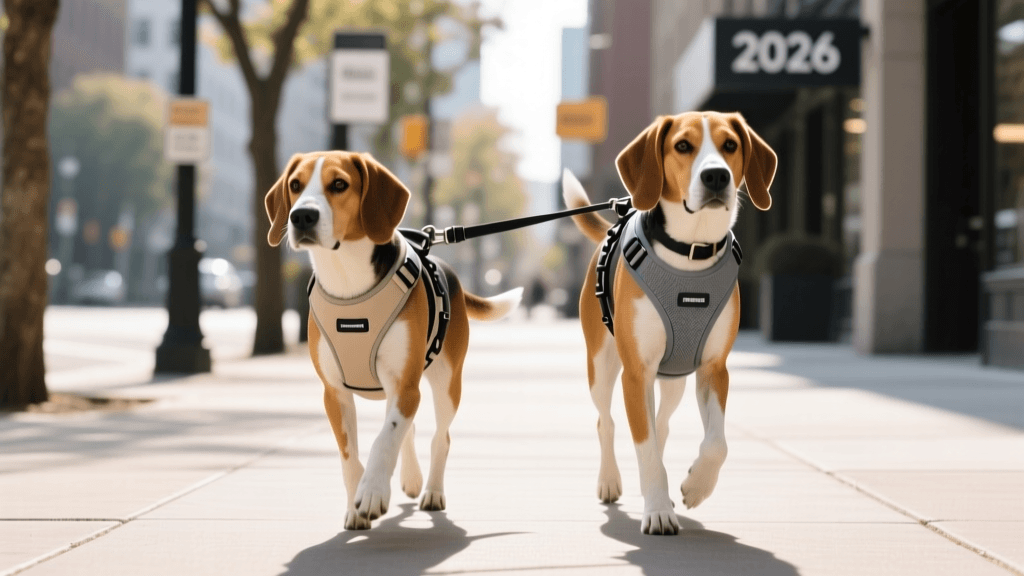
Top No-Pull Dog Harnesses for Strong Pullers in 2026
Discover how front-clip no-pull harnesses stop leash pulling in 2026. Expert training tips, sizing guides, and urban walking routines for strong dogs.
The Urban Walking Dilemma: Why Traditional Collars Fail
Walking a strong, energetic dog through a bustling urban environment in 2026 presents unique challenges. With denser city populations and more distractions than ever, leash pulling is not just an annoyance; it is a significant safety hazard and a leading cause of walking-related injuries for both dogs and their owners. If you have ever felt your shoulder wrenched by a determined Labrador or found yourself dragged down the sidewalk by an eager Husky, you already know the frustration.
Traditional flat collars and back-clip harnesses often exacerbate the problem due to a canine instinct known as the opposition reflex. When a dog feels pressure against their chest or neck from a back-clip harness or collar, their natural instinct is to push forward against that pressure. This biological response makes pulling a self-rewarding behavior. According to veterinary behaviorists and training experts, the most effective way to counteract this reflex without causing physical harm is by utilizing a front-clip no-pull harness. As highlighted by the American Kennel Club, front-clip harnesses gently redirect the dog's momentum toward the handler, effectively neutralizing the opposition reflex and making it biomechanically difficult for the dog to pull forward.
Top No-Pull Harnesses Reviewed for 2026
When selecting the right equipment for your daily routine, not all harnesses are created equal. The market in 2026 offers several high-quality options, but three models consistently rise to the top for urban dwellers and owners of strong pullers.
1. 2 Hounds Design Freedom No-Pull Harness
Widely considered the gold standard by professional dog trainers, the 2 Hounds Design Freedom No-Pull Harness features a patented martingale loop on the back and a sturdy front chest ring. The dual-clip leash attachment allows you to connect a double-ended leash to both the front and back rings simultaneously. This setup provides unparalleled steering control, much like having power steering in a car. Priced around $44 in 2026, it features a velvet-lined chest strap that prevents chafing, a common issue with cheaper nylon alternatives.
2. Ruffwear Front Range Harness
For owners who blend urban walking with weekend trail hiking, the Ruffwear Front Range Harness remains a top contender. Priced at approximately $48, it offers four points of adjustment and foam-padded straps that distribute weight evenly. While its front aluminum V-ring is excellent for mild to moderate pullers, it lacks the tightening martingale loop of the 2 Hounds model, making it slightly less effective for massive, determined pullers. However, its durability and reflective trim make it a favorite for active households.
3. Kurgo Tru-Fit Smart Harness
Retailing for about $35, the Kurgo Tru-Fit is a budget-friendly option that doubles as a crash-tested car restraint. Its front D-ring is positioned slightly lower on the chest, which can be highly effective for broad-chested breeds like Boxers or Pit Bull Terriers. The 2026 updated model features improved quick-release buckles that are easier to operate with one hand, a crucial feature when managing a reactive dog at a busy intersection.
2026 Harness Feature Comparison Chart
| Feature | 2 Hounds Freedom | Ruffwear Front Range | Kurgo Tru-Fit |
|---|---|---|---|
| Front Clip Ring | Stainless Steel | Aluminum V-Ring | Reinforced Steel |
| Back Clip Mechanism | Patented Martingale Loop | Standard Nylon Webbing | Standard Nylon Webbing |
| Chest Padding | Swiss Velvet Lining | Foam-Padded | Neoprene Padding |
| 2026 Avg. Price | $44.00 | $48.00 | $35.00 |
| Best For | Severe Pullers & Training | Active Hikers & Mild Pullers | Budget & Car Travel |
Step-by-Step Training Protocol for Front-Clip Harnesses
Purchasing a no-pull harness is only the first step. To truly transform your daily walking routine, you must pair the equipment with positive reinforcement training. The VCA Animal Hospitals emphasize that consistent, reward-based training is essential for long-term behavioral modification. Here is a proven 2026 training protocol to use with your front-clip harness:
Step 1: The Engage-Disengage Game
Before you even leave your driveway, teach your dog that a loose leash equals forward movement. Stand still with your dog. The moment they look at you or the leash goes slack, mark the behavior with a clicker or a verbal 'Yes!' and deliver a high-value treat near the seam of your pants. This teaches them that staying by your side is more rewarding than surging ahead.
Step 2: The 180-Degree Redirect
When walking, if your dog hits the end of the leash and the front-clip engages, do not yank the leash. Simply stop walking and wait. The front-clip will naturally turn their body toward you. The second they make eye contact or take a step back toward you, mark, reward, and resume walking in the original direction.
Step 3: Variable Reward Schedules
Once your dog understands the mechanics, transition from rewarding every single step to a variable reward schedule. Treat them after three loose-leash steps, then seven, then two. This unpredictability keeps the dog highly engaged and focused on you, rather than the environment.
Proper Fitting: The Two-Finger Rule
A no-pull harness can only work if it fits correctly. An improperly fitted harness can cause chafing, restrict shoulder movement, or allow the dog to slip out. Follow the universal two-finger rule for 2026 harness models:
- The Chest Strap: You should be able to slide exactly two fingers flat between the chest strap and your dog's sternum. If you can fit more, it is too loose and the front ring will sag. If you can fit fewer, it will restrict breathing.
- The Neck Opening: Ensure the neck strap sits high on the chest, just below the trachea, avoiding the throat entirely. Two fingers should fit snugly here as well.
- The Girth Strap: Positioned behind the front legs, this strap must be tight enough to prevent the harness from shifting side-to-side, but loose enough that you can slide two fingers underneath without pinching your skin.
Integrating the Harness into Your Daily Routine
Living with a dog in a multi-pet household or a busy apartment complex requires a structured routine. Reserve the front-clip no-pull harness exclusively for structured training walks where you are actively working on leash manners. For casual backyard potty breaks or quick evening outings, you can use a simple flat collar or a back-clip harness to signal to your dog that it is 'free time.' This contextual differentiation helps your dog understand exactly what behavior is expected in different scenarios.
By combining the biomechanical advantage of a high-quality front-clip harness like the 2 Hounds Design Freedom model with consistent, positive reinforcement training, you will reclaim your daily walks. In 2026, there is no reason to suffer through shoulder pain and stressful outings; with the right gear and the right routine, sharing your life with a strong dog can be a joyful, harmonious experience.
tom-renshaw
All our authors care for dogs every day — read more of their work on the authors page.