Best Puppy Breeds for Remote Workers in 2026: Top Picks
Discover the best puppy breeds for remote workers in 2026. Learn WFH potty training, quiet teething toys, and socialization tips for home-bound pups.
The 2026 Guide to Raising a Work-From-Home Puppy
As remote and hybrid work models solidify in 2026, the demand for the perfect home office companion remains at an all-time high. Bringing a puppy into your home while working remotely offers incredible benefits, from stress reduction during high-stakes virtual meetings to built-in motivation for daily screen breaks. However, raising a puppy during its critical first year of life requires strategic planning, especially when your living room doubles as your corporate headquarters.
Not all dog breeds are suited for the unique rhythm of a remote worker's day. A puppy that demands constant outdoor stimulation or is prone to excessive vocalization can quickly derail your productivity. Conversely, the right breed will happily nap under your desk, adapt to your Pomodoro break schedule, and provide silent comfort during deep-work sessions. In this comprehensive guide, we explore the best puppy breeds for remote workers in 2026, alongside essential puppy care strategies tailored specifically for the work-from-home lifestyle.
Top 4 Puppy Breeds for the Home Office in 2026
1. Cavalier King Charles Spaniel: The Ultimate Lap Warmer
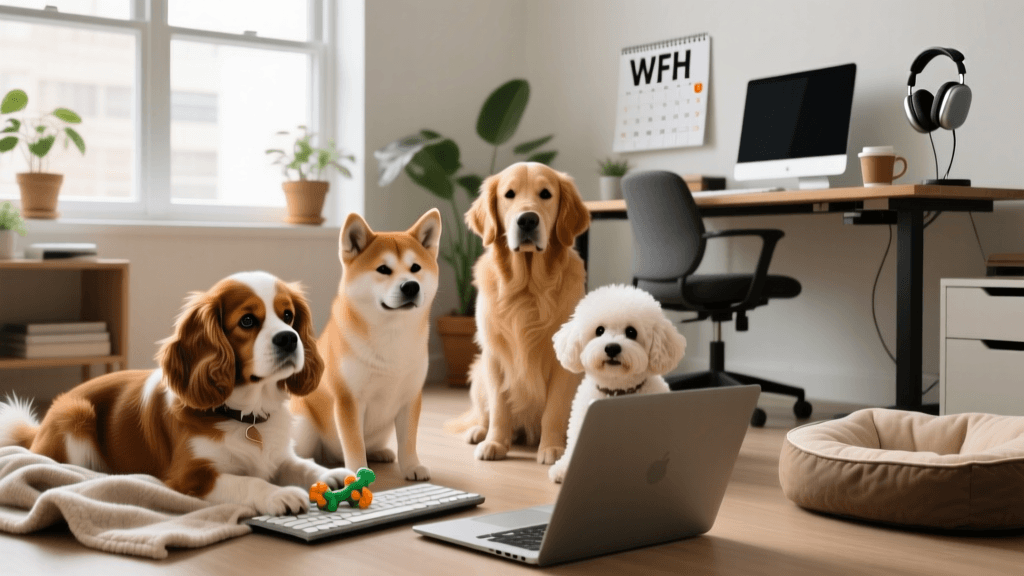
The Cavalier King Charles Spaniel consistently ranks as a top choice for remote professionals. Known for their deeply affectionate nature and moderate energy levels, Cavaliers are perfectly content to spend the workday curled up on a dog bed beneath your standing desk. They are highly attuned to their owner's emotions, making them excellent stress-relievers during demanding virtual quarters.
From a puppy care perspective, Cavaliers are relatively easy to house-train and are not known for nuisance barking, which is a massive plus for open-mic conference calls. However, their intense devotion means they are highly susceptible to separation anxiety. If your remote role requires occasional travel or in-office days, early independence training is absolutely critical to prevent distress when you eventually step away from your home office.
2. Bichon Frise: The Low-Shedding Co-Pilot
For remote workers operating out of smaller apartments or shared home offices, the Bichon Frise is a stellar choice. Their hypoallergenic, low-shedding coats mean you will not be picking dog hair out of your keyboard or off your professional wardrobe before a video call. Bichons are cheerful, adaptable, and thrive on being near their humans without being overly demanding of intense physical exercise.
Puppyhood with a Bichon requires a strict commitment to grooming and consistent potty training. Small breeds have smaller bladders, meaning a Bichon puppy will need more frequent outdoor breaks than a larger breed. Fortunately, their high intelligence and eagerness to please make them highly responsive to positive reinforcement training methods, allowing you to establish a reliable bathroom routine that aligns with your meeting schedule.
3. Miniature Schnauzer: The Alert but Quiet Companion
If you prefer a puppy with a bit more personality and a terrier-like spark, the Miniature Schnauzer is an outstanding remote work companion. They are highly intelligent, easily trained, and possess a sturdy build that handles the occasional clumsy step around the home office. Unlike some other terrier breeds, Miniature Schnauzers are generally less yappy, provided they receive adequate mental stimulation.
During the puppy teething phase, Schnauzers can be enthusiastic chewers. Remote workers must puppy-proof their office spaces, ensuring that expensive monitor cables and ergonomic mouse cords are hidden behind cable management sleeves. Providing a steady rotation of interactive puzzle toys will keep your Schnauzer puppy mentally engaged and quiet while you focus on deep-work tasks.
4. Pug: The Comedic Relief
Pugs are the quintessential companion dogs. They require minimal exercise, making them ideal for remote workers who live in urban environments without immediate access to large yards. A Pug puppy will happily participate in your sedentary work hours, offering occasional comedic relief with their expressive faces and gentle snores.
Caring for a Pug puppy in 2026 requires special attention to their brachycephalic (flat-faced) anatomy. You must ensure your home office is climate-controlled, as Pugs are highly sensitive to heat and humidity. Furthermore, their facial folds require daily cleaning to prevent infections, adding a small but necessary daily grooming task to your morning routine before you log on to your computer.
Comparison Chart: WFH Puppy Breeds
| Breed | Energy Level | Zoom Call Noise Risk | Shedding | Best For |
|---|---|---|---|---|
| Cavalier King Charles Spaniel | Low-Medium | Very Low | Moderate | Quiet desk companions |
| Bichon Frise | Medium | Low | Very Low | Allergy-sensitive home offices |
| Miniature Schnauzer | Medium-High | Low-Medium | Low | Active remote workers |
| Pug | Low | Low (Snoring) | High | Urban apartment dwellers |
Puppy Care Essentials for Remote Workers
Potty Training Around Zoom Meetings
One of the most significant challenges of raising a puppy while working from home is managing potty breaks without missing critical meetings. According to the ASPCA's house training guidelines, establishing a rigid, predictable schedule is the foundation of successful potty training. For remote workers, this means syncing your puppy's biological clock with your digital calendar.
Utilize the Pomodoro technique: work for 45 minutes, then take a 15-minute break to take your puppy outside, engage in brief play, and reinforce potty commands. If you live in a high-rise apartment and cannot make it downstairs in time, consider subscribing to a real-grass delivery service like DoggyLawn or Fresh Patch. These services deliver hydroponically grown grass patches to your balcony, providing an eco-friendly, odor-neutralizing indoor potty solution that mimics the outdoors and accelerates the house-training process.
Managing Teething on Conference Calls
Between 12 and 24 weeks of age, your puppy will begin teething. This developmental milestone is characterized by an intense urge to chew, which can result in destroyed office furniture and disruptive noise during phone calls. The Humane Society recommends providing a variety of textures to soothe inflamed gums while redirecting destructive behavior.
For the home office, you must curate a selection of 'silent' chew toys. Avoid hard plastic bones or toys with internal squeakers, as the repetitive clicking and squeaking will easily be picked up by your microphone. Instead, opt for the classic KONG Puppy rubber toy stuffed with frozen plain pumpkin puree, or a high-quality natural rubber chew. These provide hours of silent, soothing relief for your puppy while you present your quarterly metrics.
Preventing Separation Anxiety in WFH Puppies
The greatest hidden danger of raising a puppy as a remote worker is the accidental development of separation anxiety. Because you are present 24/7, your puppy learns to expect your constant proximity. When you eventually need to leave for a dentist appointment, a hybrid office day, or a weekend trip, the sudden absence can trigger severe panic, destructive behavior, and endless howling.
The American Kennel Club notes that preventing separation anxiety requires proactive desensitization. You must practice 'micro-departures' daily. Put on your shoes, grab your keys, step out the front door, and return 30 seconds later without greeting your puppy. Gradually increase the duration of your absence. Additionally, invest in a smart pet camera like the Furbo 360. These devices allow you to monitor your puppy from your smartphone and toss treats remotely, rewarding calm behavior when you are in another room or away from the house entirely.
Socializing a Home-Bound Puppy
A common pitfall for remote workers is assuming that because the puppy is with them all day, it is being adequately socialized. True socialization involves exposing your puppy to a wide variety of environments, surfaces, sounds, and strangers during the critical 8-to-16-week developmental window. A puppy that only sees the inside of your home office and your backyard will likely develop fear-based reactivity when introduced to the outside world.
You must schedule 'field trips' into your workweek. Take your puppy to a local coffee shop, sit outside a busy grocery store, or visit a dog-friendly co-working space. Equip your puppy with a modern GPS smart collar, such as the Fi Series 4, which offers lightweight, escape-proof tracking and activity monitoring. This ensures that as you navigate busy urban environments to socialize your pup, you have real-time location data and can track their daily step count to ensure they are getting adequate physical exercise outside of your work hours.
Conclusion
Raising a puppy as a remote worker in 2026 is a deeply rewarding experience that blends the joys of dog ownership with the flexibility of modern work. By selecting a breed that aligns with your home environment, implementing a strict potty and teething schedule, and proactively training for independence, you can cultivate a well-adjusted, quiet, and loving companion. Remember that your puppy's first year sets the foundation for the next decade of your life together—invest the time now, and your future home office will be a happier, more productive space.
aaron-whyte
All our authors care for dogs every day — read more of their work on the authors page.