First-Time Owner Guide: Puppy Potty Training Schedule
Master puppy potty training with our first-time owner guide. Learn crate setup, hourly schedules, and accident prevention tips for a stress-free start.
Welcome to Puppy Parenthood: The Potty Training Reality
Bringing home a new puppy is an exhilarating experience, but it quickly introduces first-time owners to one of the most daunting challenges of dog ownership: potty training. Unlike older dogs, puppies lack the physical bladder control and the cognitive understanding of where it is appropriate to relieve themselves. According to the ASPCA, house training requires consistency, patience, and a structured schedule. For first-time owners, the sheer volume of conflicting advice online can be overwhelming. Should you use pee pads? How often should you take them out? What do you do when accidents inevitably happen?
This comprehensive guide is designed specifically for novice puppy parents. We will walk you through the exact crate setup, the hourly potty training schedule, and the specific products you need to set your puppy up for success from day one. By the end of this guide, you will have a clear, actionable roadmap to achieve a fully house-trained dog without the frustration that often accompanies the first few months of puppyhood.
Setting Up the Perfect Crate Environment
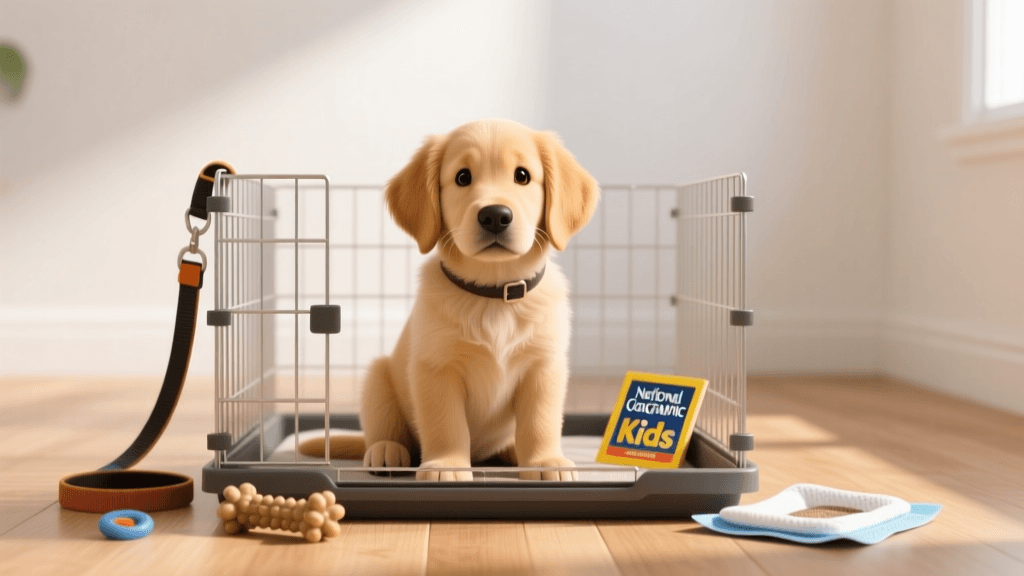
Crate training is not just about giving your puppy a safe den; it is the foundational tool for successful potty training. Dogs have a natural instinct to keep their sleeping area clean, which makes the crate an invaluable ally in teaching bladder control. However, the setup must be precise.
Choosing the Right Crate Size
A common mistake first-time owners make is buying a crate that is too large. If a puppy has enough room to sleep in one corner and eliminate in another, the crate loses its potty-training effectiveness. You should purchase a wire or plastic crate that allows your puppy to stand up, turn around, and lie down comfortably, but no more. For medium-to-large breed puppies, buy a crate with an adjustable divider panel, such as the MidWest Homes for Pets iCrate. A 36-inch crate with a divider costs around $60 to $80 and will grow with your dog, saving you from buying multiple crates.
Making the Crate Comfortable
Line the crate with a washable, chew-resistant bed. Avoid thick, plush blankets initially, as teething puppies may chew and ingest the fabric, leading to dangerous intestinal blockages. A rubber-backed kennel mat or a tight-fitting fleece pad is a safer, more practical choice. Place the crate in a high-traffic area like the living room so your puppy does not feel isolated, which can trigger separation anxiety and excessive whining. The Humane Society of the United States emphasizes that a crate should always be associated with positive experiences, never used as a punishment zone.
The First-Time Owner's Potty Training Schedule
Puppies thrive on routine. A predictable schedule helps their developing digestive and urinary systems regulate, making it easier for you to anticipate when they need to go out. The general rule of thumb for bladder control is that a puppy can hold it for one hour per month of age, up to a maximum. However, during active play or immediately after meals, they will need to go out much more frequently.
Below is a structured potty training schedule and bladder capacity chart tailored for first-time owners.
| Puppy Age | Max Bladder Hold Time | Daytime Potty Frequency | Nighttime Potty Frequency |
|---|---|---|---|
| 8 to 10 Weeks | 1 to 2 Hours | Every 1-2 Hours | Every 2-3 Hours |
| 11 to 14 Weeks | 2 to 3 Hours | Every 2-3 Hours | Every 3-4 Hours |
| 15 to 16 Weeks | 3 to 4 Hours | Every 3-4 Hours | Every 4-5 Hours |
| 4 to 6 Months | 4 to 6 Hours | Every 4-5 Hours | Usually sleeps through |
Key Trigger Times for Potty Breaks
Regardless of the clock, you must take your puppy outside immediately after the following triggers:
- Waking up from a nap or nighttime sleep.
- Within 15 to 30 minutes after eating a meal or drinking a large amount of water.
- Immediately after an intense play session or excitement (like when guests arrive).
- After being released from the crate.
Step-by-Step Potty Training Routine
When it is time for a potty break, your execution matters just as much as the schedule. First-time owners often treat potty breaks as playtime, which distracts the puppy from the task at hand.
1. Use a Leash and a Designated Spot
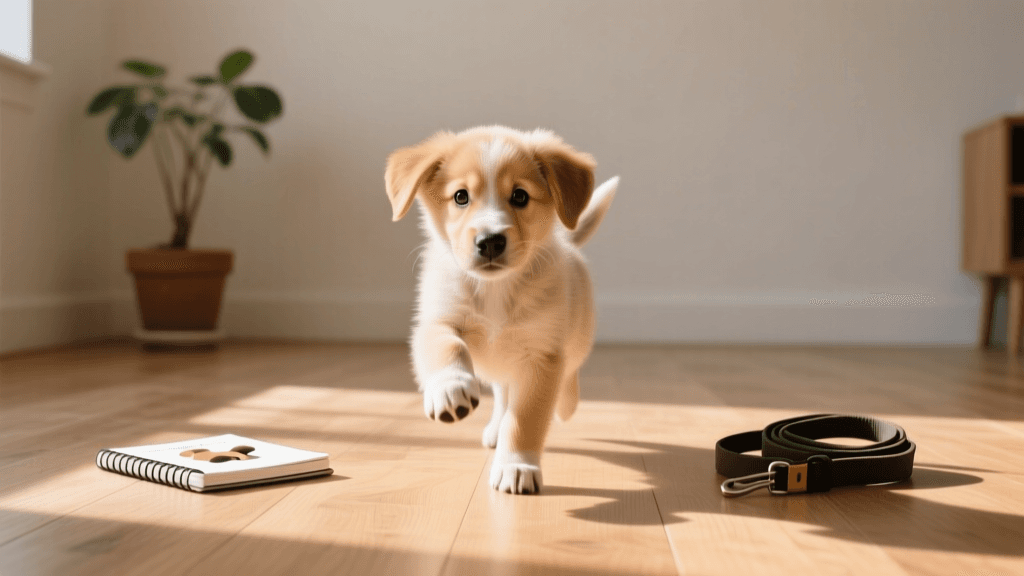
Even if you have a fenced backyard, keep your puppy on a 4-to-6-foot standard nylon leash during potty breaks. This prevents them from wandering off to play and guides them to a specific potty zone. The scent of their previous eliminations in this designated spot will act as a natural stimulus to go again.
2. Introduce a Verbal Cue
As your puppy begins to eliminate, use a consistent verbal cue such as 'Go potty' or 'Do your business.' According to the American Kennel Club, pairing a verbal command with the action helps the dog associate the words with the physical act, eventually allowing you to prompt them to go on command during bad weather or travel.
3. The Potty Party Reward
The moment your puppy finishes, throw a massive reward party. Offer a high-value training treat, such as Zuke's Mini Naturals or small pieces of boiled chicken, and provide enthusiastic verbal praise. The reward must be delivered within two seconds of the action finishing so the puppy connects the reward to eliminating outside, not to walking back to the house.
Managing Accidents and Enzymatic Cleaning
Accidents are an inevitable part of the process. How you handle them will dictate how quickly your puppy learns.
Never Punish After the Fact
If you find a puddle on the rug, do not yell, rub the puppy's nose in it, or hit them. Dogs do not possess the cognitive ability to connect a past action with a present punishment. They will simply learn to fear you and will start hiding behind furniture to eliminate. If you catch them in the act, clap your hands loudly to interrupt them, immediately scoop them up or leash them, and carry them outside to finish.
The Importance of Enzymatic Cleaners
Standard household cleaners, bleach, or ammonia-based products will not remove the uric acid crystals found in dog urine. While the smell might disappear to your human nose, your puppy's highly sensitive olfactory system will still smell it, marking that spot as an acceptable bathroom. You must use a dedicated enzymatic cleaner like Nature's Miracle Advanced Stain and Odor Eliminator or Rocco & Roxie Professional Strength Stain & Odor Remover. These products contain natural enzymes that literally eat the bacteria causing the odor. Saturate the area, let it sit for 10 to 15 minutes, and blot it dry. For carpets, you may need to lift the rug to treat the padding underneath.
Nighttime Potty Breaks: Surviving the First Weeks
Nighttime is often the most exhausting period for first-time owners. An 8-week-old puppy physically cannot hold their bladder for an 8-hour sleep cycle.
Setting the Nighttime Alarm
Set an alarm for 3 to 4 hours after your puppy goes to sleep. Keep the nighttime potty break strictly business. Do not turn on bright lights, do not play, and do not speak in an excited tone. Keep the puppy on a leash, walk them to their designated spot, wait for them to eliminate, reward them quietly, and immediately return them to the crate.
Water Restriction
To minimize nighttime accidents, pick up your puppy's water bowl about two hours before their bedtime. Ensure they have ample opportunity to hydrate throughout the day and during meal times.
Common Mistakes First-Time Owners Make
To ensure your success, avoid these frequent pitfalls:
- Using Pee Pads Indefinitely: While puppy pads can be useful for high-rise apartment dwellers, they teach the dog that it is acceptable to eliminate indoors on soft, rectangular surfaces. This often leads to dogs peeing on bath mats and area rugs later in life. Transition to outdoor potty training as soon as the puppy's vaccination schedule allows.
- Inconsistent Schedules: Letting the puppy out the back door sometimes, but leashing them other times, or changing the feeding schedule daily will confuse their digestive tract and delay house training.
- Expecting Too Much Too Soon: Remember that a puppy's brain and bladder muscles are still developing. Setbacks will happen, especially during growth spurts or teething phases. Stay patient, stick to the routine, and celebrate the small victories.
Conclusion
Potty training a puppy is a marathon, not a sprint. By utilizing a properly sized crate, adhering to a strict schedule, using enzymatic cleaners, and rewarding success, you will build a foundation of trust and hygiene with your new companion. The sleepless nights and occasional carpet cleanups are temporary, but the bond you build through patient, positive reinforcement will last a lifetime. Stick to the plan, trust the process, and welcome to the wonderful world of dog ownership!
priya-sutaria
All our authors care for dogs every day — read more of their work on the authors page.