Best Puppy Breeds for Remote Workers in 2026: 5 WFH Picks
Discover the best puppy breeds for remote workers in 2026. Learn which low-bark, adaptable dogs thrive in a home office without ruining Zoom calls.
The Reality of Raising a Puppy in a 2026 Home Office
As we navigate the entrenched remote work landscape of 2026, the home office has evolved from a makeshift desk in the corner to a permanent, optimized hub for productivity. For many professionals, the ultimate WFH (Work From Home) upgrade isn't a standing desk or an ultrawide monitor—it is a furry companion resting at their feet. However, introducing a puppy into a home office environment requires careful consideration. Not all dogs are suited for the quiet focus required during deep work sessions, and a poorly timed bark can easily disrupt a critical Zoom presentation.
Choosing the right breed is the first step toward achieving harmony between your career and your canine companion. While every dog is an individual, certain breeds possess genetic predispositions that make them exceptionally well-suited for the remote worker lifestyle. In this guide, we explore the best puppy breeds for remote workers in 2026, focusing on temperament, energy levels, and vocalization.
3 Essential Traits for a WFH-Friendly Puppy
Before diving into specific breeds, it is crucial to understand what makes a dog a good 'coworker.' When evaluating puppies for a home office environment, prioritize these three traits:
- Low Vocalization: You need a dog that communicates without barking at every passing car or delivery drone. Breeds with a quiet disposition are essential for maintaining professional phone calls.
- Moderate to Low Energy: High-drive working breeds (like Border Collies or Belgian Malinois) require hours of intense physical and mental stimulation. Remote workers rarely have the time to provide this between meetings. A breed content with a morning walk and afternoon lounging is ideal.
- Independence: While companionship is the goal, a velcro dog that whines whenever your attention shifts to your screen will destroy your productivity. Dogs that can entertain themselves with a chew toy or nap quietly under your desk are preferable.
The Top 5 Best Puppy Breeds for Remote Workers
1. Cavalier King Charles Spaniel
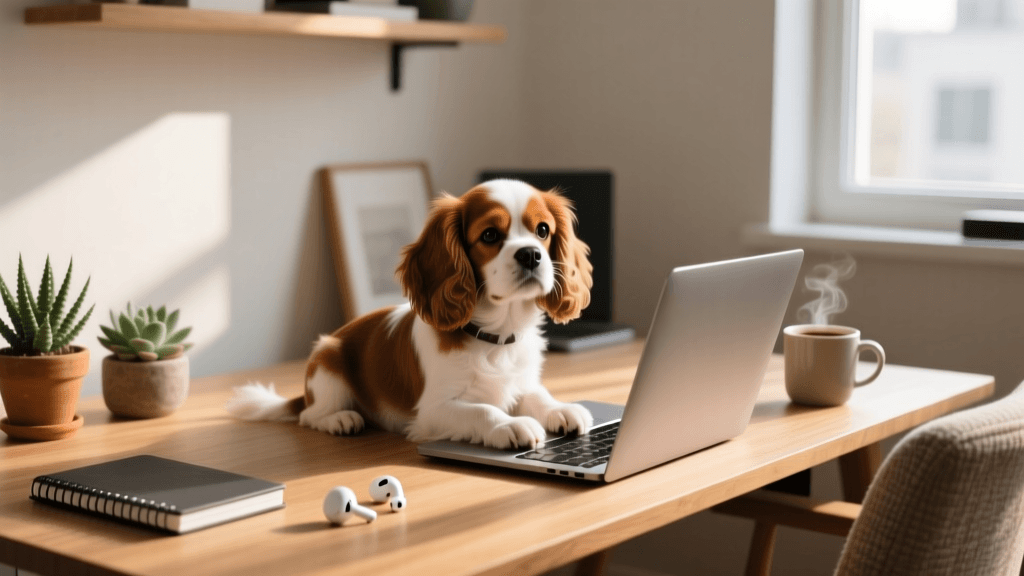
The Cavalier King Charles Spaniel is widely regarded as one of the ultimate lap dogs. Bred specifically for companionship, this breed thrives on being near their human but does so with a gentle, unobtrusive presence. According to the American Kennel Club, Cavaliers are incredibly adaptable and tend to mirror their owner's energy levels. If you are typing away at your desk, they are perfectly happy to curl up on an orthopedic bed nearby. They rarely bark without a significant reason, making them a top-tier choice for remote workers living in apartments or shared housing.
2. Greyhound
It might surprise some to see a racing breed on a list of WFH-friendly dogs, but Greyhounds are famously known in the rescue community as '45-mph couch potatoes.' Once their need for a short, daily sprint is met, they are remarkably lazy indoors. The AKC notes that Greyhounds are quiet, independent, and spend the vast majority of their day sleeping. For a remote worker, a retired racing Greyhound or a Greyhound puppy raised with a calm routine will simply snooze through your afternoon spreadsheets, requiring minimal intervention.
3. Basset Hound
With their soulful eyes and low-slung bodies, Basset Hounds are the epitome of relaxed. Originally bred for scent hunting at a slow pace, they do not possess the hyperactive energy of other hound breeds. They are generally quiet indoors, though they can be prone to stubbornness during training. For a remote worker who enjoys a slow-paced morning and a dog that will happily occupy a sunbeam for six hours, the Basset Hound is an excellent fit. Just be prepared to invest in a good robotic vacuum, as their shedding is a small price to pay for their tranquil demeanor.
4. Shih Tzu
The Shih Tzu was bred for one purpose: to sit in the laps of Chinese royalty and provide companionship. They have virtually no working drive, meaning they won't try to herd your cats or guard the house from the mail carrier. Their exercise needs are minimal—a short walk around the block and some indoor play are usually sufficient. In 2026, where urban remote work setups are common, the Shih Tzu's small size and low exercise requirements make them an ideal desk companion. They are affectionate but not overly demanding of constant physical activity.
5. Bernese Mountain Dog
If you have a larger home office and prefer a bigger dog, the Bernese Mountain Dog is a gentle giant that excels in a calm indoor environment. Despite their size, they are not overly active indoors and prefer to stay close to their family. They are highly trainable and eager to please, which makes teaching them the 'place' command (staying on their bed while you work) relatively straightforward. They do require regular grooming and have a shorter lifespan, but the profound bond and calm presence they offer a remote worker are unmatched.
WFH Puppy Breed Comparison Chart
| Breed | Bark Level | Energy Level | Independence | WFH Suitability |
|---|---|---|---|---|
| Cavalier King Charles Spaniel | Low | Moderate | Low (Velcro) | Excellent |
| Greyhound | Very Low | Low (Indoors) | High | Excellent |
| Basset Hound | Moderate | Low | High | Very Good |
| Shih Tzu | Moderate | Low | Moderate | Very Good |
| Bernese Mountain Dog | Low | Moderate | Low | Good (Needs Space) |
Structuring a WFH Puppy Schedule in 2026
Routine is the backbone of successful puppy rearing. When you work from home, it is easy to blur the lines between work time and dog time. Here is a sample schedule optimized for remote workers:
- 6:30 AM - Morning Decompression: A 30-minute sniffari walk. Let the puppy set the pace and sniff to mentally tire them out before your first morning stand-up meeting.
- 8:30 AM - Deep Work & Nap Time: Puppies sleep up to 18 hours a day. Use your morning deep work blocks to let them sleep in their crate or under-desk bed.
- 12:00 PM - Midday Training & Play: Take a full hour off. Practice basic obedience (sit, stay, place) for 15 minutes, followed by active play. This fulfills their mental and physical needs.
- 3:00 PM - The Afternoon Slump: Use a frozen lick mat or snuffle puzzle during your afternoon administrative tasks. This keeps them quietly occupied while you answer emails.
- 5:30 PM - Evening Transition: Close the laptop and engage in a longer walk or visit a local dog park. This signals to the dog that the workday is over and it is time for family bonding.
Upgrading Your 2026 Home Office for a Puppy
Selecting the right breed is only half the battle; optimizing your workspace is equally important. In 2026, pet-centric home office ergonomics have become a major trend. Here is how to set up your space for success:
- Under-Desk Orthopedic Beds: Brands like Casper and Furhaven now offer low-profile, memory foam dog beds designed specifically to slide under standard standing desks. This gives your puppy a designated 'office' that keeps them close but out of your rolling chair's path.
- Smart Pet Cameras with Treat Tossing: The latest 2026 models from Furbo and Eufy feature AI-driven bark detection and automated treat dispensing. If your puppy starts to stir during a long meeting, you can discreetly toss a treat via your smartphone to redirect their attention without leaving your desk.
- Interactive Lick Mats and Snuffle Puzzles: To keep your puppy occupied during deep work blocks, freeze a lick mat with dog-safe peanut butter and bone broth. The licking action is naturally soothing for dogs and can keep them quietly entertained for up to 45 minutes.
Preventing Separation Anxiety in Remote Work Dogs
One of the hidden dangers of WFH life is that your puppy becomes accustomed to your presence 24/7. When you eventually need to leave for an in-person meeting, a vet visit, or a weekend trip, the sudden absence can trigger severe distress. As highlighted by the American Kennel Club's guide on separation anxiety, dogs that are never left alone can develop destructive behaviors, excessive vocalization, and house-soiling.
To prevent this, you must actively practice 'independence training' from the moment you bring your puppy home. Use baby gates to separate your workspace from the puppy's play area for short intervals. Take your daily lunch break outside the house, leaving the puppy alone with a safe chew toy. By simulating absences, you teach your dog that being alone is safe and temporary, ensuring they remain confident and relaxed even when you step out.
Final Thoughts
Sharing your home office with a puppy in 2026 is a deeply rewarding experience that can reduce stress, encourage regular screen breaks, and provide unmatched companionship. By selecting a breed that aligns with your work habits—prioritizing low vocalization, moderate energy, and a calm disposition—you set both yourself and your new dog up for success. Whether you choose the regal Cavalier King Charles Spaniel or the laid-back Greyhound, remember that consistent training and a well-designed workspace are the true keys to a productive, paw-friendly workday.
priya-sutaria
All our authors care for dogs every day — read more of their work on the authors page.