Best Dog Breeds for Toddlers and Home Safety Guide
Discover the best dog breeds for families with toddlers. Learn essential home safety tips, kid-dog interaction rules, and how to prepare your space.

Bringing a Dog Home: The Toddler Factor
Welcoming a dog into a family with toddlers is one of the most rewarding experiences a parent can have. The bond between a young child and a gentle canine companion can foster empathy, responsibility, and lifelong memories. However, the toddler years (ages one to three) present a unique set of challenges. Toddlers are notoriously unpredictable. They move erratically, drop food, scream at high pitches, and lack the motor skills and impulse control to interact gently with animals. Therefore, selecting the right dog and meticulously preparing your home is not just a matter of preference; it is a critical safety requirement.
When getting a dog for a family with toddlers, you must prioritize temperament over appearance. You need a dog with a high 'startle threshold' (meaning they do not easily panic when surprised) and a low 'prey drive' (so they do not view a running, squealing toddler as something to chase). In this comprehensive guide, we will explore the best dog breeds for households with little ones, how to set up physical safe zones, and the actionable rules you need to implement from day one.
Top Dog Breeds for Families with Toddlers
While every dog is an individual and mixed-breed rescues can make phenomenal family pets, certain purebreds have been selectively bred for generations to possess the patience and biddability required to live alongside young children. According to experts, breeds that are eager to please, forgiving of clumsy handling, and moderately energetic tend to thrive in busy households.
| Breed | Patience Level | Energy Level | Grooming Needs | Best For |
|---|---|---|---|---|
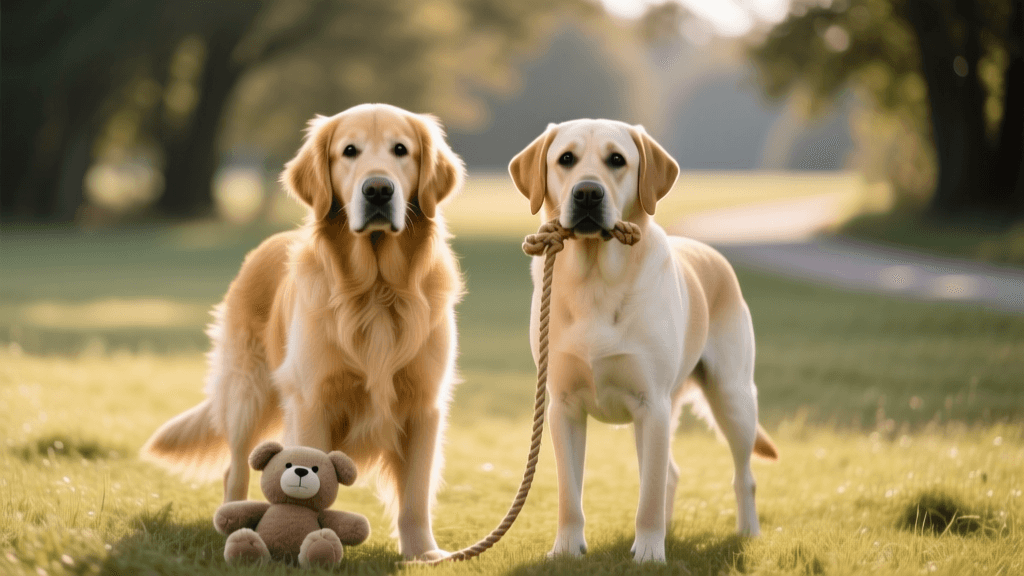
| Golden Retriever | Very High | Moderate-High | High (Shedding) | Active families wanting a gentle, forgiving companion. |
| Labrador Retriever | High | High | Moderate | Outdoorsy families who can provide ample daily exercise. |
| Beagle | Moderate-High | Moderate | Low | Families wanting a sturdy, smaller hound (but beware of vocalization). |
| Boxer | High | High | Low | Playful families who want an athletic, protective, yet goofy dog. |
| Standard Poodle | Very High | Moderate | High (Professional) | Families with mild allergies who want a highly intelligent dog. |
A Note on Size and Fragility: While tiny breeds like Chihuahuas or Pomeranians might seem ideal for small children, they are often too fragile for toddlers. A toddler falling onto a toy breed can cause severe injuries to the dog, which may result in a defensive bite. Conversely, giant breeds like Great Danes are incredibly gentle but can accidentally knock over a 25-pound toddler with a simple wag of their tail. Medium-to-large, sturdy breeds (40-75 lbs) often strike the best physical balance for toddler households.
Preparing Your Home: Creating Safe Zones
Before your new dog crosses the threshold, your home must be divided into managed zones. The ASPCA strongly recommends providing dogs with a designated safe space where they can retreat when they feel overwhelmed. For toddlers, this means creating boundaries that they physically cannot cross without adult assistance.
1. The Dog's Sanctuary (Kid-Free Zone)
Your dog needs a place to decompress. This should be a quiet corner of a low-traffic room or a dedicated space in the family room, secured by a baby gate.
- Hardware: Invest in a sturdy, hardware-mounted gate rather than a pressure-mounted one, as toddlers can push pressure gates over. The Regalo Easy Step Walk Thru Gate (approx. $45-$55) is a popular, reliable choice.
- The Crate: A crate is essential for safe confinement when you cannot actively supervise. The MidWest Homes for Pets iCrate (approx. $60-$90 depending on size) offers durability and proper ventilation. Place the crate inside the gated area so the dog can choose to enter and be left entirely alone.
2. The Kid's Playpen (Dog-Free Zone)
Toddlers need a space to play with their small toys (which can be choking hazards for dogs) without a wet nose investigating. Use a freestanding playpen or a gated section of the living room where the dog is not permitted when unsupervised.
Teaching Toddlers and Dogs to Safely Coexist
Supervision is not just about being in the same room; it is about active observation. The American Academy of Pediatrics (AAP) emphasizes that young children should never be left alone with a dog, even a trusted family pet, as the majority of dog bites to children occur during seemingly benign interactions.
The 'Be a Tree' Method
Toddlers are naturally inclined to run toward dogs. You must teach your child the 'Be a Tree' method for when the dog approaches or gets too excited. Teach your toddler to stop moving, fold their 'branches' (arms crossed over chest), and look at their 'roots' (feet). Dogs lose interest in stationary, boring objects. Practice this game daily before the dog even arrives.
Recognizing Canine Stress Signals
Parents must become fluent in dog body language. According to the American Veterinary Medical Association (AVMA), understanding early warning signs of stress can prevent bites. Look out for:
- Whale Eye: The dog turns its head away but keeps its eyes on the toddler, showing the whites of the eyes.
- Lip Licking: Repeated, quick flicks of the tongue over the nose when not eating.
- Stiffening: The dog freezes its body when hugged or leaned on.
- Yawning: Out-of-context yawning is a major calming signal indicating stress.
'Never allow a toddler to hug a dog around the neck. While humans view hugging as affection, most dogs view having their neck restricted as a threat or an act of dominance. Teach children to pet the dog gently on the back or chest instead.'
Essential Gear and Budgeting for Your First 30 Days
Getting a dog requires a financial and temporal investment, especially when managing a toddler simultaneously. Here is a practical breakdown of essential gear and timing for the first month.
Must-Have Products
- Interactive Chew Toys: To keep the dog occupied in their safe zone, invest in the KONG Classic Dog Toy (Red, approx. $15-$20). Stuff it with dog-safe peanut butter and freeze it to provide 30 minutes of quiet enrichment.
- Snuggle Puppy Behavioral Aid: (Approx. $40). This toy includes a heartbeat simulator and heat pack, which can drastically reduce whining and anxiety in a newly adopted dog during the first few nights, ensuring your toddler's sleep isn't disrupted.
- Enzymatic Cleaner: Accidents will happen. Nature's Miracle Advanced Stain and Odor Eliminator (approx. $15) is crucial for completely removing biological scents that might encourage repeat offenses on your rugs.
The 30-Day Integration Timeline
Week 1 (The Decompression Phase): Keep the dog's world small. Limit introductions to immediate family. Enforce the 3-day rule: no visitors, no trips to the dog park, and strict adherence to the crate-and-gate routine. Let the dog observe the toddler from behind a gate.
Week 2 (Scent and Sound): Begin feeding the dog high-value treats whenever the toddler is in the room, creating a positive association with the child's erratic noises and movements. Keep physical interactions to zero or strictly controlled, brief petting sessions.
Weeks 3-4 (Controlled Integration): Begin short, leashed walks with the toddler in a stroller alongside the dog. Allow brief, supervised sniffing sessions. Always end interactions on a positive note before either the dog or the toddler becomes fatigued.
Final Thoughts on Family Harmony
Bringing a dog into a home with toddlers is a marathon, not a sprint. The decision to get a dog should be made with the understanding that the adults will bear 100% of the responsibility for training, exercising, and managing the environment. By choosing a breed with the right temperament, investing in physical barriers like sturdy gates and crates, and proactively teaching your toddler how to respect the dog's boundaries, you are laying the groundwork for a beautiful, safe, and enduring friendship between your child and their new best friend.
hannah-wickes
All our authors care for dogs every day — read more of their work on the authors page.