Best Dog Breeds for Families With Toddlers and Young Kids
Discover the best dog breeds for families with toddlers. Learn essential safety tips, setup costs, and how to prepare your home for a new furry sibling.
Why Age and Temperament Matter When Choosing a Family Dog
Bringing a new dog into a household with toddlers and young children is a magical milestone, but it requires careful planning, immense patience, and strategic preparation. Unlike families with older children or adults-only homes, households with toddlers must prioritize a dog's tolerance for unpredictable movements, loud noises, and boundary-testing behaviors. Selecting the right breed and setting up a safe environment are critical steps to ensure a harmonious relationship between your new furry family member and your little ones. In this comprehensive guide, we will explore the best dog breeds for families with toddlers, break down the exact gear and costs needed to puppy-proof your home, and establish safety protocols backed by pediatric and veterinary experts.
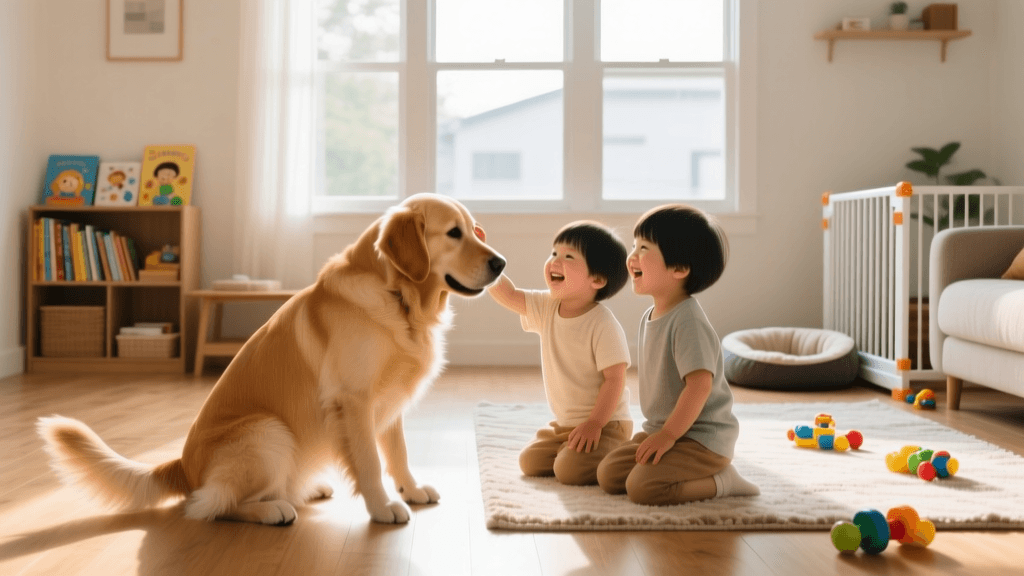
When evaluating a dog for a home with young children, temperament heavily outweighs purebred status or appearance. Toddlers are naturally uncoordinated; they stumble, drop toys, scream, and may inadvertently pull on ears or tails. A suitable family dog must possess a high "startle threshold"—meaning they do not react aggressively or fearfully to sudden loud noises or abrupt movements. Furthermore, the dog's size plays a pivotal role. While tiny toy breeds might seem ideal for small children, they are often fragile and prone to injury if a toddler falls on them. Conversely, giant breeds can accidentally knock over a newly walking child with a simple wag of the tail. Medium-to-large breeds with sturdy builds and calm, biddable natures generally offer the safest and most rewarding experience for families with children under the age of five.
Top 5 Dog Breeds for Families with Toddlers
According to the American Kennel Club (AKC), certain breeds have been historically selected for their gentle, patient, and eager-to-please dispositions. Below is a comparison chart of five exceptional breeds that thrive in chaotic, loving households with young kids.
| Breed | Adult Weight | Energy Level | Grooming Needs | Estimated Puppy Cost |
|---|---|---|---|---|
| Golden Retriever | 55-75 lbs | Moderate-High | High | $1,500 - $2,500 |
| Labrador Retriever | 55-80 lbs | High | Moderate | $1,200 - $2,000 |
| Beagle | 20-30 lbs | Moderate | Low | $800 - $1,500 |
| Boxer | 50-70 lbs | High | Low | $1,000 - $1,800 |
| Bichon Frise | 12-18 lbs | Moderate | High | $1,000 - $2,000 |
- Golden Retriever: The quintessential family dog. Known for their immense patience and intelligence, Goldens are highly trainable and tolerant of toddler antics.
- Labrador Retriever: Energetic, deeply affectionate, and sturdy. Labs love to play but require ample daily exercise to prevent destructive boredom.
- Beagle: A sturdy, medium-sized hound with a merry temperament. Their pack-animal mentality makes them excellent companions for children, though their vocalizations can be loud.
- Boxer: Playful, protective, and deeply bonded to their families. Boxers are known as the "clowns" of the dog world and are incredibly patient with kids.
- Bichon Frise: For families wanting a smaller, hypoallergenic option, the Bichon is cheerful, sturdy enough to handle gentle play, and sheds minimally.
Essential Home Preparation and Setup Costs
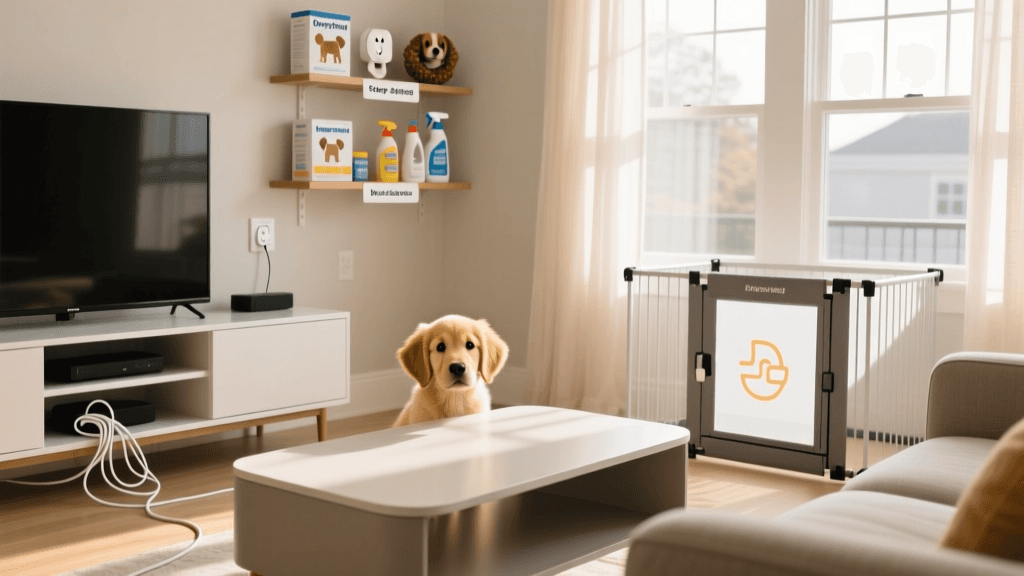
Before bringing your new dog home, you must establish physical boundaries to protect both the toddler and the dog. Creating "dog-free" and "kid-free" zones prevents resource guarding and allows the dog to decompress. Here is a breakdown of essential gear, specific product recommendations, and estimated costs for your first month.
- Extra-Wide Baby Gates: You need gates that adults can pass through easily but that confine the dog to safe zones. The Regalo Easy Step Walk Thru Gate (30 inches tall, expanding up to 32 inches wide) is a budget-friendly staple at approximately $40. For wider hallways, invest in the Regalo Super Wide Adjustable Baby Gate (up to 192 inches wide), costing around $110.
- Heavy-Duty Crate: A crate serves as the dog's sanctuary. For medium-to-large breeds like Labs or Goldens, the MidWest Homes for Pets iCrate (42x28x30 inches) provides ample room for a growing puppy and costs about $75. Always place the crate in a low-traffic area away from the toddler's play zone.
- Enzymatic Cleaners: Accidents will happen. Standard household cleaners do not break down uric acid, which encourages repeat offenses. Nature's Miracle Advanced Stain and Odor Eliminator (32 oz) is highly effective and costs around $15 per bottle. Stock up on at least three bottles.
- Indestructible Chew Toys: To redirect puppy biting away from toddler toys and fingers, provide appropriate outlets. The Kong Classic (Red, Size Large) costs $18 and can be stuffed with peanut butter and frozen to provide 30 minutes of quiet, soothing enrichment.
Teaching Toddlers and Dogs to Coexist Safely
The intersection of toddlers and dogs requires strict supervision and proactive education. The Centers for Disease Control and Prevention (CDC) notes that children are the most common victims of dog bites, and these incidents frequently occur in the home with familiar dogs. To mitigate this risk, the American Academy of Pediatrics (AAP) emphasizes that no infant or toddler should ever be left alone with a dog, regardless of the breed's reputation.
Implement the following household rules immediately:
- The "Sleeping Dog" Rule: Teach toddlers that a sleeping or eating dog is invisible. Never allow a child to approach a dog in their crate or while they are chewing a high-value treat.
- Petting Protocols: Guide your toddler's hand to pet the dog's back or chest, avoiding the face, ears, and tail. Use the phrase "gentle hands" consistently.
- Respect the Growl: A growl is a vital communication tool, not a sign of a "bad" dog. If the dog growls, calmly separate the child and the dog without punishing the dog. Punishing a growl teaches the dog to skip the warning and go straight to a bite.
Adoption vs. Buying: The Foster Advantage
While buying a puppy from a reputable breeder allows you to predict adult size and temperament, adopting an adult dog from a foster-based rescue can be a superior choice for families with toddlers. Foster parents live with the dogs in home environments and can accurately report whether a specific dog is tolerant of loud noises, vacuum cleaners, and children's erratic movements. When browsing rescue profiles, look for dogs aged two to five years; they are past the destructive puppy phase, their personalities are fully formed, and their energy levels are manageable. Expect adoption fees to range from $250 to $500, which typically includes spay/neuter surgery, microchipping, and core vaccinations.
The First 30 Days: A Timeline for Success
Week 1: Focus entirely on decompression. Keep the dog's world small. Use baby gates to limit access to the house, and keep interactions with the toddler brief, supervised, and highly positive.
Week 2: Begin establishing a routine. Take the dog out for potty breaks at the same times daily, and start basic obedience training using positive reinforcement. Enroll in a local puppy or adult dog foundational class to build communication.
Week 3: Introduce structured play. Teach the toddler how to throw a ball or engage the dog with a flirt pole under strict adult supervision.
Week 4: Evaluate and adjust. Identify any stress signals the dog exhibits (lip licking, yawning, whale eye) and adjust the environment to give the dog more space and downtime.
Bringing a dog into a family with young children is a profound responsibility, but with the right breed selection, strategic home preparation, and unwavering commitment to safety, you are laying the foundation for a beautiful, lifelong bond between your child and their new best friend.
priya-sutaria
All our authors care for dogs every day — read more of their work on the authors page.