Dog-Proofing Your Home: Room-by-Room Puppy Safety Guide
Learn how to dog-proof your home with this room-by-room safety guide. Discover essential puppy-proofing products, costs, and expert tips for new owners.
Welcoming a New Puppy: The Importance of Preparation
Bringing a new puppy home is an exhilarating milestone filled with wagging tails, wet noses, and endless photo opportunities. However, beneath the excitement lies a critical responsibility that many first-time dog owners underestimate: dog-proofing your home. A standard human household is riddled with hidden hazards that can pose severe risks to a curious, teething puppy. From toxic houseplants to easily accessible electrical cords, your home requires a thorough safety audit before your new furry friend crosses the threshold.
Puppies explore the world primarily through their mouths and noses. What looks like a fun toy to a Golden Retriever or a French Bulldog puppy could be a choking hazard or a toxic substance. According to the ASPCA Animal Poison Control Center, tens of thousands of pets are exposed to toxic household substances every single year, with a significant percentage of these emergencies occurring in homes that were not adequately puppy-proofed. Taking a proactive, room-by-room approach to home safety is not just about protecting your belongings; it is about saving your puppy's life.
Essential Dog-Proofing Supplies and Budget
Before you begin your home audit, you will need to assemble a toolkit of puppy-proofing supplies. Investing in high-quality safety gear upfront can save you thousands of dollars in emergency veterinary bills and replacement furniture costs. Below is a breakdown of essential products, their primary purposes, and estimated costs to help you budget effectively.
| Product | Purpose | Estimated Cost |
|---|---|---|
| Hardware-Mounted Baby Gates | Blocking stairs and hazardous rooms (e.g., kitchen, laundry) | $40 - $80 |
| Sliding Cabinet Locks | Securing cleaning supplies, medications, and toxic foods | $15 - $25 |
| Split Loom Tubing | Protecting electrical cords and TV cables from chewing | $10 - $20 |
| Bitter Apple Spray | Deterring chewing on furniture legs and baseboards | $8 - $15 |
| Heavy-Duty Dog Playpen | Creating a safe, contained zone for unsupervised moments | $50 - $120 |
| Locking Trash Cans | Preventing access to food scraps, bones, and wrappers | $60 - $150 |
Room-by-Room Puppy Proofing Guide
The Kitchen and Dining Area
The kitchen is arguably the most dangerous room in the house for a new dog. It is packed with toxic foods, sharp objects, and heavy appliances. Start by securing your lower cabinets with sliding locks. Many human foods, including onions, garlic, grapes, raisins, and macadamia nuts, are highly toxic to dogs. Furthermore, you must be vigilant about Xylitol (often listed as birch sugar), an artificial sweetener found in sugar-free gum, baked goods, and some peanut butters. Even a tiny amount of Xylitol can cause rapid hypoglycemia and liver failure in dogs.
Trash cans are a massive temptation for puppies. The scent of discarded meat bones, corn cobs, and fatty scraps can drive a puppy to knock over a bin and ingest dangerous items. Cooked bones can splinter and puncture the digestive tract, while corn cobs are a leading cause of intestinal blockages. Invest in a heavy-duty, locking trash can, such as the simplehuman Step Can with a lock, or keep your trash completely hidden inside a latched cabinet. Never leave food unattended on low tables or countertops where an ambitious puppy might jump up to investigate.
The Living Room
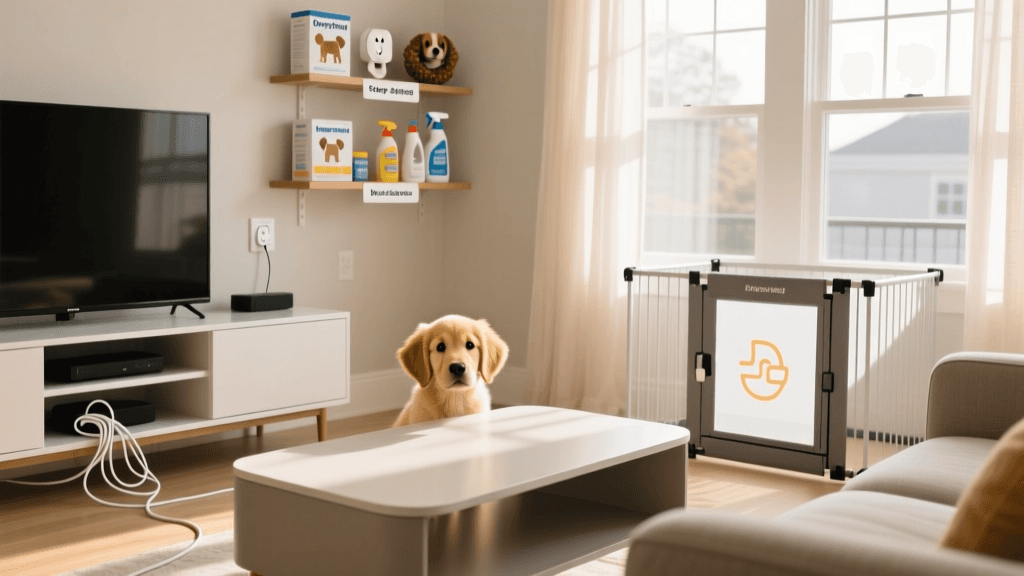
The living room is where you will spend most of your time bonding with your new dog, but it requires careful modification. Electrical cords are a major hazard. Puppies love the texture of rubbery wires, and a single bite can result in severe electrical burns or electrocution. Use split loom tubing or cord concealers to bundle and hide wires behind furniture. For cords that must remain exposed, apply a bitter-tasting deterrent spray and reapply it weekly.
Houseplants are another frequent culprit in pet emergencies. Popular indoor plants like Pothos, Philodendrons, Peace Lilies, and Sago Palms are highly toxic to dogs if ingested, causing symptoms ranging from oral irritation to fatal organ failure. Relocate all toxic plants to high, unreachable shelves or replace them with pet-safe alternatives like Spider Plants, Boston Ferns, or Calatheas. Additionally, pick up small items like TV remotes, children's toys, and loose change, as these are prime choking hazards for teething puppies.
Bathrooms and Laundry Rooms
Bathrooms and laundry rooms are often overlooked during the puppy-proofing process, yet they contain some of the most concentrated hazards in the home. Always keep the toilet lid closed. Puppies can easily fall in, struggle to get out, and drown, or they may attempt to drink from the bowl, which is especially dangerous if you use automatic toilet bowl cleaners that contain harsh chemicals.
Store all medications, vitamins, and supplements in high cabinets secured with childproof latches. Never leave pill bottles on the edge of the sink or vanity. In the laundry room, liquid laundry pods are a severe risk; their bright colors and squishy texture make them look like toys, but biting into one can cause chemical burns to the mouth and severe respiratory distress. Keep all detergents, fabric softeners, and bleach on high shelves or behind locked doors.
Bedrooms and Home Offices
Bedrooms and home offices present unique challenges, particularly regarding footwear and electronics. Shoes, socks, and underwear are notoriously appealing to puppies due to their strong scent profile. Ingesting fabric can lead to life-threatening gastrointestinal blockages that require emergency surgery. Keep all clothing in closed closets or elevated hampers.
In the home office, desk setups are often a tangled mess of charging cables, USB cords, and power strips. Use cable management boxes to enclose power strips and zip-tie loose cables to the legs of your desk. Be mindful of small office supplies like paperclips, rubber bands, and thumbtacks that may fall to the floor. A quick sweep of the floor with your hands and knees—literally getting down to your puppy's eye level—will help you spot hazards you might miss while standing.
Securing Your Outdoor Space
Your yard should be a safe sanctuary for your puppy to burn off energy, but it requires just as much scrutiny as your indoor spaces. Inspect your perimeter fencing carefully. Look for gaps, loose boards, or areas where the soil has eroded beneath the fence line. Puppies are notorious diggers and can easily escape through a hole that looks too small for their body. If you have a smaller breed, ensure the gaps between chain-link or wrought-iron fence pickets are narrow enough that they cannot squeeze their head through and become trapped.
Landscaping choices also play a crucial role in outdoor safety. Cocoa bean mulch, while attractive and fragrant, contains theobromine—the same toxic compound found in chocolate—and can be fatal if a puppy decides to snack on it. Opt for pet-safe alternatives like cedar or pine mulch, or use plain dirt and gravel beds. Before planting anything new, always cross-reference your selections with the ASPCA's Toxic and Non-Toxic Plants database to ensure your garden remains a safe haven.
Creating a Safe "Puppy Zone"
Even in a thoroughly dog-proofed home, you cannot supervise your puppy every second of the day. This is where a dedicated "puppy zone" becomes invaluable. The American Kennel Club (AKC) highly recommends setting up an exercise pen (playpen) in a common area of the house, such as the kitchen or living room. This allows your puppy to feel included in family activities while remaining safely contained.
Inside the playpen, provide a properly sized crate with the door propped open, a few safe chew toys (like solid rubber Kong toys stuffed with puppy-safe peanut butter), and a shallow bowl of fresh water. Avoid leaving plush beds or towels in the pen unsupervised until your puppy is past the heavy chewing phase, as torn fabric can be ingested. This safe zone not only prevents accidents and destruction but also serves as a critical tool for house training and teaching your puppy how to self-soothe and relax independently.
Final Thoughts on Home Safety
Dog-proofing your home is an ongoing process, not a one-time checklist. As your puppy grows, their reach, jumping ability, and problem-solving skills will expand, requiring you to adapt your safety measures accordingly. By investing the time and resources into securing your home environment before your dog arrives, you are laying the foundation for a long, healthy, and stress-free life together. Remember, a safe puppy is a happy puppy, and a secure home brings immeasurable peace of mind to any new dog owner.
tom-renshaw
All our authors care for dogs every day — read more of their work on the authors page.