Best Dog Breeds for Apartment Living and Remote Work
Discover the best dog breeds for apartment living and remote work. Compare energy levels, space needs, and costs to find your perfect WFH companion.
The Rise of the WFH Dog Parent
The shift toward remote work has fundamentally transformed how we share our lives with dogs. According to the Centers for Disease Control and Prevention, pet ownership provides significant mental health benefits, including reduced stress and lowered blood pressure—perks that are especially valuable when your home doubles as your office. However, blending apartment living with full-time remote work requires strategic breed selection. Not every dog thrives in a 700-square-foot space, and a vocal hound can quickly become a liability with shared walls and strict strata bylaws.
Selecting the right breed for an apartment-dwelling remote worker means balancing spatial constraints, noise tolerance, and the unique rhythm of a work-from-home (WFH) schedule. While you are home more often, which helps mitigate separation anxiety, your dog must also respect your working hours, remaining calm during Zoom calls and content with indoor enrichment while you hit deep-work phases.
Key Factors for Apartment-Friendly Breeds
Space and Size Considerations
There is a common misconception that small dogs are automatically better for apartments. While a Chihuahua takes up less physical space, many small terriers possess boundless energy and a propensity to bark at every hallway noise. Conversely, the American Kennel Club notes that several large breeds, such as the Greyhound or Great Dane, are notorious couch potatoes that require minimal indoor space to lounge, provided they receive an adequate daily outdoor sprint.
Energy Levels and Noise
In an apartment, a dog's energy level and vocalization are far more critical than their weight. Breeds originally developed for alerting or herding (like Shetland Sheepdogs or Beagles) are genetically wired to bark at environmental changes. For apartment harmony, you want a breed with a low alert barking tendency. Furthermore, consider your WFH schedule: if you cannot commit to a 45-minute morning run, avoid high-drive working breeds like Border Collies or Belgian Malinois, whose pent-up energy will manifest as destructive chewing on your baseboards or furniture.
Top 5 Dog Breeds for Apartment Living and Remote Work
When evaluating breeds, we look at the intersection of low indoor energy, minimal barking, and a strong desire for human companionship (ideal for a WFH environment). Below is a comparative breakdown of five exceptional apartment-friendly breeds.
| Breed | Average Weight | Energy Level | Barking Tendency | Est. Monthly Cost |
|---|---|---|---|---|
| Cavalier King Charles Spaniel | 12-18 lbs | Low to Moderate | Low | $80 - $120 |
| Greyhound (Retired Racer) | 60-70 lbs | Low (Indoor) | Very Low | $100 - $150 |
| Bichon Frise | 12-18 lbs | Moderate | Moderate | $90 - $140 |
| Shih Tzu | 9-16 lbs | Low | Low to Moderate | $70 - $110 |
| French Bulldog | 16-28 lbs | Low | Low | $120 - $200 |
1. Cavalier King Charles Spaniel
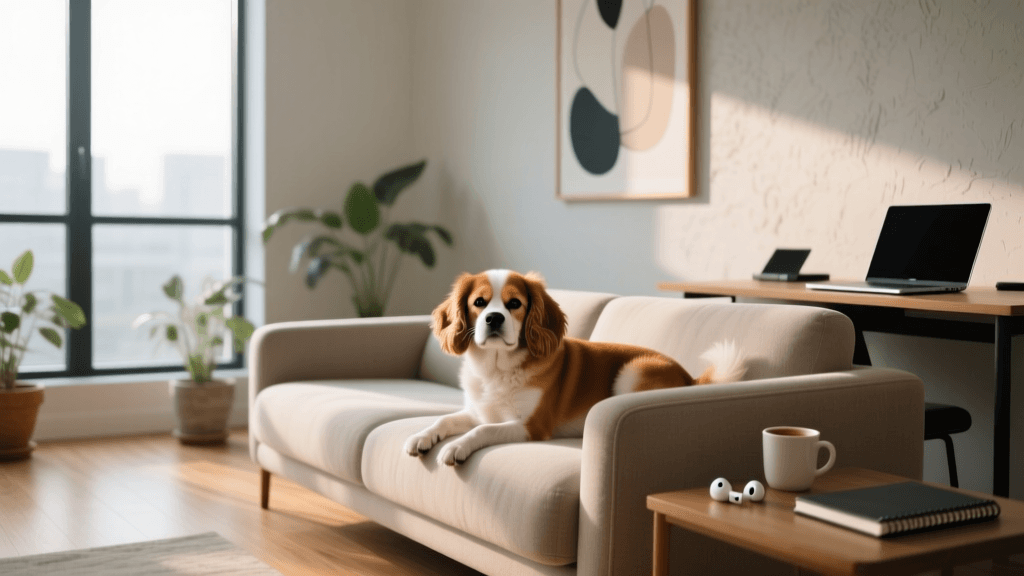
The Cavalier is the quintessential lap dog. They are deeply affectionate and thrive on proximity, making them perfect companions for a home office setup. They require a moderate 30-minute daily walk and are generally quiet, though they are prone to separation anxiety if you ever need to return to an in-office role. Budget for potential health screening, as the breed is predisposed to mitral valve heart disease.
2. Greyhound
Adopting a retired racing Greyhound is one of the best-kept secrets of apartment living. Despite their athletic background, Greyhounds are sprinters, not endurance runners. A 20-minute burst of running in a fenced park followed by a 15-foot biothane long line walk is usually sufficient. Indoors, they sleep up to 18 hours a day and rarely bark, making them invisible to your neighbors.
3. Bichon Frise
For allergy sufferers sharing a poorly ventilated apartment, the Bichon Frise is a top contender. Their hair-like coat sheds minimally, but it requires professional grooming every 4 to 6 weeks (adding roughly $50-$80 to your monthly budget). They are cheerful and adaptable, though they do require consistent potty training, as small bladders mean more frequent trips to the apartment's designated relief area.
4. Shih Tzu
Bred specifically for companionship in imperial palaces, the Shih Tzu requires minimal exercise. A couple of 15-minute leash walks around the block are plenty. They are sturdy for a small dog and generally unbothered by the ambient noise of city living, though their facial structure requires daily eye wiping to prevent tear stains and infections.
5. French Bulldog
Frenchies are incredibly popular in urban environments due to their low exercise needs and comical, affectionate personalities. They are brachycephalic (flat-faced), meaning they cannot tolerate heat or strenuous exercise, which naturally aligns with a relaxed apartment lifestyle. However, their specialized veterinary needs and premium dietary requirements push their monthly costs higher than other breeds on this list.
Practical Costs of Apartment Dog Ownership
Owning a dog in a rental apartment involves unique financial considerations beyond standard food and veterinary care. According to the Animal Legal Defense Fund, pet-friendly housing often comes with附加 financial stipulations that renters must factor into their monthly budgets.
- Pet Rent: Many landlords charge a non-refundable monthly pet rent ranging from $25 to $75 per month, depending on the city and the dog's size or breed.
- Pet Deposits: Expect an upfront, sometimes non-refundable pet deposit of $200 to $500 to cover potential damages to hardwood floors or baseboards.
- Indoor Potty Solutions: If you live on the 14th floor, midnight bathroom breaks are a logistical hurdle. Budget $30 to $45 a month for high-quality indoor grass patches or washable pee pad systems.
- Mid-Day Dog Walkers: Even if you work from home, stepping away for a 2-hour virtual meeting requires a dog walker. Urban dog walking services typically charge $20 to $30 per 30-minute walk.
Designing a WFH Routine for Your Apartment Dog
A successful WFH routine hinges on separating work time from dog time. Dogs thrive on predictability. If your dog learns that the closing of your laptop signifies playtime, they will begin to whine or paw at you whenever you open it.
The Morning Sniffari
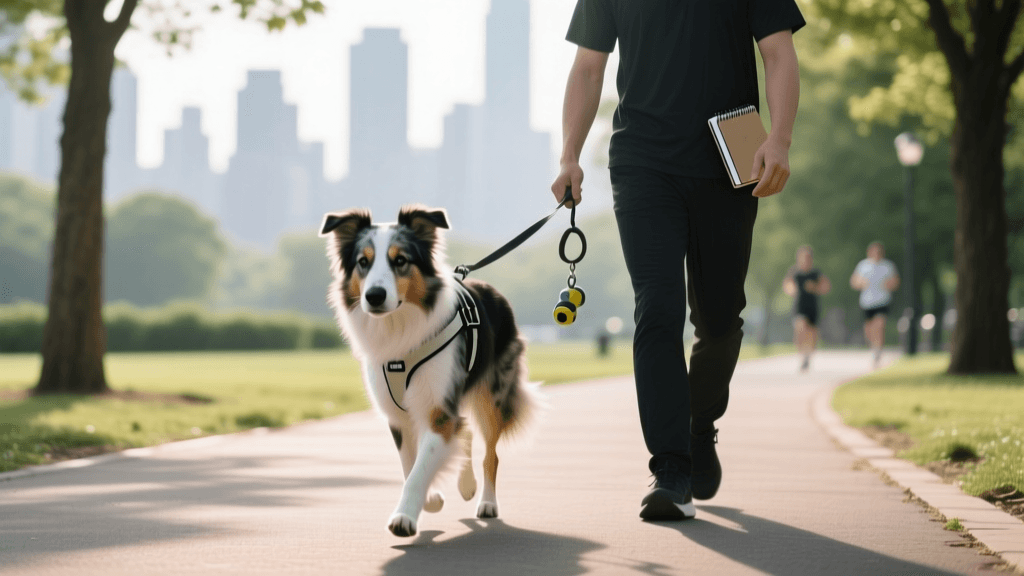
Before opening your first email, take your dog on a 30-minute sniffari. Use a 15-foot harness and long line to let them explore and sniff at their own pace. Mental enrichment through sniffing tires a dog out just as effectively as physical running, ensuring they settle into a deep sleep on their bed while you tackle morning tasks.
Soundproofing and Enrichment
Apartments are noisy. Hallway footsteps, elevator dings, and neighboring TVs can trigger alert barking. Mitigate this by laying down thick area rugs to absorb sound and running a white noise machine near the front door. When you need uninterrupted focus, provide your dog with a frozen Kong stuffed with plain Greek yogurt, pumpkin puree, and kibble. This provides 45 minutes of quiet, licking enrichment, which releases endorphins and promotes calmness.
Balcony Safety and Spatial Hacks
If your apartment features a balcony or patio, it can serve as an excellent outdoor lounge and potty area. However, safety is paramount. Install pet-safe, heavy-duty balcony netting to prevent falls or dropped toys. You can also lay down interlocking foam floor tiles or pet-safe artificial turf (measuring roughly 4x6 feet for a standard balcony) to create a designated potty zone, saving you late-night elevator trips during winter storms.
The key to a harmonious multi-family living situation with a dog is proactive management. A tired, mentally stimulated dog is a quiet dog, and a quiet dog is the best neighbor you could ask for.
Final Thoughts on Breed Selection
Choosing a dog for apartment living and remote work is a highly personalized decision. While breeds like the Greyhound and Cavalier King Charles Spaniel offer a genetic head start toward a quiet, low-space lifestyle, individual temperament varies. Always spend time with a rescue dog in a foster home rather than a loud shelter kennel to accurately gauge their indoor manners and noise sensitivity. By aligning your breed choice with your spatial reality and WFH schedule, you pave the way for a peaceful, joyful life together in the city.
jonas-cole
All our authors care for dogs every day — read more of their work on the authors page.