The Complete Beginner's Handbook to Prepping for a New Dog
Prepare your home for a new dog with our complete beginner's handbook. Discover essential gear, safety tips, and a first-day checklist for success.

The Complete Beginner's Handbook to Prepping for a New Dog
Bringing a new dog home is one of life’s most exciting milestones, but it can also be incredibly overwhelming for a first-time owner. Between choosing the right food, puppy-proofing your living space, and establishing a routine, the sheer volume of decisions can lead to decision fatigue. This complete beginner's handbook is designed to cut through the noise, providing you with actionable, step-by-step instructions to prepare your home, gather the right gear, and survive the crucial first 24 hours with your new canine companion.
Understanding the 3-3-3 Rule of Decompression
Before you buy a single dog toy or move a piece of furniture, you must understand the psychological transition your new dog is about to experience. Rescue organizations and behaviorists widely advocate for the '3-3-3 Rule' to set realistic expectations for new owners.
- The First 3 Days (Decompression): Your dog may feel overwhelmed, scared, or unsure. They might not eat or drink normally, test boundaries, or hide in their crate. This is normal.
- The First 3 Weeks (Settling In): Your dog starts to figure out your routine. Their true personality begins to emerge, and they learn the rules of the house. This is when minor behavioral issues often surface.
- The First 3 Months (Feeling at Home): Your dog builds trust and a deep bond with you. They finally feel secure and understand that this is their forever home.
Keeping this timeline in mind will prevent you from panicking if your new dog doesn't act perfectly on day one. Patience and structured preparation are your best tools.
Phase 1: Room-by-Room Dog-Proofing
Dogs explore the world with their mouths and noses, which means your home is essentially an obstacle course of potential hazards. You must dog-proof your home with the same rigor you would use for a crawling toddler.
The Kitchen
The kitchen is the most dangerous room for a new dog. Secure all cleaning supplies in high cabinets or use childproof latches. Invest in a heavy, latching trash can (like a 13-gallon simplehuman model) to prevent dumpster diving, which can lead to intestinal blockages or toxic ingestion. Be acutely aware of food hazards: xylitol (an artificial sweetener found in sugar-free gum and some peanut butters), grapes, raisins, onions, and macadamia nuts are highly toxic to dogs.
The Living Room and Houseplants
Electrical cords should be tucked away or covered with split loom tubing to prevent fatal electrocution or severe mouth burns. Furthermore, you must audit your houseplants. According to the ASPCA Animal Poison Control Center, common household plants like lilies, sago palms, aloe vera, and pothos can be highly toxic to dogs, causing symptoms ranging from gastrointestinal distress to acute liver failure. Move all toxic plants to high shelves or replace them with pet-safe alternatives like spider plants or Boston ferns.
The Bathroom and Laundry Room
Keep toilet lids closed to prevent dogs from drinking chemically treated water or drowning. Store all medications, vitamins, and supplements in locked cabinets; dogs can easily chew through child-proof pill bottles. Ensure your laundry room is gated off, as dogs love to chew on dirty socks and underwear, which are notorious for causing surgical intestinal blockages.
Phase 2: Family Meeting and Rule Setting
Before the dog arrives, hold a family meeting to establish consistency. Dogs thrive on predictable rules. If one person allows the dog on the couch and another scolds them for it, the dog will become confused and anxious. Decide on the following:
- Command Words: Agree on specific verbal cues. Will you use 'down' for lying down and 'off' for getting off the furniture? Consistency is vital.
- Furniture Rules: Are dogs allowed on the beds or sofas? If not, ensure everyone enforces this from minute one.
- Feeding and Walking Schedules: Create a chore chart so the dog learns to rely on a predictable routine, which drastically reduces anxiety.
Phase 3: The Essential Gear Checklist
Walking into a pet store without a list is a guaranteed way to overspend on useless gadgets and forget the essentials. Below is a structured breakdown of the exact gear you need, complete with estimated costs and specifications.
| Item | Purpose | Estimated Cost | Recommended Specs |
|---|---|---|---|
| Wire Crate | Safe space, potty training, and travel | $50 - $90 | MidWest Homes for Pets; must include a divider panel to adjust size as a puppy grows. |
| Front-Clip Harness | Safe walking without tracheal damage | $25 - $45 | Kurgo Tru-Fit or Rabbitgoo; front clip discourages pulling. |
| Enzymatic Cleaner | Eliminating organic potty stains and odors | $15 - $25 | Nature's Miracle or Rocco & Roxie; standard cleaners won't break down uric acid. |
| Interactive Chew Toys | Mental stimulation and teething relief | $15 - $30 | KONG Classic (red or black based on chew strength) and Nylabone Power Chew. |
| Hardware-Mounted Baby Gates | Restricting access to unsafe rooms | $40 - $70 | Minimum 30 inches tall for large breeds; avoid pressure-mounted gates near stairs. |
| Stainless Steel Bowls | Hygienic feeding and watering | $15 - $30 | Slope-backed or weighted base to prevent sliding and bacterial buildup. |
Phase 4: Setting Up the 'Safe Zone'
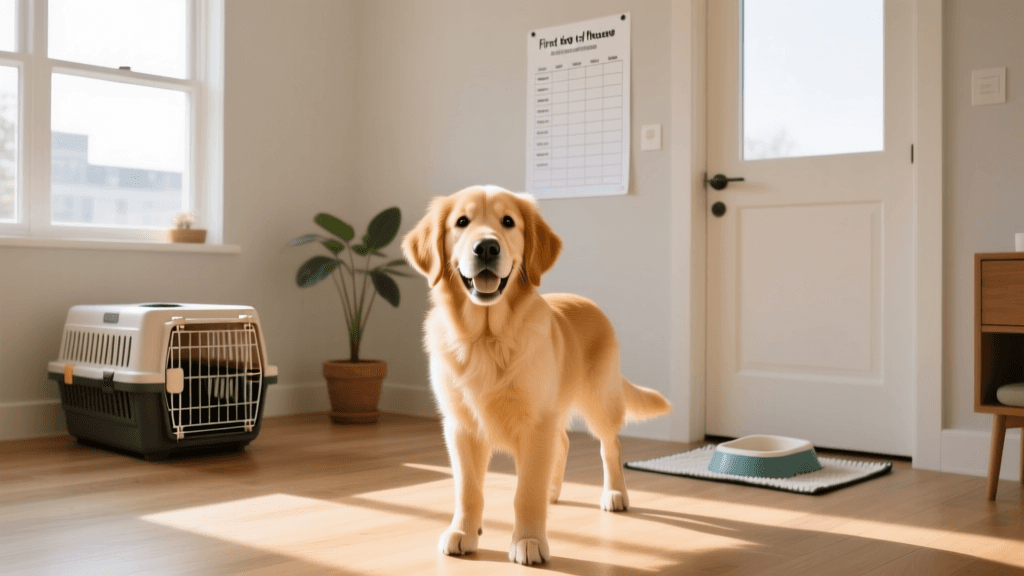
Your new dog needs a designated sanctuary where they can retreat when the environment becomes overstimulating. The American Kennel Club emphasizes that a crate should be a safe haven, never a place of punishment. To properly size a crate, measure the dog from the tip of their nose to the base of their tail, and add 2 to 4 inches. They should be able to stand up, turn around, and lie down comfortably, but not have so much extra space that they can use one end as a bathroom.
Place the crate in a low-traffic area of your home that is still part of the family's general vicinity, such as a quiet corner of the living room or a spare bedroom. Covering the top and sides of a wire crate with a breathable blanket can create a den-like atmosphere that promotes faster decompression.
Phase 5: The First 24 Hours Timeline
The first day sets the tone for your dog's entire life in your home. The Humane Society of the United States recommends giving your new dog a quiet, confined space to decompress, avoiding the temptation to invite friends and family over for a 'welcome party.' Here is a practical timeline for day one.
Hour 1: Arrival and Immediate Potty Break
When you arrive home, do not bring the dog inside immediately. Take them directly to their designated outdoor potty spot on a leash. Wait patiently for up to 15 minutes. When they eliminate, offer high-value treats (like boiled chicken or freeze-dried liver) and calm verbal praise. This immediately establishes where the bathroom is located.
Hour 2: The Leashed House Tour
Bring the dog inside on a leash. Do not give them free roam of the entire house, as this can trigger territorial marking or overwhelm them. Walk them through their designated 'safe zones' (the kitchen, the living room, and their sleeping area). Let them sniff their new water bowl and crate. Keep the energy calm and quiet.
Hour 3: Decompression and Alone Time
After the tour, guide the dog into their crate or a gated safe room with a long-lasting chew (like a frozen KONG stuffed with dog-safe peanut butter). Leave the room for 30 to 60 minutes. This teaches the dog that being alone in their safe space is rewarding and prevents the immediate onset of separation anxiety.
Evening: Establishing the Routine
Stick to a strict schedule for the evening meal and the final potty break. Take up the water bowl two hours before bedtime to minimize overnight accidents. When it is time for bed, place the crate in your bedroom for the first few nights. Your presence, scent, and the sound of your breathing will reassure the dog that they are safe, drastically reducing nighttime whining and crying.
Final Thoughts for the Beginner
Preparing for a new dog is about managing the environment to set the dog up for success. By dog-proofing your home, investing in the correct gear, and respecting the 3-3-3 decompression rule, you are building a foundation of trust. Remember that mistakes will happen—accidents will occur, and shoes might get chewed. Respond with patience, redirect to appropriate behaviors, and rely on your structured routine. You are not just bringing a pet into your house; you are welcoming a new family member into their forever home.
robin-maitland
All our authors care for dogs every day — read more of their work on the authors page.