The Beginner's Handbook To Puppy Crate Training Success
Master puppy crate training with our beginner's handbook. Learn step-by-step schedules, crate sizing, and positive reinforcement tips for a happy pup.
Welcome to Your Puppy Crate Training Handbook
Bringing a new puppy home is an exhilarating experience filled with wagging tails, tiny paws, and boundless energy. However, alongside the joy comes the immediate responsibility of teaching your new family member how to navigate their new environment safely. This is where crate training becomes your most valuable tool. Welcome to the Complete Beginner's Handbook for Puppy Crate Training. This comprehensive guide is designed specifically for first-time dog owners who want to establish a structured, positive, and stress-free foundation for their puppy's behavior.
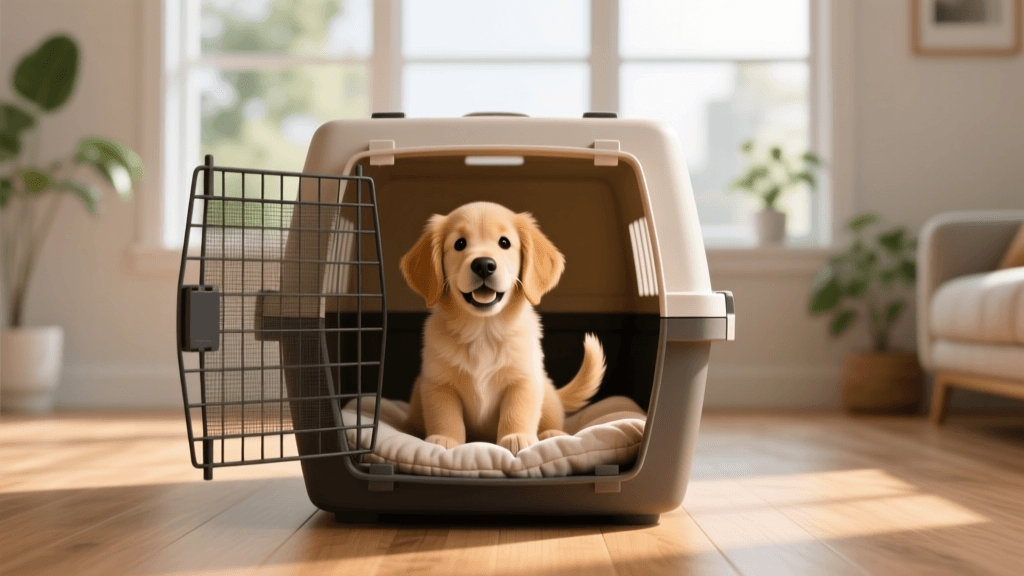
Crate training is not about locking your dog away; it is about providing them with a secure sanctuary. When executed correctly, the crate becomes your puppy's bedroom, a safe haven where they can retreat when the household becomes overwhelming, and a critical tool for housebreaking and preventing destructive behavior. In this handbook, we will cover everything from selecting the right equipment to implementing a daily schedule that sets your puppy up for lifelong success.
The Science and Psychology Behind the Crate
To understand why crate training is so effective, we must look at canine evolutionary psychology. Dogs are descendants of den-dwelling wolves. In the wild, a den provides safety from predators, a place to raise young, and a shelter from harsh weather. While domesticated dogs no longer face these wild threats, the instinct to seek out a small, enclosed, and secure space remains deeply ingrained in their DNA.
When you introduce a crate properly, you are tapping into this natural denning instinct. The crate becomes their personal territory. According to the Humane Society of the United States, a crate takes advantage of a dog's natural reluctance to soil their sleeping area, making it one of the most effective methods for accelerating potty training. Furthermore, it prevents puppies from engaging in dangerous behaviors, such as chewing on electrical cords or ingesting toxic household items, when they cannot be directly supervised.
Choosing the Right Crate: A Buyer's Comparison
Not all crates are created equal, and selecting the right material and style is crucial for your puppy's comfort and your convenience. Below is a comparison chart of the most common crate types available on the market, including average costs and ideal use cases.
| Crate Type | Average Cost | Pros | Cons | Best For |
|---|---|---|---|---|
| Wire Crates (e.g., MidWest iCrate) | $40 - $90 | Excellent ventilation, foldable for travel, includes divider panels, easy to clean. | Heavy, visually obtrusive, can be noisy if the puppy paws at the metal. | Everyday home use, potty training, growing puppies. |
| Plastic Crates (e.g., Petmate Sky Kennel) | $30 - $75 | Den-like feel, airline-approved, blocks visual stimuli to reduce barking. | Poor ventilation in hot weather, harder to clean, takes up more storage space. | Air travel, anxious dogs who need a darker, cozier den. |
| Soft-Sided Crates (e.g., Frisco Soft-Sided) | $30 - $60 | Lightweight, portable, comfortable, folds down easily. | Easily destroyed by chewing or scratching, difficult to clean accidents. | Fully crate-trained adult dogs, car trips, camping. |
| Heavy-Duty/Aluminum | $300 - $800+ | Virtually indestructible, escape-proof, highly durable. | Extremely expensive, very heavy, lacks a cozy aesthetic. | Severe separation anxiety, escape artists, large powerful breeds. |
For a beginner with a new puppy, a wire crate with a divider panel is universally recommended. The divider allows you to adjust the internal space as your puppy grows, ensuring you only need to purchase one crate for their entire life.
Sizing and Setup: Getting the Measurements Right
A common beginner mistake is buying a crate that is too large. If a puppy has too much space, they will designate one corner for sleeping and the opposite corner for eliminating, completely defeating the purpose of potty training. The crate should be just large enough for your puppy to stand up without crouching, turn around comfortably, and lie down stretched out.
How to Measure:
- Length: Measure from the tip of your puppy's nose to the base of their tail (do not include the tail), then add 2 to 4 inches.
- Height: Measure from the floor to the top of their head (or the tips of their ears if they are erect), then add 2 inches.
Setup Tips: Place the crate in a high-traffic family area, such as the living room or kitchen, so your puppy does not feel isolated. Avoid placing it in direct sunlight or near drafty windows. Outfit the interior with a washable fleece pad or a chew-proof bed like the KONG Slumber Dog Bed. Avoid thick, plush beds initially, as teething puppies may shred and ingest the stuffing, leading to costly veterinary emergencies.
The Step-by-Step Crate Training Schedule
Patience and positive reinforcement are the cornerstones of successful crate training. Never force your puppy into the crate or use it as a punishment. Follow this phased approach to build a positive association.
Phase 1: Introduction and Positive Association (Days 1-3)
Leave the crate door open and toss high-value treats (like boiled chicken or Zuke's Mini Naturals) inside. Let the puppy enter, eat the treat, and exit freely. Feed them their regular meals near the crate, gradually moving the food bowl further inside with each feeding. The goal is to teach the puppy that the crate is the source of all good things.
Phase 2: Building Duration (Days 4-7)
Once your puppy willingly enters the crate, begin closing the door for short intervals. Give them a long-lasting chew, such as a frozen KONG stuffed with peanut butter or plain yogurt. Sit nearby while they chew. Start with 5 minutes, gradually increasing to 15, then 30 minutes. If the puppy whines, wait for a brief moment of silence before opening the door to avoid reinforcing the whining behavior.
Phase 3: Leaving the Room (Week 2 and Beyond)
Begin stepping out of the room for brief periods. Start with just one minute, then return and reward calm behavior. Slowly extend your absences to 5, 10, and eventually 30 minutes. Experts at the American Kennel Club emphasize keeping departures and arrivals low-key to prevent triggering separation anxiety.
Mastering Nighttime Crate Training and Potty Breaks
Nighttime is often the most challenging period for beginners. Puppies have tiny bladders and cannot hold it through the night. The general rule of thumb for bladder control is the puppy's age in months plus one. For example, a 2-month-old puppy can hold their bladder for approximately 3 hours.
Nighttime Protocol:
- Water Curfew: Remove your puppy's water bowl 1.5 to 2 hours before bedtime.
- Last Potty Break: Take them outside on a leash immediately before crating for the night. Keep this trip boring and strictly business.
- Placement: For the first few weeks, keep the crate in your bedroom or just outside your door. Hearing your breathing and scent will soothe them.
- The Midnight Whine: If your puppy whines in the middle of the night, assume they need to eliminate. Carry them outside (to prevent accidents on the way), place them on their potty spot, and reward them when they go. Then, return them directly to the crate.
- Sensory Soothing: Covering the wire crate with a breathable blanket can create a darker, cozier den. Playing a white noise machine or using a Snuggle Puppy (a plush toy with a simulated heartbeat) can significantly reduce nighttime crying.
Crucial Rules and Common Beginner Mistakes
Even with the best intentions, beginners often make missteps that can set their training back. Avoid these common pitfalls:
- Never use the crate as punishment. The crate must always be associated with safety and positivity. If you use it for time-outs, your dog will develop an aversion to entering it.
- Do not leave the puppy crated too long. Veterinary professionals at Preventive Vet warn that excessive crating can lead to physical issues like joint stiffness and psychological issues like depression or hyperactivity. Puppies under 6 months should not be crated for more than 3-4 hours at a time during the day, excluding overnight sleep.
- Do not give in to attention barking. If your puppy barks or throws a tantrum and you immediately open the door, you have just taught them that barking is the key to freedom. Always wait for a pause in the noise, or ask for a simple command like 'sit' before releasing them.
- Remove collars before crating. To prevent tragic accidents where a collar gets snagged on the wire or plastic grates, always remove your puppy's collar before they enter the crate.
Conclusion: Setting the Stage for a Well-Adjusted Dog
Crate training is a marathon, not a sprint. There will be sleepless nights and moments of frustration, but consistency is your greatest ally. By following the steps in this beginner's handbook, selecting the right equipment, and maintaining a compassionate, reward-based approach, you are giving your puppy the gift of security and independence. Stick to the schedule, celebrate the small victories, and watch your puppy grow into a confident, well-mannered adult dog who loves their personal sanctuary.
anouk-beaumont
All our authors care for dogs every day — read more of their work on the authors page.