Transform Your Home: Before and After Dog-Proofing Guide
Discover essential before and after home transformations for new dog owners. Learn practical dog-proofing tips, costs, and safety upgrades for your space.

The Journey Begins: From Human-Centric to Canine-Sanctuary
Bringing a new dog into your life is a thrilling milestone, but the transition from a dog-free household to a dog-friendly home requires more than just purchasing a bag of kibble and a squeaky toy. The most successful dog owners understand that preparing the physical environment is just as critical as preparing emotionally. When we look at home transformations through a "before and after" lens, the differences are staggering. A space that once felt perfectly safe and organized can quickly become a minefield of chewed baseboards, ingested toxins, and ruined furniture if left unmodified.
This comprehensive guide will walk you through the ultimate before-and-after home transformation for new dog owners. We will cover specific product recommendations, exact measurements for safety barriers, estimated costs, and the behavioral shifts required to turn your house into a true canine sanctuary.
The "Before" Phase: Assessing Your Home Through a Dog's Eyes
Before you can transform your space, you must audit it. Get down on your hands and knees—literally. This is the vantage point of a new puppy or a small adult dog. In the "before" state, most homes are riddled with hidden dangers that humans easily overlook.
Hidden Toxins and Hazards
In an unmodified home, household cleaners are often stored under the kitchen sink, secured only by a simple cabinet knob. Toxic houseplants like Sago Palms, Oleander, and Peace Lilies sit at nose-level on coffee tables. Dangling blind cords present a severe strangulation risk, while loose electrical wires behind the television console look remarkably like chew toys. According to the ASPCA Animal Poison Control, thousands of pets suffer from toxic exposures every year simply because owners were unaware of the everyday items that pose a lethal threat to canines.
The Unsecured Perimeter
Outdoors, the "before" state often features decorative landscaping that is highly toxic to dogs, such as cocoa bean mulch, which contains theobromine (the same toxic compound found in chocolate). Fences may have gaps wider than three inches, and gate latches might be easily nudged open by a determined snout.
The "After" Transformation: Room-by-Room Dog-Proofing
The "after" state of your home should be a masterclass in proactive safety and boundary setting. Here is how to execute the transformation in the most critical areas of your house.
The Kitchen: Securing the Scavenger Zone
Dogs are natural scavengers, and the kitchen is their ultimate prize. The transformation here focuses on waste management and chemical security.
- Trash Can Upgrade: Replace open or lightweight step-cans with a heavy, locking, or pedal-less bin. The Simplehuman 13-Gallon Dual Compartment (approx. $120) features a secure lid that prevents dogs from foraging for cooked bones and toxic food scraps like onions and grapes.
- Cabinet Locks: Install magnetic cabinet locks (approx. $25 for a 12-pack) on all lower cabinets containing cleaning supplies, dishwasher pods, and human medications.
- Dishwasher Discipline: Never leave the dishwasher door open with detergent pods inside. A dog can puncture a pod in seconds, leading to severe chemical burns in the mouth and esophagus.
The Living Room: Protecting Wires and Wood
The living room is where most of your dog's indoor time will be spent, making it a high-risk zone for destructive chewing.
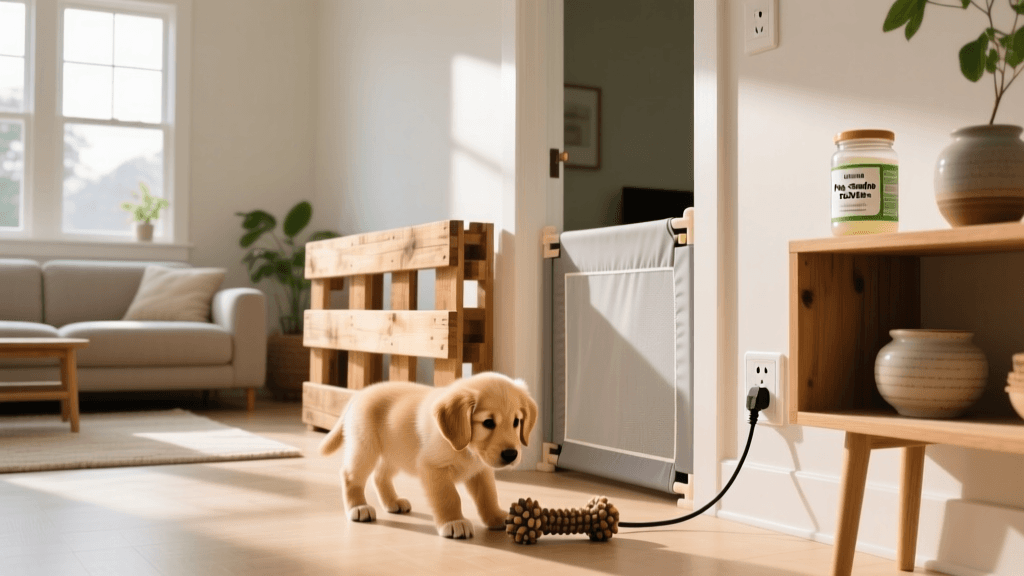
- Cord Management: Bundle and conceal all electrical cords using split-loom tubing or hard plastic cord concealers (approx. $30). Never rely solely on bitter sprays for electrical wires, as some dogs will chew through the bitter taste.
- Furniture Deterrents: If you are protecting wooden table legs or baseboards, apply a pet-safe deterrent like Grannick's Bitter Apple Spray (approx. $12). Reapply every 48 hours during the first two weeks of the dog's arrival to build a negative association with chewing wood.
- Plant Relocation: Move all toxic plants to high, hanging planters or replace them entirely with dog-safe alternatives like Spider Plants, Boston Ferns, or Calatheas.
The Bathroom: The Forgotten Danger Zone
Bathrooms are frequently left out of the dog-proofing process, yet they contain some of the most concentrated hazards.
- Toilet Lids: Install a simple child-proof toilet lid lock (approx. $8). Dogs are often tempted to drink from the bowl, which can expose them to harsh chemical bowl cleaners or cause them to ingest dropped medications.
- Medication Storage: Never leave vitamins, supplements, or prescriptions on the bathroom counter. A single dropped pill of human ibuprofen or acetaminophen can be fatal to a small dog.
The Outdoor Transformation: Building a Secure Perimeter
Your yard is your dog's primary play area, and its transformation requires physical labor and strategic planning. The Centers for Disease Control and Prevention (CDC) emphasizes the importance of maintaining a clean, secure outdoor environment to prevent the spread of zoonotic diseases, parasites, and physical injuries.
Fencing and Dig-Proofing
Standard privacy fences are often insufficient for athletic breeds. The "after" yard features reinforced boundaries.
- Gap Analysis: Ensure no gaps in the fence exceed 2.5 inches to prevent small breeds or puppies from slipping through.
- Dig-Proofing (The L-Footer Method): To prevent escape-prone dogs from digging under the fence, bury 1-inch chicken wire or hardware cloth in an "L" shape. Dig a trench 12 inches deep and 12 inches outward from the fence base, lay the wire, and cover it with soil. This creates an underground barrier that stops digging immediately.
- Gate Latches: Upgrade standard hook-and-eye latches to carabiner-style locking clips or padlocks to prevent clever paws from lifting the latch.
Landscaping Overhaul
Replace toxic cocoa bean mulch with dog-safe cedar or pine bark. Ensure your compost bin is fully enclosed, as rotting food produces tremorgenic mycotoxins, which can cause severe neurological seizures in dogs.
Before and After Cost Breakdown
Budgeting for a dog goes far beyond the adoption fee or veterinary care. Below is a structured comparison of the financial investment required to transform a standard home into a dog-proofed environment.
| Area of Home | The "Before" Hazard | The "After" Solution | Estimated Cost |
|---|---|---|---|
| Kitchen | Open, lightweight trash can | Heavy, locking step-can (e.g., Simplehuman) | $100 - $150 |
| Living Room | Exposed TV and lamp wires | Hard plastic cord concealers & split-loom | $25 - $40 |
| Cabinets | Standard knobs (easy to paw open) | Magnetic child-proof cabinet locks | $20 - $30 |
| Stairways | Open access to steep falls | Hardware-mounted baby gates (30"+ height) | $40 - $70 per gate |
| Yard Fence | Dirt base (easy to dig under) | L-Footer buried chicken wire barrier | $50 - $100 (materials) |
| Flooring | Standard rugs (slip & stain hazards) | Machine-washable rug pads & enzyme cleaners | $30 - $60 |
Note: Costs are estimates based on average retail prices and may vary based on home size and specific brand selections.
The Emotional Transformation: Creating a Canine Safe Space
The physical transformation of your home must be matched by an emotional and behavioral one. Dogs, especially puppies or newly adopted rescues, experience immense stress when transitioning to a new environment. They need a designated "safe zone" where they can decompress.
The Crate Setup
According to the American Kennel Club (AKC), crate training is one of the most effective ways to provide a dog with a sense of security while simultaneously aiding in housebreaking and preventing destructive behavior when unsupervised.
- The Crate: Invest in a wire crate with a divider panel (e.g., MidWest Homes for Pets iCrate, approx. $60). The divider allows you to adjust the space as a puppy grows, ensuring the area is just large enough for them to stand, turn around, and lie down—which naturally discourages them from soiling their sleeping area.
- Comfort Items: Include a washable fleece bed and a heartbeat-simulating plush toy (like the Snuggle Puppy, approx. $40) to mimic the warmth and pulse of littermates, drastically reducing nighttime whining and separation anxiety.
- Location: Place the crate in a low-traffic but socially integrated area, such as the corner of the living room or a quiet alcove near the kitchen, so the dog feels part of the pack without being overwhelmed by foot traffic.
The First 48 Hours: Managing the Transition
The true test of your home's transformation occurs in the first 48 hours. During this window, your dog will test boundaries, mark territory, and experience sensory overload.
Have an enzymatic cleaner like Nature's Miracle Advanced Stain and Odor Eliminator (approx. $15) ready and accessible in every room. Standard household cleaners contain ammonia, which smells like urine to a dog and will actually encourage them to re-mark the same spot. Enzymatic cleaners break down the uric acid crystals entirely, removing the scent marker and preventing repeat offenses.
Establish a strict potty schedule immediately: take the dog outside every two hours, immediately after meals, and right after waking up from a nap. Praise heavily with high-value treats (like boiled chicken breast) the moment they eliminate in the correct outdoor zone. This rapid feedback loop transforms confusion into clarity, setting the foundation for a well-adjusted, happy dog in their newly secured home.
Conclusion: Peace of Mind is the Ultimate Reward
The "before and after" transformation of your home is an investment of time, money, and effort, but the return on that investment is immeasurable. By systematically eliminating hazards, reinforcing boundaries, and creating a dedicated safe space, you are not just protecting your belongings—you are protecting your new best friend. A properly dog-proofed home allows you to relax, knowing that your canine companion can explore, play, and thrive in an environment designed specifically with their safety and happiness in mind.
aaron-whyte
All our authors care for dogs every day — read more of their work on the authors page.