Basenji Recall Training 2026: Mastering Off-Leash Reliability
Master Basenji recall training in 2026 with proven long-line methods and haptic feedback tools. Build reliable off-leash obedience for independent hounds.
The Unique Challenge of Basenji Recall
Originating from the dense forests of Central Africa, the Basenji is a pariah dog breed renowned for its lack of barking, cat-like grooming habits, and fierce independence. While these traits make them fascinating companions, they also present a monumental challenge when it comes to off-leash obedience. According to the American Kennel Club's Basenji Breed Profile, this breed possesses an intense prey drive and an aloof nature that means they simply do not live to please their owners in the way a Golden Retriever might.
In 2026, the approach to training exotic and international breeds has shifted heavily toward force-free, psychology-based conditioning. For a Basenji, traditional recall methods often fail because the environmental stimulation (a darting squirrel, an interesting scent) is vastly more rewarding than a standard kibble treat. Mastering recall requires a strategic blend of high-value reinforcement, modern training technology, and an understanding of sighthound cognition.
Essential Gear for 2026 Basenji Training
Before stepping outside, you must equip yourself with the right tools. The training landscape in 2026 has moved away from punitive shock collars, embracing haptic feedback and advanced tracking instead. Below is a comparison of the essential gear required for a reliable Basenji recall protocol.
| Training Tool | Primary Purpose | 2026 Estimated Cost |
|---|---|---|
| 15ft Biothane Long-Line | Safe outdoor proofing without the tangling of nylon. | $45 - $75 |
| Haptic GPS Training Collar | Delivers a gentle 'tap' vibration to break focus without static shock. | $250 - $400 |
| Magnetic-Closure Bait Pouch | Allows lightning-fast treat delivery for split-second timing. | $25 - $40 |
| Freeze-Dried Raw Liver Bites | Ultra-high-value reward to compete with environmental distractions. | $18 - $30 |
Step-by-Step Basenji Recall Conditioning
Teaching a Basenji to come when called is not a weekend project; it is a multi-month behavioral conditioning process. The AKC Expert Advice on Teaching Recall emphasizes that consistency and high-value rewards are the bedrock of any successful recall program, especially for stubborn hound breeds.
Phase 1: Indoor Engagement and the 'Name Game'
Basenjis are notorious for tuning out their owners. Begin in a low-distraction indoor environment. Say your dog's name exactly once. The moment they make eye contact, mark the behavior with a clicker or a verbal 'Yes!' and deliver a high-value treat. Repeat this 50 times a day across different rooms. If they do not respond to their name, do not repeat it. Instead, make a strange noise (like a kissy sound or a whistle) to trigger their curiosity, then reward the resulting eye contact. This builds a baseline of engagement.
Phase 2: The 15-Foot Biothane Long-Line Method
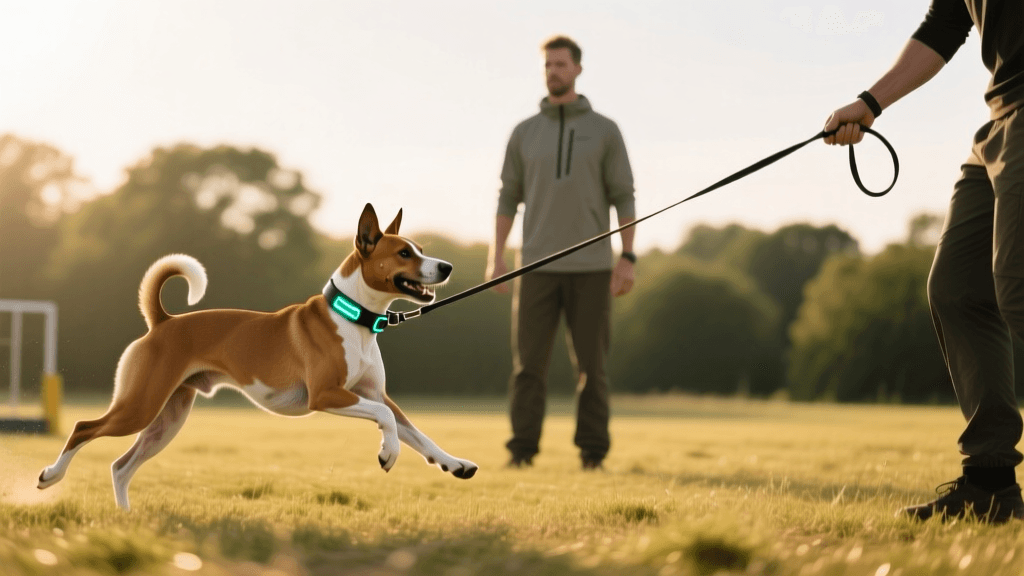
Move to a fenced yard or an empty tennis court. Attach the 15-foot Biothane long-line to a well-fitted Y-harness (never a flat collar, to prevent tracheal damage). Let your Basenji wander and sniff. When they are mildly distracted, give your recall cue (e.g., 'Come' or a specific whistle). If they ignore you, gently reel them in using the long-line without pulling aggressively, then reward heavily when they reach you. The long-line ensures that ignoring the cue is not an option, preventing the dog from practicing the unwanted behavior of blowing you off.
Phase 3: Proofing with the Premack Principle
The Premack Principle states that a more probable behavior can be used to reinforce a less probable behavior. For a Basenji, sniffing a bush is highly probable; returning to you is less probable. When your dog is on the long-line and heading toward a bush to sniff, call them. When they return, reward them with a treat, and then immediately release them with a cue like 'Go Sniff!' allowing them to return to the bush. By using the environment as the ultimate reward, you align your training goals with the dog's natural sighthound instincts.
Integrating 2026 Haptic Technology for Off-Leash Reliability
Once your Basenji is responding reliably on the long-line, you can begin integrating modern haptic feedback collars. Unlike older generation e-collars that relied on static correction, the 2026 models utilize distinct vibration patterns that act as a 'tap on the shoulder.' This is crucial for hounds, who can become 'deaf' to auditory cues when their prey drive is triggered.
- Conditioning the Haptic Cue: With the dog on a leash, apply a low-level vibration, immediately followed by your recall cue and a high-value treat. Repeat until the dog associates the vibration with the reward.
- The 'Tap and Turn': In a secure area, use the haptic vibration just as the dog begins to lock onto a distraction. The vibration breaks their visual fixation, allowing your subsequent recall cue to penetrate their focus.
- GPS Backup: Even with flawless training, a Basenji's instinct to chase can override years of conditioning. Always use the GPS tracking feature of the collar as a safety net, not a training crutch.
Managing the Sighthound Prey Drive
It is vital to understand that you cannot entirely erase a Basenji's prey drive. As noted in the AKC Guide on Managing Prey Drive and Chasing, management is just as important as training. If a Basenji spots a rabbit at a distance of 50 yards and enters a full sprint, their auditory processing effectively shuts down. In these moments, recall training will fail.
Therefore, off-leash privileges for a Basenji should only be granted in areas where you can see potential wildlife before your dog does. Practice 'Look at That' (LAT) games: when your dog spots a squirrel at a distance, mark and reward them for looking at the squirrel and then voluntarily looking back at you. This builds impulse control and keeps their brain engaged with you, rather than allowing them to cross the threshold into a blind chase.
Common Mistakes to Avoid
- Poisoning the Cue: Never use your recall word to call your dog for something they dislike, such as a bath, nail trimming, or leaving the dog park. The recall word must always predict a positive outcome.
- Repeating the Command: Saying 'Come, come, come, come' teaches the dog that the word is merely background noise. Say it once, and if they fail to respond, use your long-line to enforce the command.
- Using Low-Value Treats: Dry kibble will not compete with the scent of a deer. Invest in freeze-dried meats, boiled chicken, or cheese for outdoor recall sessions.
- Punishing the Return: Even if it took your Basenji three minutes to finally return to you, never scold them when they arrive. Punishing a dog for coming to you teaches them that returning results in a negative experience.
Conclusion
Training a Basenji to achieve off-leash reliability is a testament to patience, modern behavioral science, and deep respect for the breed's exotic heritage. By leveraging 2026's advanced haptic tools, utilizing the Premack Principle, and maintaining unwavering consistency on a long-line, you can build a recall that honors both your dog's independence and their safety. Remember, a well-trained Basenji is not a submissive robot, but a willing partner who chooses to return to you because you are the most rewarding part of their environment.
aaron-whyte
All our authors care for dogs every day — read more of their work on the authors page.