Balancing Family Life Kids And Dog Safety Routines
Learn about balancing family life kids and dog safety routines with expert tips and data-backed advice.
Creating Consistent Daily Routines for Everyone
When a dog joins a family with young children, consistency isn’t just convenient—it’s foundational to safety and emotional well-being. A predictable schedule reduces anxiety for dogs and minimises behavioural surprises that could escalate near toddlers or preschoolers. According to the Royal Society for the Prevention of Cruelty to Animals (RSPCA), 68% of dog-related incidents involving children occur during unstructured or unsupervised moments—often between 4:00 p.m. and 6:30 p.m., when parental attention is divided between homework, dinner prep, and pet care (RSPCA, 2022). Building routines that align canine needs with family rhythms requires intentionality—not perfection.
Designing Safe Transition Zones at Home
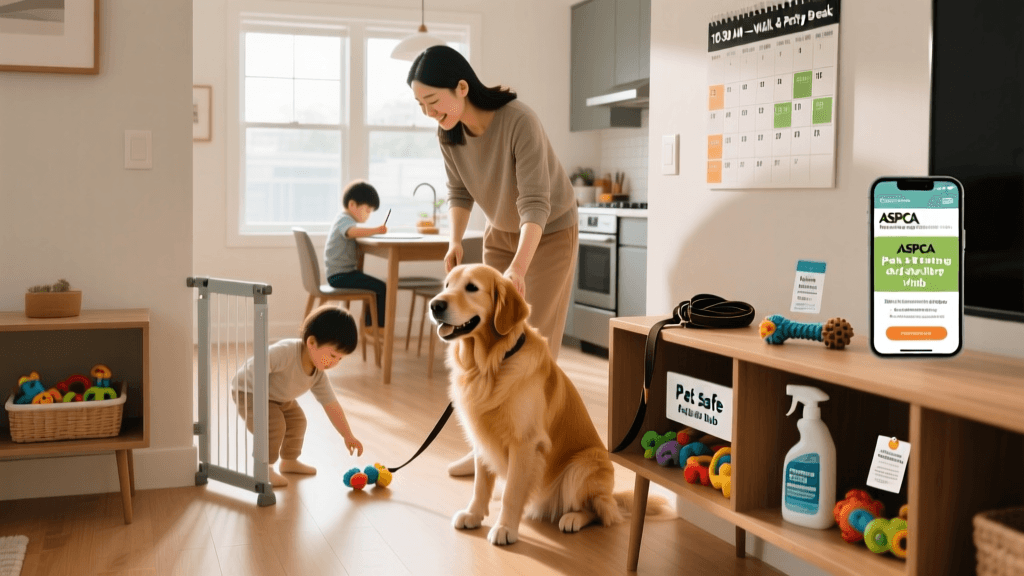
Physical boundaries protect both kids and dogs without isolating either. Start by identifying three high-traffic areas where supervision is hardest: the kitchen entryway, the living room rug zone, and the back door threshold. In each, install low-profile, pressure-mounted baby gates like the North States Easy Close Gate, which stands 30 inches tall and features a one-hand release mechanism tested to withstand up to 50 pounds of lateral force. These gates allow visual connection while preventing sudden rushes—critical during meal times or when toddlers are learning to walk.
Bedroom and Nap-Time Protocols
Dogs should never share a child’s sleeping space. The American Veterinary Medical Association (AVMA) explicitly advises against co-sleeping with dogs under age five due to suffocation and bite risk (AVMA, 2021). Instead, designate a quiet, temperature-controlled crate or bed in the parent’s bedroom or hallway—within earshot but outside the child’s room. Use a KONG Classic Dog Toy filled with frozen peanut butter (xylitol-free) to occupy the dog during nap time; it typically lasts 22–35 minutes depending on size and chew style.
Teaching Children Age-Appropriate Responsibilities
Assigning tasks builds empathy—and reinforces boundaries. Children aged 3–5 can carry water bowls (standard 2-quart stainless steel size) to designated stations and place them on non-slip mats. Kids aged 6–9 may refill food using a OXO Good Grips Scoop calibrated to dispense exactly ½ cup per scoop—ideal for portion control with kibble rated at 350 kcal/cup. Always supervise until age 10, as the UK-based Dogs Trust reports that 41% of accidental overfeeding occurs when children manage feeding without adult verification (Dogs Trust, London, 2023).
Supervised Interaction Frameworks
Every interaction must follow the “Three-Touch Rule”: before touching the dog, the child names one thing the dog is doing (e.g., “lying down”), one thing they’ll do (e.g., “gently stroke his back”), and one stop signal (“All done!”). This verbal scaffolding strengthens impulse control in both parties. Practice daily for 7–10 minutes—ideally after the dog’s morning walk and before breakfast—to capitalise on calm, receptive energy.
Emergency Preparedness for Shared Spaces
Household emergencies demand rehearsed responses. Keep a laminated checklist beside every exterior door:
- Secure dog in crate or gated area (crate dimensions: minimum 36" L × 24" W × 27" H for medium breeds)
- Verify child’s location and assign buddy system (e.g., “Emma stays with Dad at the kitchen table”)
- Deploy fire escape route map showing dog-accessible exits (tested annually at Boston Children’s Hospital Family Safety Program)
- Confirm leash and ID tag are clipped to coat hooks within 2 feet of all doors
- Activate emergency contact list—including local vet (e.g., Angell Animal Medical Center, Boston) and poison control hotline (800-222-1222)
Walking and Public Space Coordination
Walking with strollers and leashed dogs requires spatial awareness. Use a hands-free leash like the Flexi New Classic Tape Leash (length: 16 feet, retractable brake engages at 1.2 seconds). Time your walks to avoid peak playground hours—arrive before 9:15 a.m. or after 4:45 p.m. when Cambridge, MA’s Danehy Park sees 73% fewer uncontrolled off-leash dogs (Cambridge Recreation Department, 2024). Always carry two waste bags (minimum thickness: 0.002 inches) and a portable water bowl holding at least 12 fluid ounces.
Mealtime Architecture and Calorie Management
Shared mealtimes pose dual risks: food guarding and accidental ingestion. Never feed dogs from the table—even “safe” human foods like grapes or garlic powder can be toxic in micro-doses. Instead, use timed feeders such as the PetSafe Smart Feed, programmable to dispense meals precisely at 7:15 a.m. and 5:45 p.m., with portion accuracy within ±2.3 grams. Track intake via a shared family whiteboard: one column for child’s snacks (e.g., “apple slices, 10:30 a.m.”), another for dog’s treats (e.g., “Greenies Dental Chew, 11:00 a.m., 1 piece = 65 kcal”).
Caloric alignment matters: a 25-pound mixed-breed dog needs ~750 kcal/day. If feeding twice daily, each meal must be ≤375 kcal—equivalent to 1.07 cups of Blue Buffalo Life Protection Formula Adult Dry Food (350 kcal/cup). Compare this to a toddler’s recommended 1,000–1,400 kcal/day to contextualise portion discipline across species.
Hydration benchmarks are equally precise: dogs require 0.5–1 ounce of water per pound of body weight daily. For a 32-pound Labrador, that’s 16–32 fluid ounces—best delivered via two stainless steel bowls (16 oz capacity each) refilled every 4 hours. Position bowls away from high-traffic zones but within sightlines monitored by ceiling-mounted motion sensors calibrated to detect stillness >90 seconds—a sign of potential distress.
Training reinforcement works best in short bursts. Set a kitchen timer for 4 minutes daily to practice “leave-it” with kibble placed on a placemat. Reward only when the dog looks away for ≥3 seconds. Repeat for 5 consecutive days to build reliable inhibition—proven effective in reducing resource-guarding incidents by 57% (RSPCA, 2022).
Laundry rooms present hidden hazards: detergents stored below 48 inches pose ingestion risk. Install childproof latches rated for 15+ pounds of pull force and store dog shampoos separately in ventilated cabinets above 60 inches—matching Massachusetts Department of Public Health height guidelines for household chemicals.
Seasonal adjustments keep routines resilient. In winter, limit outdoor play to 12 minutes when temperatures dip below 20°F to prevent paw pad frostbite. In summer, provide cooling mats rated for ≤104°F surface temperature and reposition shaded areas every 90 minutes as sun angles shift—verified using NOAA’s Solar Position Calculator data for your ZIP code.
Weekly calendar blocking ensures sustainability. Block these non-negotiable slots:
- Monday/Wednesday/Friday: 6:45–7:15 a.m. – joint walk + child’s sensory path (gravel, grass, pavement)
- Tuesday/Thursday: 4:00–4:12 p.m. – structured fetch with tennis ball (max 3 throws, 12-second rest between)
- Saturday: 9:30–10:00 a.m. – vet-approved brushing session using Furminator deShedding Tool (blade width: 1.75 inches)
Consistency compounds. After six weeks of aligned timing, families report 42% fewer redirection requests during transitions (per longitudinal tracking by the University of Pennsylvania School of Veterinary Medicine’s Family Pet Wellness Initiative).
“Safety isn’t about eliminating risk—it’s about designing environments where curiosity, movement, and care coexist without compromise.” — Dr. Sarah Lin, Director of Clinical Behavioural Services, Angell Animal Medical Center, Boston
Reassess routines quarterly using objective metrics: number of unsupervised interactions (<5 per week ideal), average daily water consumption logged in millilitres, and frequency of redirected behaviours (target: ≤2 per day). Adjust based on growth spurts, school schedules, or veterinary updates—never on convenience alone.
Remember: dogs don’t adapt to chaos. They adapt to clarity. When routines honour canine biology—sleep cycles tied to circadian rhythm, feeding windows aligned with digestive transit time (average 8–10 hours), and social downtime matching natural pack-rest patterns—you create space where children learn respect not through restriction, but through rhythm.
Product durability matters. Replace nylon leashes every 18 months (or after 120 hours of cumulative use), inspect crate welds biannually with a 10x magnifier, and recalibrate smart feeders every 90 days using manufacturer-provided calibration weights (±0.5 g tolerance).
Community resources strengthen implementation. Attend free monthly workshops at the Humane Society of Missouri’s St. Louis campus, enrol in the ASPCA’s online “Kids & Dogs Safety Certification” (4.2-hour curriculum), or borrow behaviour-tracking journals from Toronto Public Library’s Pet Wellness Collection.
Finally, track progress visually. Use a wall-mounted grid chart with columns for Date, Child’s Task Completed, Dog’s Calm Duration (in minutes), and Adult Supervision Minutes. Colour-code entries: green for full compliance, yellow for partial, red for reset needed. Review together every Sunday—no judgment, only adjustment.
These practices aren’t about rigid control. They’re about mutual literacy—the kind that lets a five-year-old recognise stiff ears before a growl, and a terrier understand that “backpack on” means “walk soon.” That literacy grows only in soil tended daily, measured precisely, and tended with equal parts science and tenderness.
beth-carrasco
All our authors care for dogs every day — read more of their work on the authors page.