The Beginner's Handbook to Apartment Living With a Dog
Discover the complete beginner's handbook to apartment living with a dog. Learn space management, noise control, and potty routines for small spaces.
Welcome to Apartment Dog Ownership
Bringing a furry companion into an apartment is one of life's most rewarding experiences, but it also presents a unique set of challenges that homeowners simply do not face. Without a sprawling backyard or immediate access to open fields, apartment dwellers must be intentional about space management, noise control, and daily routines. This complete beginner's handbook will walk you through the practical, actionable steps required to thrive in a multi-family building with your new best friend.
According to general care guidelines outlined by the Humane Society, establishing a predictable environment is the foundation of a well-adjusted dog. In an apartment, this predictability must be manufactured through careful planning, consistent scheduling, and an understanding of your dog's spatial needs.
Designing Your Dog's Indoor Zone
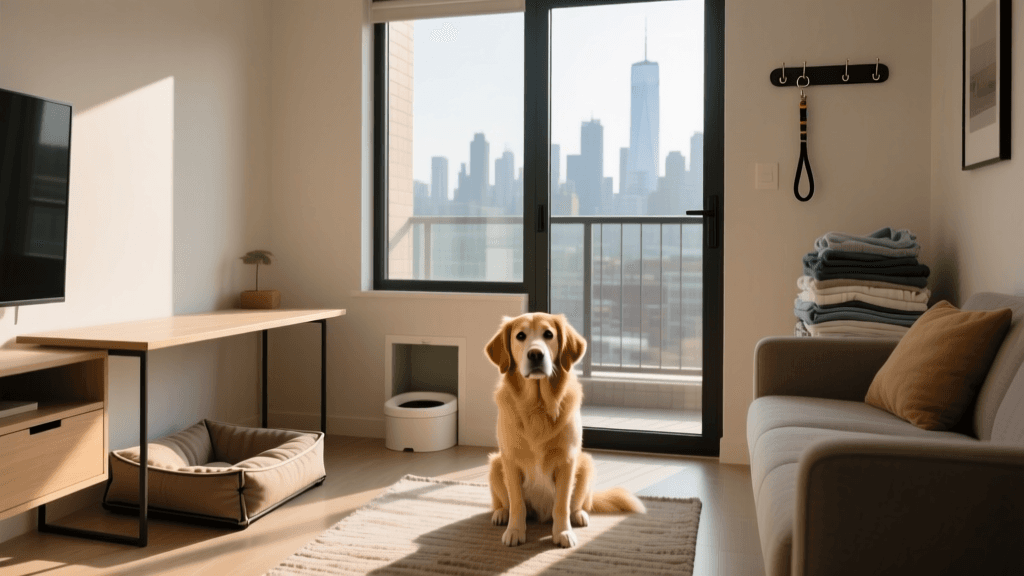
Space is at a premium in an apartment. Rather than allowing your dog to roam freely across the entire square footage, which can lead to accidents and destructive behavior, create designated zones. Use pressure-mounted baby gates to block off high-risk areas like the kitchen, bathroom, or home office.
The Safe Haven
Every dog needs a sanctuary. Set up a crate or a designated mat in a low-traffic corner of your living room or bedroom. The American Kennel Club highly recommends crate training as a method to provide dogs with a secure, den-like environment that reduces anxiety and aids in housebreaking. Ensure the crate is sized correctly: your dog should be able to stand up, turn around, and lie down comfortably, but not so large that they can use one end as a bathroom. For growing puppies, use the included divider panels to adjust the space as they grow.
Essential Gear for Small-Space Living
Equipping your apartment with the right tools can mean the difference between chaos and harmony. Below is a breakdown of essential products tailored for apartment living, including estimated costs to help you budget effectively.
| Product Category | Specific Recommendation | Purpose | Estimated Cost |
|---|---|---|---|
| Sound Masking | White Noise Machine (e.g., Hatch Restore or LectroFan) | Drowns out hallway footsteps and neighbor noise | $40 - $130 |
| Odor Control | Enzymatic Cleaner (e.g., Nature's Miracle) | Breaks down uric acid to prevent repeat accidents | $12 - $20 |
| Indoor Enrichment | Snuffle Mat or Lick Mat (e.g., Hyper Pet) | Provides mental stimulation without requiring space | $15 - $30 |
| Containment | Pressure-Mounted Baby Gate | Blocks off kitchens or bathrooms without drilling | $30 - $60 |
| Potty Backup | DoggieLawn or Synthetic Turf Tray | Emergency bathroom for balconies or bad weather | $30 - $150 |
Mastering the Apartment Potty Routine
The most daunting aspect of apartment dog ownership is the potty routine. Unlike a house with a dog door, every bathroom break requires a leash, a hallway walk, an elevator ride, and a trip outside.
Timing is Everything
For a young puppy, the general rule of thumb is they can hold their bladder for one hour per month of age, up to a maximum of eight hours for an adult dog. If you live on the fifth floor, you must account for the five to ten minutes it takes to actually reach the grass. This means you need to initiate the potty break before the dog starts pacing, whining, or sniffing the floor. Keep your leash, shoes, and treat pouch right by the front door to eliminate fumbling.
The Balcony Potty Option
If you have a private balcony, you might consider an indoor potty system like a hydroponic grass patch or a synthetic turf tray with a drainage grate. While this is incredibly convenient for late-night or bad-weather breaks, it is vital that you still take your dog on regular outdoor walks. Relying solely on a balcony patch can lead to a dog that refuses to eliminate on natural surfaces or during travel.
Managing Noise and Separation Anxiety
In a multi-family building, your dog's behavior directly impacts your neighbors. Barking is the number one complaint in apartment complexes and the fastest way to receive a warning from your landlord. Dogs often bark at apartment-specific triggers: the sound of keys jingling in the hallway, the ding of the elevator, or the heavy footsteps of the upstairs neighbor.
Pro Tip: Desensitize your dog to hallway noises by playing recordings of doors closing, muffled talking, and footsteps at a very low volume while feeding them high-value treats like boiled chicken. Gradually increase the volume over several weeks until the noise no longer triggers a reaction.
Separation anxiety is also magnified in apartments because a distressed dog will vocalize, leading to noise complaints and potential lease violations. The ASPCA notes that separation anxiety requires a multi-faceted approach, including counterconditioning, providing puzzle toys filled with food, and, in severe cases, consulting a veterinary behaviorist. Never punish a dog for anxiety-induced barking; instead, focus on building their confidence and creating positive associations with your departure routine.
Exercise and Mental Enrichment Indoors
A tired dog is a quiet dog. While daily outdoor walks are non-negotiable, physical exercise alone is rarely enough to exhaust a healthy, energetic dog. Mental stimulation tires a dog out just as effectively as a long run, and it can be done entirely within the confines of your living room.
- Hide and Seek: Have your dog sit and stay in one room while you hide in another. Call them once and reward them heavily when they find you. This builds recall skills and burns mental energy.
- Flirt Poles: A flirt pole is essentially a giant cat wand for dogs. It allows you to engage their prey drive and get them sprinting and jumping in a small space. Just ensure you have breakable items moved out of the way and enforce a 'drop it' command to maintain control.
- Decompression Sniffaris: When you do go outside, don't just walk for distance. Allow your dog to sniff every tree and fire hydrant. Fifteen minutes of intense sniffing provides as much mental fatigue as a mile-long run.
- Training Sessions: Ten minutes of learning a new trick (like 'spin', 'crawl', or 'fetch specific toys by name') requires intense focus and will leave your dog ready for a long nap.
Navigating Shared Spaces and Neighbors
Apartment living means sharing elevators, lobbies, and hallways. Practicing good etiquette is essential for maintaining a peaceful environment, keeping your security deposit intact, and ensuring your dog is a welcomed member of the community.
Elevator Etiquette
Always keep your dog on a short, four-foot leash in the elevator. Do not use a retractable leash, as it offers poor control in tight, enclosed spaces. If the elevator is crowded, it is often best to wait for the next one rather than forcing your dog into a stressful, confined area with strangers. Position yourself between your dog and other passengers to act as a buffer.
Hallway Passing and Cleanups
Teach your dog the 'touch' command (where they boop their nose to your palm) or the 'watch me' command. When a neighbor approaches in a narrow hallway, use these commands to keep your dog's focus entirely on you, preventing unwanted jumping or lunging. Furthermore, always carry extra waste bags and a small travel bottle of enzymatic cleaner with paper towels when walking through the lobby. If your dog has an accident in a shared space, cleaning it up immediately and thoroughly is not just good etiquette; it prevents lingering odors that might trigger other pets and shows respect for the building's maintenance staff.
Conclusion
Living in an apartment with a dog requires more logistical planning than living in a house, but the bond you build through this intentional, hands-on routine is unparalleled. By managing your space, investing in the right gear, prioritizing mental enrichment, and respecting your neighbors, you will create a thriving, happy home for both you and your canine companion. Embrace the routine, and watch your apartment dog flourish.
aaron-whyte
All our authors care for dogs every day — read more of their work on the authors page.