Balance IT Canine Plus 2026: Homemade Dog Diet Review
Discover how to use Balance IT Canine Plus in 2026 to create nutritionally complete homemade cooked dog meals. Includes recipes, dosing, and vet tips.
The Shift Toward Fresh Nutrition in 2026
As we move through 2026, the pet care landscape has experienced a massive shift away from ultra-processed, extruded kibble toward fresh, whole-food diets. Dog owners are increasingly seeking transparency in their pets' nutrition, opting for gently cooked or raw meals that mirror a whole-food lifestyle. While commercial fresh food delivery services have surged in popularity, many dedicated pet parents prefer the ultimate control and cost-efficiency of preparing homemade meals in their own kitchens.
However, cooking for your dog is not as simple as sharing your dinner plate. The most critical challenge of homemade dog food is achieving complete and balanced nutrition. This is where Balance IT Canine Plus has solidified its position as the gold-standard supplement for homemade diets in 2026. Developed by board-certified veterinary nutritionists, this supplement bridges the gap between wholesome, fresh ingredients and the rigorous nutritional requirements set by the Association of American Feed Control Officials (AAFCO).
The Hidden Dangers of Unsupplemented Homemade Diets
Before diving into how to use Balance IT, it is vital to understand why a 'meat and vegetable' approach is inherently dangerous without proper supplementation. According to the Tufts Cummings Veterinary Medical Center Clinical Nutrition Service, the vast majority of homemade diets found online or formulated without a veterinary nutritionist are severely deficient in essential micronutrients.
- Calcium to Phosphorus Imbalance: Meat is naturally high in phosphorus and very low in calcium. Feeding a diet heavy in chicken or beef without a precise calcium source leads to a skewed Ca:P ratio, which can cause nutritional secondary hyperparathyroidism, leading to severe bone demineralization and fractures.
- Trace Mineral Deficiencies: Zinc, copper, and iodine are rarely present in adequate amounts in standard grocery store meats and vegetables. Long-term deficiencies can result in compromised immune function, poor coat quality, and thyroid dysfunction.
- Vitamin Shortfalls: Dogs require specific levels of Vitamin D, Vitamin E, and B-complex vitamins that are easily destroyed during the cooking process or simply absent in whole-food ingredients.
Balance IT Canine Plus eliminates the guesswork. It is a precisely formulated powder that provides the exact missing vitamins, minerals, and amino acids required to turn a basic recipe of meat, carbohydrates, and vegetables into a complete, life-sustaining meal.
What is Balance IT Canine Plus?
Balance IT Canine Plus is a specialized nutritional supplement powder designed exclusively for homemade cooked dog diets. Unlike generic multivitamins, it is engineered to complement the specific nutrient profile of cooked meats and plant-based ingredients. It contains calcium carbonate to correct the phosphorus imbalance, alongside chelated trace minerals for optimal absorption, essential fatty acids, and a full spectrum of vitamins.
In 2026, the manufacturer continues to offer a free online recipe builder tool, allowing owners to input their preferred proteins and carbohydrates to generate a custom recipe. Alternatively, owners can work directly with their veterinarian to select from a library of pre-approved, AAFCO-compliant recipes.
Step-by-Step: Formulating a Complete Recipe
Creating a meal plan requires precision. You must use a digital kitchen scale, as measuring ingredients by volume (cups) can lead to dangerous caloric and nutrient fluctuations. Below is a highly popular, easily digestible recipe suitable for an average, neutered 30-pound adult dog with a moderate activity level.
Sample Recipe: Chicken and Sweet Potato Adult Maintenance
This recipe yields approximately one day of food for a 30 lb dog (roughly 850-950 kcal, depending on exact ingredient moisture). Always consult your vet to adjust caloric intake for your specific dog's metabolic rate.
- Protein: 6.5 oz (184g) cooked chicken breast, boiled or baked without oils or seasonings, then diced.
- Carbohydrate: 1.5 cups (340g) cooked sweet potato, baked or boiled and mashed.
- Vegetable: 1 cup (150g) steamed broccoli florets, finely chopped.
- Fat Source: 1.5 tablespoons (21g) of sunflower oil or safflower oil (added raw after cooking to preserve fatty acid integrity).
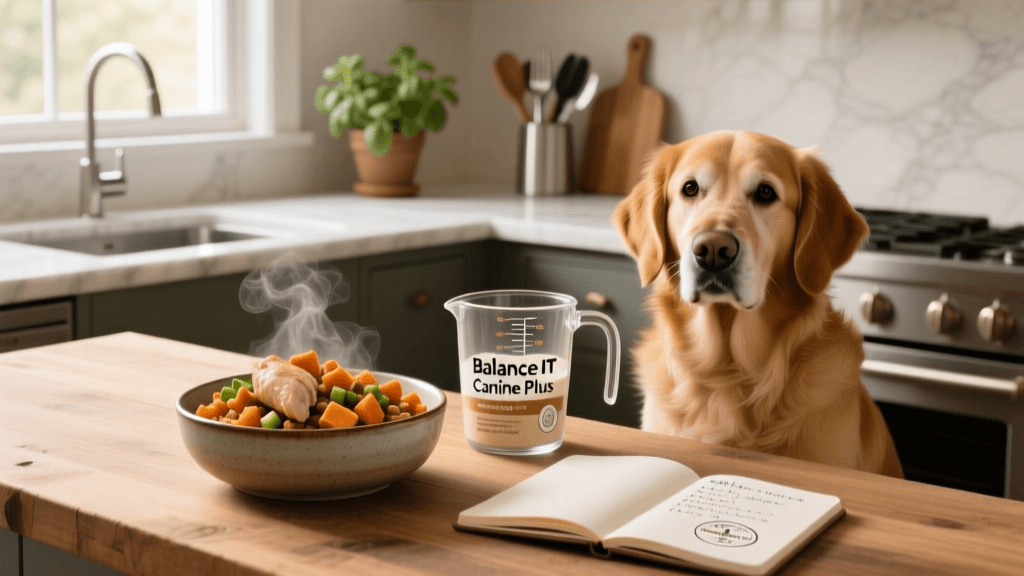
- Supplement: 1.5 scoops (using the provided Balance IT measuring scoop) of Balance IT Canine Plus powder.
Preparation Instructions: Cook the chicken, sweet potato, and broccoli separately or steam them together. Allow the food to cool to room temperature. Toss the food with the sunflower oil and the Balance IT Canine Plus powder right before serving. Never cook the supplement powder, as high heat will destroy the added vitamins.
Nutritional Comparison: Homemade vs. Commercial
How does a properly supplemented homemade diet compare to other feeding methods available in 2026? The following table highlights the differences in nutritional integrity, moisture content, and daily costs.
| Diet Type | Ca:P Ratio | Moisture Content | Ingredient Transparency | Avg. Cost/Day (30lb Dog) |
|---|---|---|---|---|
| Unsupplemented Homemade | 1:15 (Dangerous) | 70-80% | High | $2.50 - $3.50 |
| Commercial Dry Kibble | 1.2:1 (Safe) | 10-12% | Low to Medium | $1.00 - $2.00 |
| Commercial Fresh Delivery | 1.2:1 (Safe) | 70-75% | High | $6.00 - $9.00 |
| Homemade + Balance IT | 1.2:1 (Safe) | 70-75% | Maximum | $3.50 - $4.50 |
The 10-Day Transition Protocol
When transitioning your dog from kibble or a commercial fresh diet to a newly formulated homemade diet, a gradual approach is essential to prevent gastrointestinal upset, including diarrhea and vomiting. The high moisture and fiber content of fresh food can alter the gut microbiome rapidly.
- Days 1 to 3: Feed 75% of the old diet and 25% of the new Balance IT supplemented homemade diet.
- Days 4 to 6: Feed 50% of the old diet and 50% of the new homemade diet.
- Days 7 to 9: Feed 25% of the old diet and 75% of the new homemade diet.
- Day 10 and Beyond: Feed 100% of the new homemade diet.
Pro Tip: If your dog experiences soft stools during the transition, pause the process for 48 hours at the current ratio and consider adding a canine-specific probiotic to support digestive adaptation.
Food Safety and Handling Guidelines
Handling fresh meat and homemade pet food requires strict hygiene protocols to protect both your dog and your human family members from zoonotic pathogens like Salmonella and Listeria. The U.S. Food and Drug Administration (FDA) strongly recommends treating pet food preparation with the same rigor as human food preparation.
Always wash your hands with soap and water before and after handling pet food. Wash pet food bowls, utensils, and preparation surfaces with hot, soapy water after every use to prevent bacterial cross-contamination.
Batch cooking is highly recommended to save time. You can cook a week's worth of chicken, sweet potatoes, and broccoli on a Sunday. Store the cooked, un-supplemented food in airtight glass containers in the refrigerator for up to 4 days, or freeze individual daily portions for up to 3 months. Remember to only add the oil and Balance IT powder after the food has been thawed and brought to room temperature.
2026 Cost Breakdown: Is It Worth It?
Many owners assume that cooking at home is vastly cheaper than buying commercial food. While it is generally more affordable than premium fresh delivery services, the cost of high-quality human-grade ingredients and specialized supplements must be factored in. For the 30 lb dog recipe outlined above, the 2026 average grocery costs break down as follows:
- Chicken Breast: $1.80
- Sweet Potato & Broccoli: $0.90
- Sunflower Oil: $0.15
- Balance IT Canine Plus Supplement: $1.15 per daily dose
- Total Daily Cost: $4.00
At roughly $120 per month, this approach sits comfortably between high-end kibble and commercial fresh delivery services, offering the ultimate benefit of total ingredient control for dogs with severe food allergies or sensitive stomachs.
Final Thoughts from Veterinary Experts
The consensus among veterinary professionals is clear: homemade diets can be incredibly beneficial, but only when scientifically balanced. The World Small Animal Veterinary Association (WSAVA) Global Nutrition Committee continuously emphasizes that every pet's diet should be evaluated as a core component of their overall medical care. Balance IT Canine Plus provides a vital safety net, ensuring that your dedication to feeding fresh, whole foods translates into measurable, long-term health benefits for your dog. Always schedule an annual nutritional assessment with your veterinarian to adjust your homemade recipes as your dog ages, gains or loses weight, or develops new health conditions.
anouk-beaumont
All our authors care for dogs every day — read more of their work on the authors page.