Top 5 Low-Anxiety Puppy Breeds for Remote Workers in 2026
Discover the best low-anxiety puppy breeds for remote workers in 2026. Promote canine mental health and maintain your work-from-home productivity.
The Intersection of Remote Work and Canine Mental Health
As fully remote and flexible hybrid work models solidify in 2026, the home office has become a permanent fixture for millions of professionals. While working from home offers unparalleled flexibility, it also presents unique challenges when bringing a new puppy into your life. The 'pandemic puppy' phenomenon taught us a harsh lesson about canine mental health: dogs that are overly dependent on their owners can develop severe separation anxiety and destructive behaviors when their humans are busy on video calls or eventually return to an office. For remote workers, selecting a puppy breed that possesses an independent, low-anxiety temperament is not just a matter of convenience; it is a critical component of holistic canine wellbeing and owner mental health.
High-drive, hyper-social breeds like Border Collies or German Shepherds often struggle in a home office environment. They require constant engagement and can become stressed when their owner is physically present but mentally unavailable. According to the ASPCA, separation anxiety and confinement distress are among the most common behavioral health issues in modern dogs, often triggered by inconsistent attention. By choosing a breed with a naturally calm, independent disposition, remote workers can foster a healthier, more balanced psychological environment for both themselves and their pets.
Top 5 Low-Anxiety Breeds for the 2026 Home Office
When evaluating breeds for a remote work lifestyle, we prioritize emotional stability, moderate exercise needs, and the ability to self-soothe. Here are the top five breeds that excel in a work-from-home setting in 2026.
1. The Greyhound: The 45-MPH Couch Potato
Despite their reputation as elite racing dogs, retired Greyhounds and well-bred puppies from calm lines are famously known as '45-mph couch potatoes.' They are incredibly low-anxiety dogs that thrive on long naps. A Greyhound will happily sleep on a plush orthopedic bed beside your desk for hours while you tackle deep work. Their mental health thrives on a single, brisk 30-minute morning walk followed by indoor relaxation, making them perfect for busy remote professionals.
2. The Whippet: The Quiet, Independent Companion
Similar to the Greyhound but in a more compact, apartment-friendly package, the Whippet is an exceptionally quiet breed. They rarely bark, ensuring your Zoom meetings remain uninterrupted. Whippets are affectionate but not overly clingy; they enjoy being in the same room as you without demanding constant physical contact. Their low predisposition to separation-related distress makes them a top choice for mental wellbeing.
3. The Basset Hound: The Stubborn but Serene Lounger
Basset Hounds possess a remarkably serene and somewhat stubborn temperament. They are not easily startled and do not suffer from the hyper-vigilance that plagues many terrier breeds. While they do require mental stimulation through scent work, their physical energy levels are quite low. A Basset Hound will happily occupy themselves with a snuffle mat under your desk while you work, providing a grounding, stress-reducing presence in your home office.
4. The Shiba Inu: The Cat-Like Independent
For the remote worker who appreciates a dog with a feline-like independence, the Shiba Inu is an excellent match. Shibas are famously clean, quiet, and aloof. They do not typically suffer from the velcro-dog syndrome that leads to severe separation anxiety. However, their independent nature requires early, positive socialization to ensure they remain well-adjusted. Their mental health is best supported by structured routines and puzzle toys rather than constant cuddling.
5. The Cavalier King Charles Spaniel: The Adaptable Empath
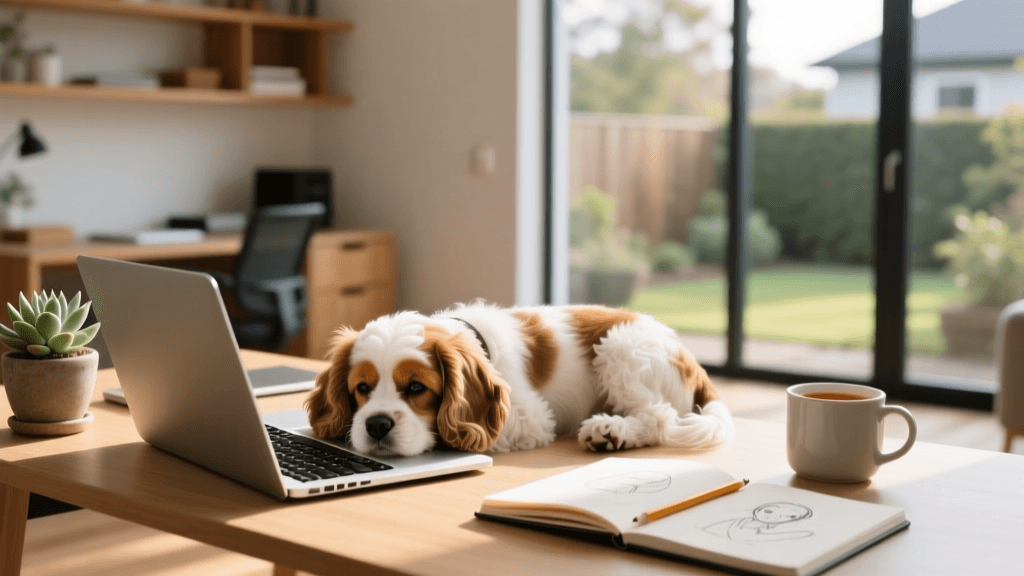
If you prefer a smaller, more affectionate dog, the Cavalier King Charles Spaniel is highly adaptable. While they do love their humans, well-bred Cavaliers are generally emotionally stable and can easily transition from a morning cuddle to a long nap on the sofa. They are highly attuned to human emotions, often providing passive emotional support during stressful workdays without becoming overly demanding or anxious when you need to focus.
Breed Comparison Chart for Remote Lifestyles
To help you make an informed decision, we have compiled a comparison of these breeds based on their suitability for a remote work environment in 2026. Note that puppy costs reflect current 2026 averages from reputable, health-tested breeders.
| Breed | Daily Exercise Need | Independence Level | Anxiety Risk | Est. 2026 Puppy Cost |
|---|---|---|---|---|
| Greyhound | 30-45 mins | High | Very Low | $1,500 - $2,500 |
| Whippet | 30-40 mins | High | Low | $1,800 - $2,800 |
| Basset Hound | 20-30 mins | Medium | Low | $1,200 - $2,000 |
| Shiba Inu | 40-60 mins | Very High | Low | $2,000 - $3,500 |
| Cavalier King Charles | 30-45 mins | Low-Medium | Medium | $2,500 - $4,000 |
Actionable Wellbeing Strategies for Your Workday
Choosing the right breed is only the first step. To ensure your puppy's mental health and your own productivity, you must implement structured routines that teach your dog how to settle independently. The American Kennel Club (AKC) emphasizes that teaching a dog to be comfortable alone, even when you are home, is vital for preventing behavioral issues.
The Canine Pomodoro Technique
Remote workers often use the Pomodoro technique (25 minutes of work, 5 minutes of rest). You can adapt this for your puppy's wellbeing. During your 25-minute focus blocks, require your puppy to rest on a designated 'settle mat' or in an open crate. When the timer goes off, use your 5-minute break to engage in active play, training, or a quick potty break. This creates a predictable rhythm that reduces canine anxiety and prevents the dog from demanding attention while you are typing.
Strategic Mental Enrichment
Physical exercise is not enough to tire out a puppy; mental fatigue is equally important for emotional regulation. Invest in high-quality, durable enrichment tools to keep your puppy occupied during long meetings. In 2026, the Outward Hound Nina Ottosson Dog Smart Puzzle and the KONG Classic stuffed with frozen, dog-safe bone broth remain gold standards for independent play. Additionally, using a LickiMat Soother spread with plain Greek yogurt and frozen blueberries can trigger the release of endorphins in your dog's brain, naturally calming them down while you work.
Creating Boundaries with Baby Gates
According to the Cornell University Companion Animal Behavior Clinic, environmental management is a cornerstone of behavioral health. Do not give a new puppy free roam of the entire house. Use aesthetic, pressure-mounted baby gates to create a 'puppy zone' that includes your home office. This allows the dog to see and smell you, fulfilling their social needs, while physically preventing them from pacing, chewing on cables, or jumping on your lap during critical work hours.
Conclusion
Integrating a puppy into your remote work life in 2026 should be a source of joy and stress relief, not a catalyst for anxiety and disruption. By carefully selecting a low-anxiety, independent breed like a Greyhound, Whippet, or Shiba Inu, and by implementing structured mental enrichment and boundary-setting routines, you protect both your canine companion's psychological wellbeing and your professional productivity. Remember that a well-adjusted, independent dog is a happy dog, allowing you to thrive in your career while providing a loving, stable forever home.
priya-sutaria
All our authors care for dogs every day — read more of their work on the authors page.