Puppy Pad To Outdoor Potty Transition 2026: 5 Steps
Transitioning your apartment puppy from indoor pee pads to outdoor potty training in 2026. Discover the 5-step gradual method and top gear.
The Life Transition: Moving from Pads to the Great Outdoors
Bringing a new puppy into your life is a journey marked by countless milestones, but few life transitions with your dog are as notoriously frustrating as moving from indoor potty pads to outdoor elimination. For urban dwellers and apartment residents, puppy pads are often a necessary survival tool during the early weeks of a puppy's life, especially during harsh winter months or when living on high floors. However, as your puppy grows and the seasons change, transitioning them to the outdoors becomes a critical developmental step.
This transition is not just about changing a location; it is about rewiring your puppy's deeply ingrained substrate preferences. According to ASPCA's official house-training guidelines, puppies develop a preference for the surface they are first taught to eliminate on. If that surface is a soft, absorbent fabric pad, convincing them that rough grass, cold concrete, or gravel is the new "bathroom" requires patience, strategy, and the right tools. In 2026, we have better access to smart pet technology and advanced enzymatic cleaners than ever before, making this life transition smoother for both you and your growing dog.
The Science of Substrate Preference
Before diving into the actionable steps, it is vital to understand why your puppy might stubbornly refuse to go outside. When a puppy spends their first three to six months using indoor pads, their brain associates the feeling of soft, porous materials with the act of relieving themselves. When you take them outside to a patch of grass or a concrete balcony, the sensory feedback is entirely different. The American Kennel Club's potty training resource emphasizes that overcoming this sensory mismatch is the primary hurdle in pad-to-outdoor transitions.
Furthermore, the outdoors is filled with distractions. Squirrels, wind, traffic noise, and new smells can easily override a puppy's urge to go. To succeed in this life transition, you must make the outdoor environment feel safe, rewarding, and clearly marked as the new designated potty zone.
Your 2026 Transition Toolkit
Setting up for success means equipping yourself with the latest and most effective gear available this year. Here is what you need for a seamless transition:
- Enzymatic Odor Eliminator: Standard household cleaners will not cut it. You need a 2026-formula enzymatic cleaner like the Nature's Miracle Advanced Oxy Formula to completely break down the uric acid crystals left behind on your floors or near the old pad location. If the puppy can still smell their old bathroom, they will return to it.
- Smart Pet Monitoring Camera: Devices like the Furbo 2026 Smart Dog Camera allow you to monitor your puppy's pacing and sniffing behaviors from your phone, alerting you the moment they start circling the old pad spot so you can intervene and redirect them outside.
- High-Value Outdoor-Only Treats: Reserve a specific, ultra-high-value treat exclusively for outdoor potty success. Freeze-dried beef liver or Zuke's Mini Naturals work exceptionally well. The puppy must learn that outside equals premium rewards.
- Artificial Grass Transition Mat: For balcony dwellers, a product like the PetSafe SmartGrass 2026 Edition can serve as a bridge between the indoor fabric pad and the outdoor earth.
Choosing Your Transition Strategy
There are three primary methods for moving a puppy off pads. Review the comparison table below to determine which approach best fits your living situation and your puppy's temperament.
| Method | Best For | Timeframe | Success Rate |
|---|---|---|---|
| Cold Turkey | Young puppies (8-10 weeks), homes with direct yard access | 1-2 Weeks | Moderate |
| Gradual Pad Shifting | Apartment dwellers, older puppies, high-rise living | 3-5 Weeks | High |
| Scent Association | Stubborn breeds, winter transitions, balcony training | 2-4 Weeks | Very High |
For most apartment dwellers navigating this life transition, the Gradual Pad Shifting method combined with Scent Association yields the most reliable, stress-free results. Below is the definitive 5-step protocol for 2026.
Step-by-Step: The Gradual Pad Shifting Method
Step 1: Relocate the Target Zone (Days 1-5)
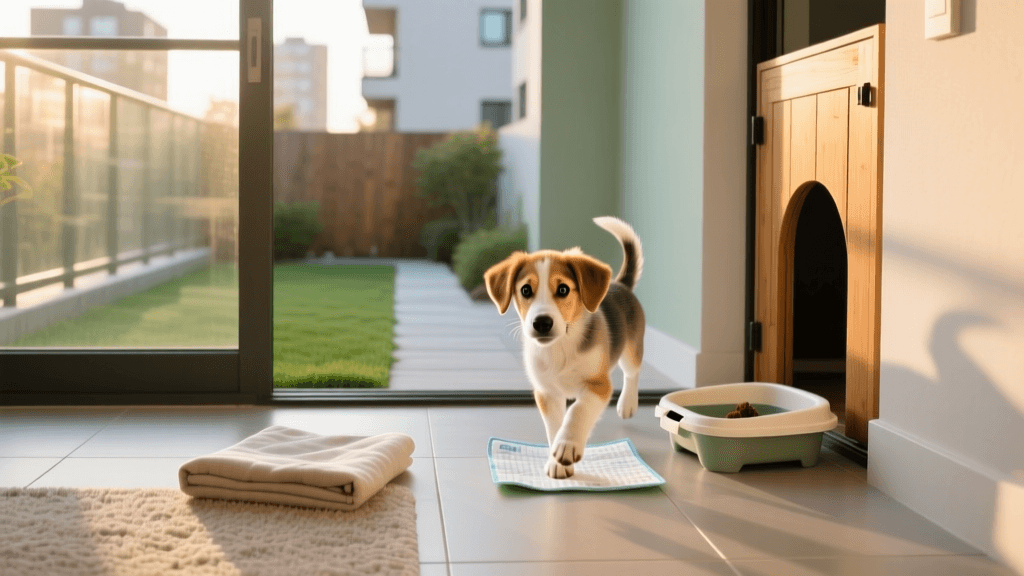
Do not remove the pad all at once. Instead, begin moving the pad closer to your exit door. Shift the pad approximately two to three feet every two days. If your puppy misses the pad because it moved too far, shift it back to the previous successful location and move it slower. The goal is to slowly change the puppy's spatial map of where the bathroom is located without causing confusion.
Step 2: The Threshold Transition (Days 6-12)
Once the pad is directly in front of your interior door, it is time to cross the threshold. If you have a balcony or patio, place the pad just outside the door. If you are in a house, place the pad on the exterior welcome mat or the very edge of the grass. This introduces the puppy to outdoor temperatures, sounds, and lighting while still providing the familiar soft substrate they trust.
Step 3: Introduce Outdoor Scent (Days 13-18)
Now we tackle the substrate preference. Take a soiled paper towel from an indoor accident (or a slightly used pad) and place it directly on the grass or concrete outside. Alternatively, bring a small patch of grass indoors and place it on top of the pad. This cross-contamination of scents bridges the gap between the familiar indoor smell and the new outdoor texture. When the puppy goes outside, use a consistent verbal cue like "Go potty" or "Do your business."
Step 4: The Shrink and Shift (Days 19-25)
Begin cutting the outdoor pad in half. Then cut it into quarters. Place these smaller pieces directly on the grass or concrete. The puppy will aim for the pad, but their paws will feel the grass, and their nose will smell the earth. Praise heavily and deliver the high-value treat the second they finish. During this phase, you must accompany them outside on a leash every single time. Do not let them out unsupervised, or they will play instead of focusing on the task.
Step 5: Ditch the Pad and Reward the Earth (Day 26+)
Remove the pad fragments entirely. Take your puppy to the designated outdoor spot on a leash. If they do not go within 10 minutes, bring them back inside, confine them to a crate or a small playpen for 15 minutes, and try again. This prevents them from wandering and playing, teaching them that the outdoor trip is strictly for business. Once they eliminate on the natural surface, throw a mini-party with treats and verbal praise.
Managing the Emotional Toll of Potty Transitions
Life transitions with your dog are as much about your emotional regulation as they are about your puppy's learning curve. It is incredibly common for owners to feel frustrated, exhausted, and defeated when a puppy who was "perfectly pad-trained" suddenly starts having accidents on the living room rug during the transition phase.
Remember that regression is a normal part of the learning process. Your puppy is not being spiteful; they are simply confused by the changing rules. Never punish your puppy for an accident. Rubbing their nose in it or yelling will only teach them to hide from you when they need to eliminate, leading to sneaky potty habits behind furniture. Instead, interrupt the behavior with a neutral "Oops!" or a clap, scoop them up, and carry them outside to finish.
Sample Daily Transition Schedule
Consistency is the bedrock of any successful life transition. Stick to this daily rhythm to accelerate your puppy's outdoor learning:
- 7:00 AM: Wake up, immediately leash and carry outside to the designated spot. High-value reward.
- 7:30 AM: Breakfast. (Puppies typically need to go 15-30 minutes after eating).
- 8:00 AM: Leashed outdoor potty trip. Reward.
- 10:00 AM, 12:00 PM, 2:00 PM, 4:00 PM: Scheduled leash walks to the potty zone, especially after naps or heavy play sessions.
- 6:00 PM: Dinner.
- 6:30 PM & 8:00 PM: Post-dinner outdoor trips.
- 10:30 PM: Final outdoor trip before bed. Limit water intake two hours before bedtime to prevent overnight accidents.
Troubleshooting Common Setbacks
My puppy holds it outside and goes the moment we come back in.
This is the most common issue in 2026. The puppy views the outdoors as a playground and the indoors as the bathroom. To fix this, make the outdoor trip boring. Stand in one spot, be a tree, and wait. Do not walk around or play. The moment they finish, then the play and walk begin. If they do not go after 15 minutes, bring them inside, crate them for 10 minutes, and try again. Do not give them free roam of the house until they have emptied their bladder outside.
My puppy is terrified of the rain and refuses to go out.
Invest in a high-quality puppy raincoat and use an umbrella to shield the designated potty spot. You can also set up a temporary covered shelter in your yard or use a balcony setup with an overhead awning to keep the area dry.
Final Thoughts on Puppy Life Transitions
Transitioning from puppy pads to outdoor potty training is a monumental life transition that marks the end of the "baby" phase and the beginning of true companionship. By leveraging gradual shifting, scent association, and modern 2026 enzymatic cleaning technology, you can guide your puppy through this confusing time with confidence. Stay patient, keep your routines ironclad, and celebrate the small victories. Soon enough, your puppy will be bypassing the front door without a second thought, eager to do their business in the great outdoors.
tom-renshaw
All our authors care for dogs every day — read more of their work on the authors page.