Apartment Dog Enrichment: Indoor Exercise for Small Spaces
Discover practical strategies for urban dog living. Learn to maximize small spaces, manage noise, and provide essential indoor enrichment for apartment dogs.

The Urban Dog Dilemma: Space vs. Energy
Living in a city apartment with a dog is a rewarding experience, but it comes with unique spatial and logistical challenges. According to the American Veterinary Medical Association (AVMA), dogs require regular physical and mental stimulation to maintain their health and behavioral stability. When you lack a private backyard, fulfilling these requirements demands intentional planning, creative use of vertical space, and a robust indoor enrichment strategy.
Urban environments often mean close quarters with neighbors, strict noise ordinances, and limited square footage. However, a small apartment does not equate to a sedentary or unhappy dog. By shifting the focus from purely physical exercise to intensive mental enrichment and structured routines, you can create a thriving environment for your canine companion in a high-rise setting.
Space-Saving Indoor Exercise Routines
While daily outdoor walks are non-negotiable for bathroom breaks and environmental sniffing, you can supplement your dog's physical needs inside your apartment without knocking over furniture.
The Flirt Pole Technique
A flirt pole is essentially a giant cat wand for dogs. Consisting of a 3-to-4-foot pole with a bungee cord and a lure, it allows you to burn off your dog's prey-drive energy in a 10x10 foot living room space. A 15-minute session of controlled chasing, sit-and-wait commands, and directional changes can tire a dog out as much as a 45-minute walk. Look for poles with quick-release lures to prevent accidental swallowing.
Utilizing Vertical Space
When floor space is limited, look up. Dogs love to observe their environment. Installing a sturdy, suction-cup window hammock or placing a dog bed on a stable, low bookshelf gives your dog a lookout point. This satisfies their guarding and observing instincts without taking up valuable floor square footage. Ensure any elevated resting spots are secured with non-slip mats and dog stairs (such as the PetSafe CozyUp steps, costing around $40) to prevent joint injuries from jumping down.
Canine Treadmill Training
For high-energy breeds like Border Collies or Siberian Huskies confined to studio apartments, a dog-specific treadmill (such as the DogPacer, which costs between $400 and $600) can be a lifesaver. These treadmills feature side enclosures to keep the dog focused and lack the motor heat and speed limitations of human treadmills. Always introduce the treadmill slowly using high-value treats and a harness, never leaving the dog unattended.
Mental Enrichment: The Secret to a Tired Dog
Behaviorists often note that 15 minutes of intense mental work is equivalent to an hour of physical exercise. In an apartment, mental enrichment is your best tool for preventing destructive behaviors and excessive vocalization.
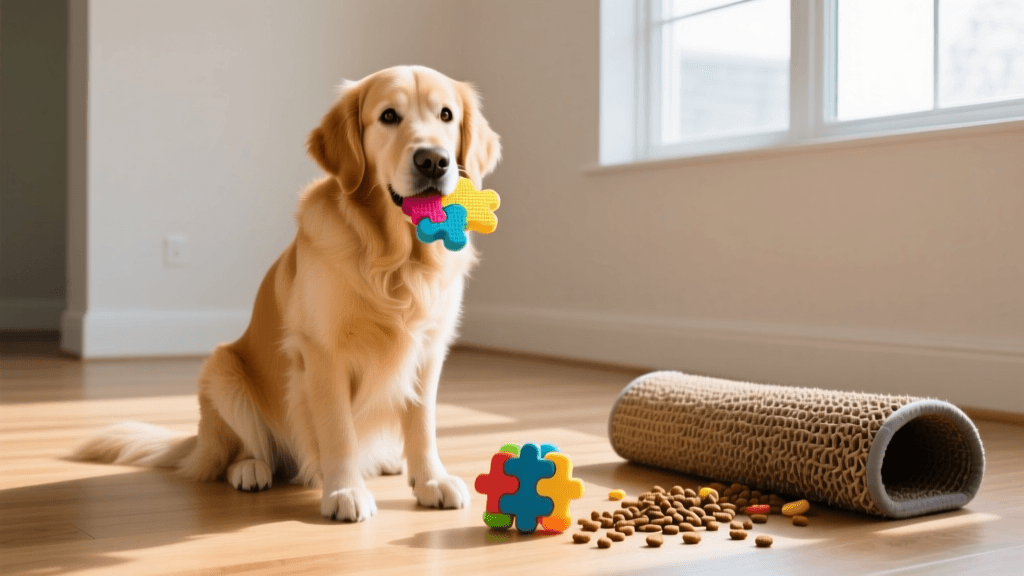
- Snuffle Mats (Cost: $20 - $35): These fabric mats mimic foraging in grass. Hiding 1/2 cup of your dog's daily kibble in a 12x12 inch snuffle mat forces them to use their olfactory senses, slowing down eating and providing deep mental satisfaction.
- Lick Mats (Cost: $8 - $15): Spreading plain pumpkin puree, dog-safe peanut butter, or Greek yogurt on a textured silicone mat and freezing it for two hours creates a long-lasting calming activity. Licking releases endorphins in dogs, making this an excellent tool to use right before you leave for work to curb separation anxiety.
- Puzzle Toys (Cost: $15 - $40): The Outward Hound Dog Brick or the classic Kong Wobbler require dogs to slide compartments or knock the toy around to dispense treats. These are vital for problem-solving stimulation.
Indoor Enrichment Comparison Chart
| Enrichment Tool | Space Required | Avg. Cost | Primary Benefit | Best For |
|---|---|---|---|---|
| Snuffle Mat | 1 sq. ft. | $25 | Olfactory stimulation, slow feeding | Food-motivated dogs, seniors |
| Frozen Lick Mat | 0.5 sq. ft. | $12 | Calming, endorphin release | Anxious dogs, departure cues |
| Flirt Pole | 25 sq. ft. | $30 | Cardio, impulse control | High-prey-drive, energetic breeds |
| Puzzle Feeder | 2 sq. ft. | $20 | Cognitive problem-solving | Intelligent breeds, puppies |
High-Rise Potty Logistics
Potty training in a high-rise apartment requires strict scheduling. The time it takes to ride an elevator down 15 floors can be the difference between a successful bathroom break and an accident on your hallway rug.
Balcony Grass Patches
If you have a balcony, a subscription-based real grass patch (like Fresh Patch or DoggieLawn, measuring roughly 16x24 inches and costing about $30 every two weeks) can serve as an emergency or late-night potty spot. Real grass is preferred over synthetic turf because the natural scent triggers the dog's instinct to eliminate, and it absorbs odors better than plastic alternatives.
Indoor Litter Systems for Small Breeds
If you have a small breed and lack a balcony, indoor dog litter boxes (like the Purina SecondNature system) can be a viable backup plan. These systems use recycled paper pellets that absorb moisture and neutralize ammonia odors. While it requires dedicated training to transition an outdoor-preferring dog to an indoor box, it is an invaluable safety net for extreme weather days or late-night emergencies in high-rise buildings.
Elevator Etiquette and Timing
Establish a rigid schedule. Take your dog out immediately upon waking, 20 minutes after meals, and right before bed. During peak elevator hours (8:00 AM and 5:30 PM), keep your dog on a short 4-foot leash and practice wait commands in the back corner of the elevator to respect your neighbors' personal space.
Noise Management and Neighbor Relations
In an apartment, a barking dog can quickly lead to noise complaints and lease violations. Dogs often bark at hallway footsteps, neighboring dogs, or city sirens due to barrier frustration or fear. The ASPCA's guide on Separation Anxiety and Noise Fears emphasizes the importance of environmental management and desensitization over punishment.
White Noise Machines: Invest in a high-quality white noise machine (like the LectroFan, approx. $40) and place it near your front door or shared walls. The continuous ambient sound masks the sharp, sudden noises of footsteps or talking that trigger alert barking.
Desensitization Training: Record sounds of doors closing, keys jingling, and muffled voices. Play these sounds at a very low volume while feeding your dog high-value treats. Gradually increase the volume over several weeks. This changes the dog's emotional response to apartment noises from alert intruder to predictor of treats.
The Ideal Apartment Dog Daily Schedule
Structure is the antidote to chaos in a small space. Here is a sample daily routine optimized for an urban dog owner working a standard schedule:
- 6:30 AM - Morning Relief & Sniffari: 20-minute outdoor walk focusing on sniffing (mental decompression).
- 7:15 AM - Breakfast Enrichment: Serve breakfast via a snuffle mat or puzzle toy to burn morning energy.
- 8:00 AM - Departure Protocol: Provide a frozen lick mat in a crate or confined safe zone to soothe the dog as you leave.
- 12:30 PM - Midday Break: Hire a dog walker for a 30-minute neighborhood walk to break up the day and prevent potty accidents.
- 5:30 PM - Evening Cardio: 10 minutes of indoor flirt pole play or a brisk 30-minute outdoor jog.
- 7:00 PM - Dinner & Training: Use dinner kibble as rewards for 15 minutes of obedience training (sit, stay, place, heel).
- 9:30 PM - Wind Down & Final Potty: Calm petting, white noise machine turned on, and a final 10-minute outdoor bathroom walk.
Conclusion
Urban dog living is not about compromising on your pet's quality of life; it is about adapting to a different rhythm. By leveraging mental enrichment tools, managing your spatial environment, and maintaining a rigorous schedule, your apartment can become a sanctuary rather than a cage. For further reading on creating a safe and stimulating environment, consult the resources provided by The Humane Society of the United States. With patience and the right tools, your city-dwelling dog will be just as happy, tired, and fulfilled as any dog with a sprawling suburban backyard.
priya-sutaria
All our authors care for dogs every day — read more of their work on the authors page.