Apartment Dog Fitness: Indoor Enrichment & Urban Walks
Discover actionable tips for apartment dog fitness. Learn indoor enrichment games, urban walking strategies, and joint health care for city-dwelling pups.
The Unique Health Challenges of Apartment Dogs
Living in an urban apartment with a dog offers incredible companionship, but it also presents unique health and wellbeing challenges. Unlike suburban or rural dogs that may have access to fenced yards for free-roaming play, apartment dogs rely entirely on their owners for physical exercise, mental stimulation, and bathroom breaks. The concrete jungle is unforgiving on joints, the noise pollution can cause chronic stress, and the lack of incidental movement makes weight management a constant hurdle.
To ensure your city-dwelling pup thrives, you must adopt a proactive approach to their physical fitness and mental health. This guide breaks down actionable, apartment-specific strategies to keep your dog physically sound, mentally sharp, and emotionally balanced.
Protecting Paws and Joints on Concrete
Concrete and asphalt act like sandpaper on canine paw pads. Over time, daily urban walks can lead to micro-abrasions, dryness, and painful cracking. Furthermore, in the winter, city sidewalks are heavily treated with chemical ice melts (like sodium chloride and calcium chloride) that can cause severe chemical burns and systemic toxicity if licked off the paws.
Actionable Advice: Invest in a high-quality paw wax like Musher's Secret Dog Paw Wax (approx. $15-$20). Apply a thin layer twice a week, and always before winter walks to create a semi-permeable barrier against salt and ice. Upon returning home, wash your dog's paws with lukewarm water and a gentle dog-safe shampoo to remove toxic road residues.
The repetitive impact of walking on hard city surfaces also accelerates joint wear and tear, particularly in medium and large breeds living in walk-up apartments where stair climbing is a daily necessity. Speak to your vet about starting a joint supplement containing Glucosamine, Chondroitin, and MSM (such as Dasuquin or Cosequin, costing $25-$40 depending on dog size) before signs of stiffness appear. Additionally, provide an orthopedic dog bed with at least 4 inches of high-density memory foam to relieve joint pressure while they sleep.
Indoor Enrichment: Burning Energy Without a Yard
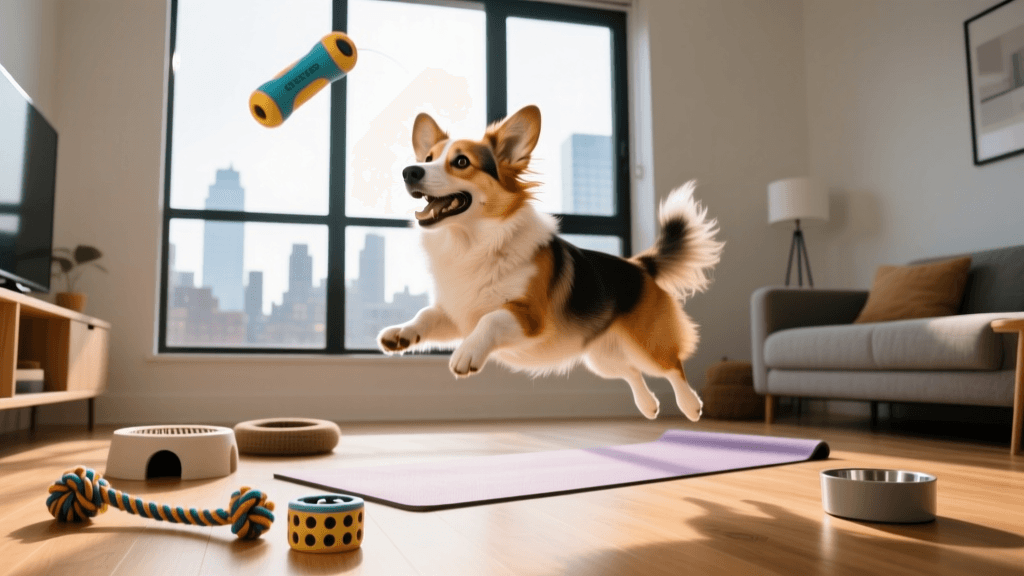
When outdoor space is limited to a leash, indoor enrichment becomes your primary tool for energy expenditure. Veterinary behaviorists often note that mental fatigue is just as effective as physical fatigue. In fact, 15 minutes of intense sniffing and problem-solving can tire a dog out as much as a 3-mile run. The ASPCA highlights that environmental enrichment is critical for preventing destructive behaviors and anxiety in confined spaces.
Below is a comparison of the best indoor enrichment tools for apartment dogs, including their primary benefits and estimated costs:
| Enrichment Tool | Primary Benefit | Best For | Est. Cost | Time to Prep |
|---|---|---|---|---|
| Snuffle Mat (e.g., Outward Hound) | Foraging & Scent Work | Food-motivated dogs, fast eaters | $25 - $35 | 3-5 mins |
| Lick Mat (e.g., West Paw Toppl) | Calming & Anxiety Relief | Dogs with separation anxiety, grooming days | $15 - $25 | 5-10 mins |
| Flirt Pole (e.g., Squishy Face) | High-Intensity Cardio & Impulse Control | High-energy breeds, terriers, herding dogs | $25 - $30 | 1 min |
| Puzzle Feeder (e.g., Kong Classic) | Cognitive Problem Solving | Chewers, dogs left alone for long hours | $15 - $20 | 5 mins |
Pro Tip: For lick mats, spread plain, unsweetened Greek yogurt or pureed pumpkin (ensure it contains no xylitol) and freeze it for 2 hours. This extends the activity time from 5 minutes to over 20 minutes, providing prolonged soothing endorphin release for your dog while you work from home.
The 'Sniffari': Reinventing the Urban Walk
City dog owners often fall into the trap of treating walks purely as a means to an end: getting the dog to a designated relief area and marching back home. To maximize the health benefits of an urban walk, you must transition from a 'power walk' to a 'Sniffari'.
A Sniffari is a dog-led walk where the primary goal is sensory input rather than cardiovascular distance. Allow your dog to stop and sniff fire hydrants, tree bases, and patches of grass for as long as they wish. Sniffing lowers a dog's heart rate and reduces cortisol levels. Use a 10-to-15-foot biothane long line in designated city parks to give them the freedom to explore safely away from bike paths and traffic.
Furthermore, time your walks strategically. Urban environments are loudest during rush hours (7:00 AM - 9:00 AM and 4:30 PM - 6:30 PM). The cacophony of sirens, buses, and construction can trigger noise phobias and chronic stress. Aim for early morning or late evening walks when the city is quieter, allowing your dog's nervous system to remain regulated.
Weight Management in Confined Spaces
Apartment dogs are highly prone to weight gain due to lower incidental movement. A suburban dog might burn hundreds of extra calories a day simply pacing the house, checking the backyard fence, or playing with a neighborhood dog through the gate. An apartment dog's movement is strictly gated by the owner's schedule.
According to experts at the Tufts University Cummings School of Veterinary Medicine, obesity is a leading preventable disease in pets that drastically reduces lifespan and exacerbates joint issues. To combat this, you must abandon the 'scoop and hope' method of feeding.
Actionable Advice: Purchase a digital kitchen scale ($10-$15) and measure your dog's daily food allotment in grams rather than using standard measuring cups, which can vary in kibble density by up to 20%. If your dog's daily requirement is 120 grams, divide it precisely into two 60-gram meals. Subtract the calories used for training treats and enrichment puzzles from this daily total to prevent accidental overfeeding.
Creating a Canine Sanctuary for Stress Relief
Urban noise pollution—sirens, elevator dings, hallway footsteps, and neighboring bass—can prevent dogs from achieving deep REM sleep, leading to a compromised immune system and irritability. Creating a dedicated 'sanctuary' space within your apartment is vital for their mental health.
Choose a corner or a crate location away from exterior walls and high-traffic apartment hallways. Drape a heavy blanket over the crate to create a den-like atmosphere and muffle high-frequency sounds. Invest in a white noise machine or a smart speaker to play continuous brown noise or classical music (specifically tracks designed for canine relaxation, which typically feature tempos of 50-60 beats per minute). This acoustic masking helps drown out sudden, unpredictable city noises that trigger alert barking and anxiety.
Conclusion: Prioritizing Preventive Care
Ultimately, the cornerstone of urban dog health is a strong partnership with your veterinarian. Routine veterinary check-ups, as advocated by the American Veterinary Medical Association (AVMA), are essential for catching subtle changes in weight, joint mobility, and dental health before they become severe issues. By combining proactive veterinary care with intentional indoor enrichment, joint protection, and mindful urban walking, you can ensure your apartment dog lives a long, vibrant, and deeply fulfilled life right in the heart of the city.
tom-renshaw
All our authors care for dogs every day — read more of their work on the authors page.