Senior Dog Joint Health: The Complete Mobility Guide
Discover essential senior dog joint health care. Learn about mobility supplements, home modifications, and vet treatments to keep your aging dog comfortable.
The Golden Years: Navigating Senior Dog Joint Health
As your faithful companion transitions into their senior life stage, their care requirements shift dramatically. While small breeds may not be considered seniors until they reach 10 to 12 years of age, giant breeds can enter their golden years as early as 6 or 7. One of the most universal and impactful challenges of canine aging is the decline in joint health. Maintaining mobility is not just about preserving your dog's ability to walk; it is about safeguarding their independence, mental well-being, and overall quality of life. This comprehensive life stage care guide provides actionable, specific strategies to manage and support senior dog joint health.
Understanding Canine Osteoarthritis
Osteoarthritis (OA), also known as degenerative joint disease, is a progressive condition characterized by the breakdown of articular cartilage, the thickening of the joint capsule, and the formation of osteophytes (bone spurs). According to the U.S. Food and Drug Administration (FDA), osteoarthritis is the most common chronic disease in dogs, affecting an estimated 20% of adult dogs and up to 80% of senior dogs. As the protective cartilage wears away, bone rubs against bone, leading to inflammation, pain, and a severe reduction in synovial fluid, which normally acts as a lubricant.
Because dogs are inherently stoic animals descended from pack predators, they will often mask their pain until it becomes debilitating. Recognizing the subtle, early behavioral shifts is critical for effective life stage intervention.
Subtle Signs of Joint Pain in Seniors
- Hesitation or Reluctance: Pausing before jumping into the car, climbing stairs, or getting onto the couch.
- Changes in Gait: 'Bunny hopping' with the hind legs, limping, or a stiff, stilted walk, especially after resting.
- Behavioral Shifts: Increased irritability when touched near the hips or spine, excessive licking or chewing at specific joints, and panting when not hot or exercised.
- Muscle Atrophy: Noticeable thinning of the thigh muscles in the hindquarters due to reduced weight-bearing and compensatory shifting of weight to the front legs.
Targeted Nutrition and Joint Supplements
Dietary intervention is a cornerstone of senior life stage care. The goal is to reduce systemic inflammation and provide the building blocks necessary for cartilage repair and synovial fluid production. The American Kennel Club (AKC) highly recommends integrating specific joint-supporting nutrients into a senior dog's daily regimen.
Top-Tier Joint Supplements
1. Nutramax Dasuquin Advanced Soft Chews
Dasuquin Advanced is widely regarded by veterinary orthopedic specialists as a gold-standard supplement. It contains a proprietary matrix of glucosamine hydrochloride, low molecular weight chondroitin sulfate, and ASU (avocado/soybean unsaponifiables), which has been shown to protect cartilage from degradation. It also includes Boswellia serrata extract for potent anti-inflammatory support.
Dosage & Cost: For a 60-120 lb dog, the initial loading dose is 2 chews daily for 4-6 weeks, followed by a maintenance dose of 1 chew daily. A 150-count bottle costs approximately $65, making the long-term monthly cost around $13 to $26.
2. Nordic Naturals Omega-3 Pet Fish Oil
Omega-3 fatty acids, specifically EPA (eicosapentaenoic acid) and DHA (docosahexaenoic acid), are powerful natural anti-inflammatories. Unlike plant-based omega-3s (like flaxseed), marine-derived omega-3s are readily bioavailable to canines.
Dosage & Cost: The therapeutic dose for joint inflammation is roughly 75-100 mg of combined EPA/DHA per kilogram of body weight. The Nordic Naturals pump bottle costs about $30 and provides 1 pump (approx. 2.5 ml) per 10 lbs of body weight. A bottle typically lasts 1 to 2 months depending on the dog's size.
Environmental Modifications for the Aging Dog
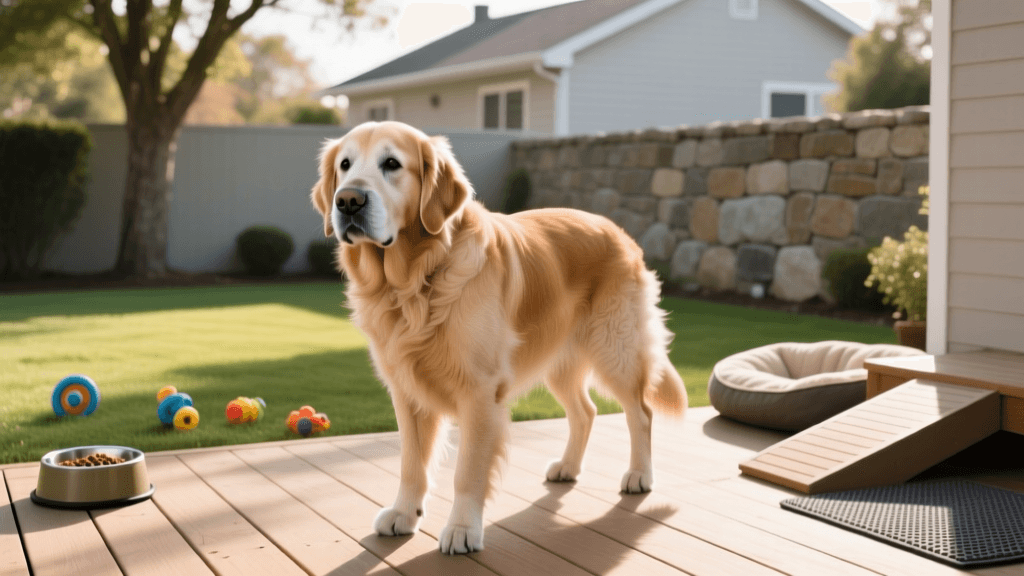
Adapting your home environment is a non-negotiable aspect of senior life stage care. Slippery floors and high jumps can cause micro-traumas to aging joints or lead to catastrophic falls.
Orthopedic Support and Traction
The Big Barker 7-Inch Orthopedic Dog Bed: Standard plush beds flatten out, offering zero support for arthritic pressure points. The Big Barker utilizes a 7-inch therapeutic foam base designed to prevent the dog from 'bottoming out' and touching the hard floor. Priced at approximately $239 for the large size, it is a significant investment but is backed by a 10-year warranty and clinically proven to improve joint function and reduce pain in older dogs.
Pet Gear Tri-Fold Pet Ramp: Lifting a 70 lb senior dog into an SUV can cause human back injuries and canine joint torque. A ramp allows the dog to use their own muscles at a safe incline. The Pet Gear Tri-Fold ramp extends to 71 inches, supporting up to 200 lbs, and folds compactly for trunk storage. It retails for about $50 and features a high-traction surface to prevent slipping.
Floor Traction Solutions: Hardwood and tile floors are hazardous for senior dogs with hind-end weakness. Instead of carpeting an entire house, use interlocking foam puzzle mats or secure non-slip yoga mats in high-traffic corridors and near the dog's bed and food bowls. A 10-pack of foam mats costs around $30 and provides immediate, customizable traction.
Veterinary Interventions and Pain Management
While supplements and environmental changes are vital, moderate to severe osteoarthritis requires pharmaceutical intervention. Veterinary orthopedic specialists, such as those at the Cornell University Veterinary Orthopedic Service, emphasize a multimodal approach to pain management, combining different classes of medications to target pain pathways from multiple angles while minimizing side effects.
Pharmaceutical Options
- NSAIDs (Non-Steroidal Anti-Inflammatory Drugs): Medications like Carprofen (Rimadyl) or Meloxicam are the first line of defense. They block the COX enzymes responsible for inflammation. Monthly costs range from $40 to $90 depending on the dog's weight. Regular bloodwork (every 6 months) is mandatory to monitor liver and kidney function.
- Adequan Canine Injections: This polysulfated glycosaminoglycan (PSGAG) injectable is administered intramuscularly by a vet. It inhibits cartilage-degrading enzymes and stimulates new cartilage synthesis. The initial series involves twice-weekly injections for 4 weeks (approx. $40 per shot), followed by monthly maintenance.
- Librela (Bedinvetmab): A revolutionary newer treatment, Librela is a monthly subcutaneous injection of a monoclonal antibody that specifically targets and neutralizes Nerve Growth Factor (NGF), a key driver of OA pain. It does not metabolize through the liver or kidneys, making it exceptionally safe for senior dogs with organ compromise. It costs between $80 and $150 per monthly injection based on weight.
Comparison Chart: Senior Dog Joint Care Options
| Intervention Type | Specific Example | Est. Monthly Cost | Best Used For |
|---|---|---|---|
| Daily Oral Supplement | Nutramax Dasuquin Advanced | $13 - $26 | Mild to moderate OA; long-term cartilage support |
| Dietary Oil Additive | Nordic Naturals Omega-3 Pet | $15 - $30 | Systemic inflammation reduction; coat and joint health |
| Prescription NSAID | Carprofen (Rimadyl) | $40 - $90 | Acute flare-ups; moderate to severe daily pain |
| Monoclonal Antibody | Librela Injection | $80 - $150 | Severe OA; dogs with compromised liver/kidney function |
| Environmental Aid | Pet Gear Tri-Fold Ramp | $50 (One-time) | Preventing joint strain during car entry/exit |
Exercise Adjustments for the Senior Life Stage
A common misconception is that senior dogs with joint pain should be completely rested. In reality, controlled, low-impact movement is essential to maintain muscle mass, which acts as a supportive brace for arthritic joints. The key is to modify the type and duration of exercise.
Replace high-impact activities like repetitive ball fetching or agility jumping with 'sniffaris'—long, slow, 15-to-20-minute walks on soft surfaces (like grass or dirt trails) where the dog is allowed to stop and sniff frequently. Mental stimulation through sniffing tires them out without placing mechanical stress on their joints.
Hydrotherapy is another exceptional option. The buoyancy of water supports the dog's weight, eliminating concussive joint impact, while the water's resistance builds muscle. Many specialized canine rehabilitation centers offer underwater treadmill sessions, typically costing $60 to $90 per 30-minute session. For home care, swimming in a calm, warm body of water or a heated canine pool is highly beneficial.
'Movement is lotion for the joints. Complete rest leads to stiffness and muscle wasting, which ultimately accelerates the progression of osteoarthritis. The goal is consistent, controlled, and pain-free mobility.'
Conclusion
Caring for a senior dog requires a proactive, multifaceted approach to joint health. By combining high-quality, scientifically backed supplements like Dasuquin Advanced and Omega-3s, investing in crucial home modifications like orthopedic beds and traction mats, and working closely with your veterinarian to utilize modern pharmaceuticals like Librela, you can dramatically alter the trajectory of your dog's aging process. The senior life stage should not be defined by pain and immobility, but rather by comfort, dignity, and the continued joy of shared companionship.
robin-maitland
All our authors care for dogs every day — read more of their work on the authors page.