Step-by-Step Guide to Anxiety-Free Dog Car Travel Training
Learn how to train your dog to love car rides with our step-by-step guide. Discover gear, timing, and tips for anxiety-free dog car travel today.
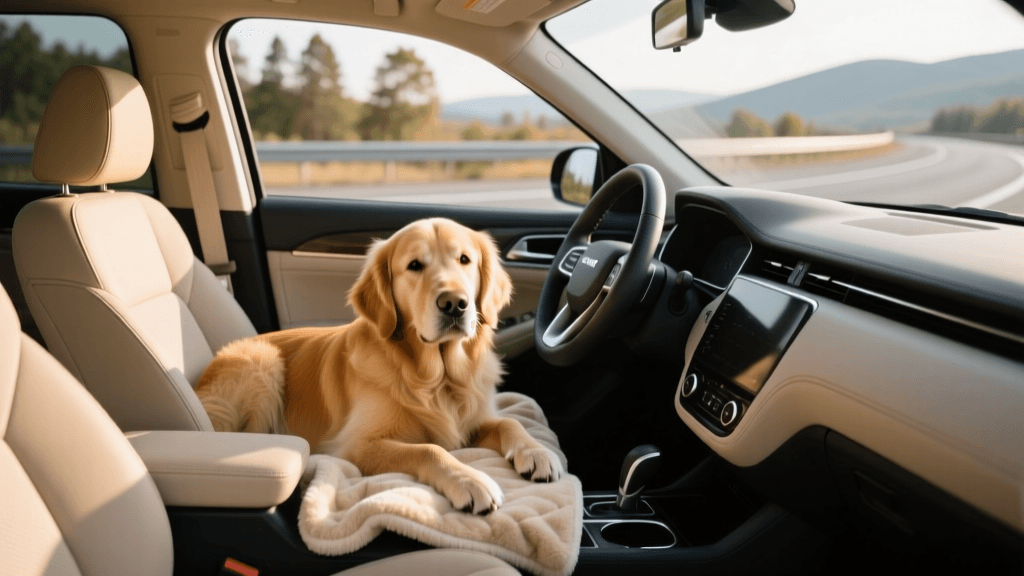
Sharing your life with a dog means they are part of the family, and that includes family road trips, weekend errands, and outdoor adventures. However, for many dogs, the car is a source of immense stress, drooling, panting, and whining. According to the American Kennel Club, car anxiety and motion sickness are incredibly common behavioral hurdles, but they can be overcome with patience, high-value rewards, and a structured desensitization protocol.
In this step-by-step training guide, we will walk you through transforming your vehicle from a scary metal box into a safe, relaxing sanctuary for your dog. We will also cover the essential safety gear you need, backed by crash-test data, to ensure that your daily life and travel routines with your dog are both enjoyable and secure.
Why Dogs Develop Car Anxiety
Before diving into the training steps, it is vital to understand why your dog might be fearful. For many rescue dogs or puppies, the car is simply an unpredictable, loud environment with strange smells and visual stimuli moving too fast to process. Furthermore, if a dog has only ever been driven to the veterinarian or the groomer, they have developed a negative associative memory: the car predicts a stressful event.
Our goal is to break that negative association and replace it with a positive one. This requires time. Do not rush these steps. Depending on your dog's baseline anxiety, this process can take anywhere from two weeks to two months.
Essential Safety Gear for Dog Car Travel
Before you begin training, you must select the right safety restraint. The Center for Pet Safety conducts rigorous crash testing on pet travel products. An unrestrained 50-pound dog becomes a 2,000-pound projectile in a collision at just 35 mph. Therefore, choosing the right gear is a non-negotiable aspect of responsible dog ownership.
Below is a comparison chart of common car restraint options, including estimated costs and safety ratings.
| Restraint Type | Example Product | Estimated Cost | Safety Rating | Best For |
|---|---|---|---|---|
| Crash-Tested Harness | Sleepypod Clickit Sport | $90 - $110 | 5-Star (CPS Certified) | Medium/Large Dogs, Sedans |
| Crash-Tested Crate | Gunner G1 Kennel | $500 - $700 | 5-Star (CPS Certified) | High Anxiety, SUVs, Trucks |
| Backseat Hammock | Kurgo Loft Hammock | $40 - $60 | Not Crash-Tested | Protection from dirt and hair only |
| Zip-Line Tether | Kurgo Zipline | $25 - $35 | Not Crash-Tested | Preventing driver distraction only |
Recommendation: For this training guide, we highly recommend using a CPS-certified harness (like the Sleepypod or Ruffwear Load Up) or a certified crate (like the Gunner G1 or Variocage). Avoid cheap, untested harnesses, as they can snap under the force of an impact.
Phase 1: Stationary Desensitization
The first phase of training takes place in your driveway with the engine completely turned off. You will need a pouch of high-value treats (such as freeze-dried beef liver or Zuke's Mini Naturals), a clicker (if you use marker training), and a lick mat like the Hyper Pet IQ Treat Mat.
Step 1: The Approach and Retreat
Start by standing about ten feet away from your parked car. Toss a high-value treat toward the car. When your dog approaches the vehicle to eat the treat, praise them calmly and call them back to you. Repeat this 10 to 15 times per session. If your dog hesitates or shows signs of stress (lip licking, yawning, tail tucking), increase the distance. The goal is to teach your dog that approaching the car is entirely their choice and always results in a reward.
Timing: Practice this for 5 minutes a day for 3 to 5 days, or until your dog is eagerly running toward the car when you toss the treat.
Step 2: Paws Inside the Car
Open the car doors and sit inside yourself, or sit in the trunk area if you are using a crate in an SUV. Toss treats onto the backseat or into the crate. Allow your dog to jump in, eat the treat, and jump right back out. Do not force them to stay inside. Once they are comfortably hopping in and out, introduce a frozen Kong or a lick mat smeared with dog-safe peanut butter. Place it inside the car and let them eat it while you sit nearby.
Timing: Spend 5 to 7 days on this step. Your dog should willingly enter the car and settle down to chew or lick their treat for at least 5 continuous minutes without showing signs of distress.
Phase 2: Introducing the Engine and Movement
Once your dog is relaxed in the stationary car, it is time to introduce the sensory experience of the engine and motion.
Step 3: The Engine Turns On
With your dog secured in their harness or crate, and happily working on a long-lasting chew (like a bully stick or a Yak cheese chew), start the engine. Do not put the car in gear. Simply let the engine idle for 2 to 3 minutes while you sit quietly with them. If your dog stops chewing and begins to pant or whine, the engine noise is too overwhelming. Turn the engine off immediately, wait for them to settle, and try again the next day with a shorter duration.
Timing: Repeat this daily until your dog can comfortably chew their treat with the engine idling for 10 full minutes.
Step 4: Driveway Drives and Short Loops
Now, put the car in gear and back out of the driveway. Drive in a slow, smooth circle around your block and return to the exact same spot. Turn off the engine, unclip your dog, and initiate a fun game of tug or fetch in the yard. This teaches your dog that a short car ride predicts a fun activity, not a trip to the vet.
Gradually increase the length of the drive over several weeks: 5 minutes, then 10 minutes, then 15 minutes. Always drive smoothly, avoiding hard braking and sharp turns, which can trigger motion sickness.
Phase 3: Real-World Application
Step 5: Destination Training
The Humane Society of the United States recommends making the car a gateway to positive experiences. Now that your dog can handle 15-minute drives, start taking them to highly rewarding destinations. Drive to a new hiking trail, a dog-friendly park, or a pet supply store that hands out free samples.
Avoid taking your newly trained dog to the veterinarian or groomer in the car for the first few months of real-world travel. If a vet visit is medically necessary, consider having a friend drive you while you sit in the back with your dog, offering continuous treats and reassurance, or use a mobile vet service temporarily to protect your car training progress.
Troubleshooting Common Car Training Issues
Motion Sickness vs. Anxiety
It is crucial to distinguish between behavioral anxiety and physiological motion sickness. If your dog is drooling excessively, smacking their lips, and vomiting, they are likely experiencing motion sickness, which is caused by the inner ear fluid being disrupted by the movement of the vehicle. Puppies often outgrow this as their inner ear develops, but adult dogs may need medical intervention.
Consult your veterinarian about anti-nausea medications. Prescription options like Cerenia (maropitant citrate) are highly effective and do not cause the heavy sedation associated with older antihistamines. Giving your dog a light, bland meal (like boiled chicken and rice) 2 hours before a trip can also help settle their stomach, whereas a full belly or a completely empty stomach can exacerbate nausea.
Whining and Pacing
If your dog is safely restrained in a harness but continues to whine, they may be overstimulated by the visual input of cars and pedestrians rushing by. Try using a dog-specific car window shade or a breathable crate cover to block their line of sight. Removing the visual stimuli often immediately lowers a dog's heart rate and stops the vocalization.
Conclusion
Training your dog to love car travel is an investment in your shared life together. By utilizing crash-tested safety gear, moving at your dog's pace, and building a foundation of positive associations, you can turn a stressful chore into a relaxing routine. Remember that consistency is key. Keep your sessions short, your treats high-value, and your driving smooth, and soon your dog will be the first one waiting by the car door, ready for the next adventure.
jonas-cole
All our authors care for dogs every day — read more of their work on the authors page.