2026 AKC Scent Work Guide: Rules, Training & Top Gear
Master AKC Scent Work in 2026 with our complete novice competition guide. Discover official rules, essential training gear, and hide techniques for success.
The Rise of Canine Olfaction Sports in 2026
As we move through 2026, canine scent work continues to dominate the dog sports world. Originally modeled after the work of professional detection dogs, this sport has evolved into a highly accessible, mentally stimulating activity for dogs of all ages, breeds, and physical abilities. According to the American Kennel Club, scent work registrations have surged this year, driven by handlers seeking a low-impact but high-engagement competition for their canine partners. Unlike agility or obedience, which rely heavily on physical prowess and handler-directed commands, scent work requires the handler to step back and trust the dog's primary sense: olfaction. This guide will walk you through the official Novice elements, essential 2026 gear, and proven imprinting protocols to get you from your living room to the competition ring.
Decoding the AKC Novice Elements
To earn your Novice Scent Work title, you must qualify in four distinct search elements. Each element tests a different facet of your dog's hunting ability and your handling skills. Understanding the nuances of these environments is critical for success in the 2026 trial season.
1. Container Search
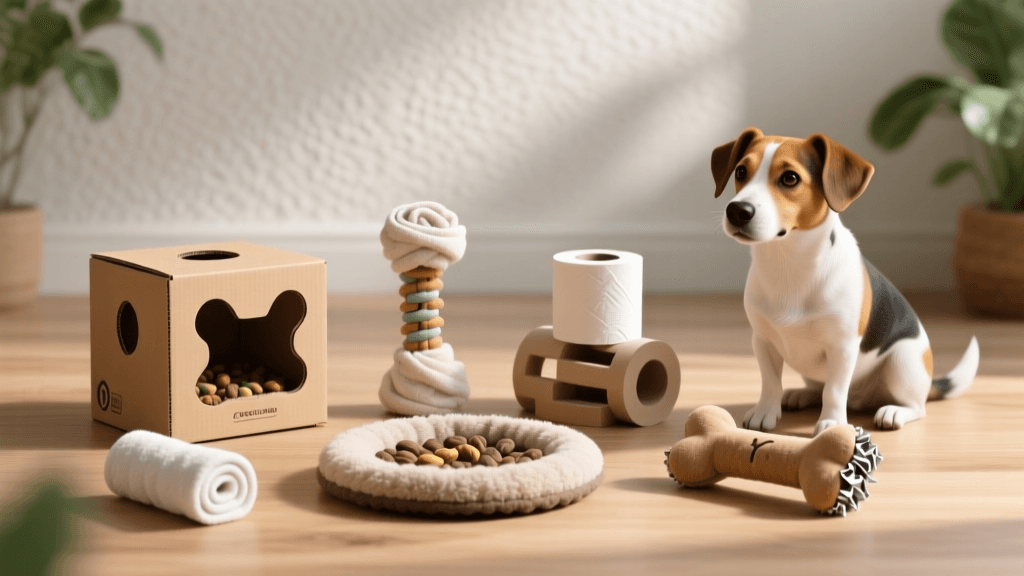
The Container element is typically the starting point for beginners. The search area consists of identical cardboard boxes, luggage, or plastic bins arranged in a specific pattern. At the Novice level, the hide (a cotton swab scented with Birch essential oil) is placed inside one of the containers. The primary challenge here is teaching the dog to ignore the visual uniformity of the containers and focus solely on the odor cone. Handlers must watch for subtle changes in their dog's breathing and head snaps when they intersect the scent plume. Distractors, such as food or toy odors, may be introduced in higher levels, but Novice focuses purely on establishing a clean, confident alert on the target odor.
2. Interior Search
Interior searches take place in a single room, such as a classroom, office, or gymnasium. The hide is placed somewhere within the room, ranging from floor level to a maximum height of 48 inches for Novice. The difficulty in Interior searches lies in the environmental odors, HVAC air currents, and the boundaries of the room. In 2026, judges are placing a heavier emphasis on how handlers manage their dogs around threshold areas and corners, where scent tends to pool and wrap. A successful Interior search requires the handler to read the room's airflow and allow the dog to work the perimeter before tackling the center.
3. Exterior Search
Exterior searches introduce the unpredictability of nature. Conducted in grassy areas, parking lots, or courtyard spaces, these searches are heavily influenced by wind, sun, and temperature gradients. The hide can be placed on natural features like trees, bushes, or man-made objects like benches and fences. Because wind can carry the Birch odor far from the actual hide location, handlers must learn to differentiate between a dog 'scenting' (catching the odor in the air) and 'sourcing' (pinpointing the physical origin). Exterior searches demand patience; rushing a dog to an alert when they are still working the edge of the odor cone is a common cause of false alerts.
4. Buried Search
The Buried element is often the most challenging for Novice dogs. The hide is enclosed in a protective tube and buried beneath sand or gravel at a depth of 2 to 6 inches. Because the ground material traps and diffuses the odor, the scent cone is much tighter and closer to the surface. Dogs must learn to use their noses to dig through the olfactory layers without physically destroying the search area. Training for this element requires specialized setups to teach the dog that the odor is coming from beneath the surface, rewarding them for a sustained, focused nose-touch near the buried source.
Essential Scent Work Gear for the 2026 Season
Having the right equipment is non-negotiable in competitive scent work. The gear you use must be safe, durable, and compliant with current regulations. Below is a comparison of the top-rated scent work equipment for the 2026 competition year.
| Equipment Type | Recommended Brand/Model | Best Used For | 2026 Est. Price |
|---|---|---|---|
| Target Odor Kit | K9 Nosework Official Birch Kit | Initial imprinting and daily training | $45.00 |
| Working Harness | Ray Allen Scent Work Harness (2026 Edition) | Competition ring and field work | $85.00 |
| Hide Vessels | Leerburg Neodymium Magnetic Tins | Interior and Exterior hide placements | $22.00 (pack of 5) |
| Reward Pouch | Sniff-It Scent Work Rewards Pouch | High-value treat delivery during searches | $35.00 |
| Buried Tubes | Aluminum Scent Work Buried Tubes | Buried element training and protection | $18.00 (pack of 3) |
Gear Deep Dive
The K9 Nosework Official Birch Kit remains the gold standard for odor introduction. As highlighted by the National Association of Canine Scent Work, using properly prepared, uncontaminated cotton swabs and high-quality essential oils is vital for building a clean odor picture in your dog's mind. The Ray Allen Scent Work Harness is designed specifically to avoid restricting shoulder movement, allowing the dog to stretch and reach into tight spaces without chafing. Its bright colors also signal to the judge that the dog is 'on the clock' and actively searching. Finally, Leerburg Neodymium Magnetic Tins are essential for Interior and Exterior training. The powerful magnets allow you to stick the hide to metal filing cabinets, car bumpers, or chain-link fences without using tape, which can leave residue and contaminate the search area with food or human scent.
Imprinting Birch: A Step-by-Step Protocol
Before you can compete, your dog must understand that the scent of Birch equals a high-value reward. This process, known as imprinting, should never be rushed. In 2026, top trainers advocate for a methodical, three-phase imprinting protocol.
Phase 1: Pairing the Odor
In the pairing phase, you present the Birch scent and a high-value food reward (such as freeze-dried liver or chicken) in the exact same location. Place a few pieces of food directly on top of the scent tin inside a cardboard box or on a chair. When the dog eats the food, they are simultaneously inhaling the Birch odor. The dog learns that the odor predicts the presence of the reward. Repeat this in various locations until the dog shows immediate excitement upon smelling the Birch.
Phase 2: The Shell Game
Once the dog understands the pairing, introduce choice. Set up three identical containers. Place the paired Birch/food hide in one, and leave the other two empty. Encourage the dog to search. When they find the correct container and eat the reward, praise them heavily. This teaches the dog to hunt for the odor rather than just following your body language or pointing fingers. Gradually increase the distance between the containers and the complexity of the setups.
Phase 3: Fading the Food
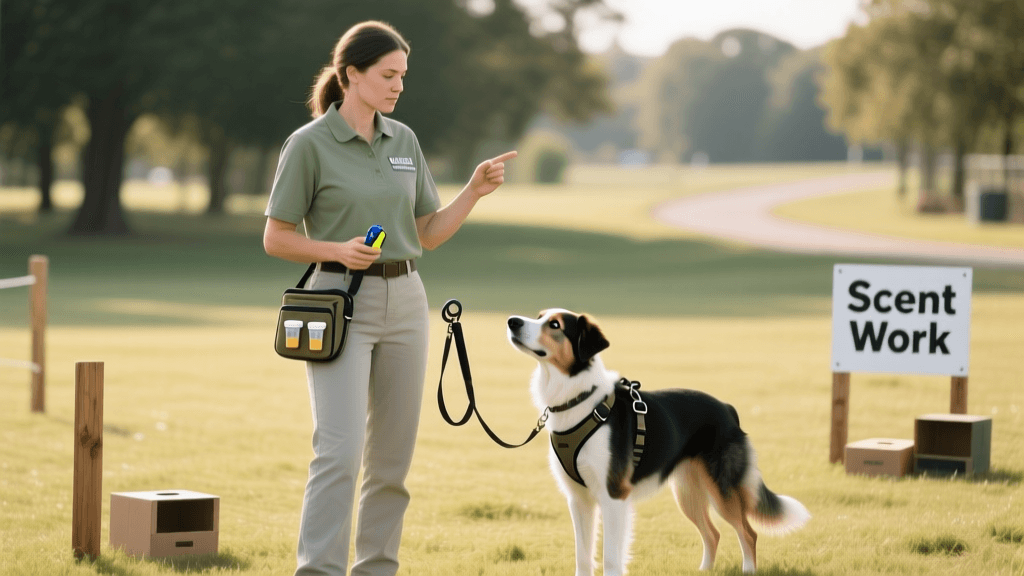
The final phase involves separating the food from the odor. Place the Birch hide in one location and hide the food reward in your treat pouch. When the dog finds the Birch and gives a sustained alert (such as a nose touch or a sit), mark the behavior with a 'Yes!' and deliver the food from your pouch. This transitions the dog from 'eating at the source' to 'indicating the source for a reward,' which is the required behavior in the AKC competition ring.
Competition Day Strategy and Handling
Walking into the trial ring in 2026 requires a blend of strategic preparation and emotional control. The Novice time limit is typically three minutes per element, which is more than enough time if you have a solid start-line routine. Before entering the search area, ensure your dog is acclimated to the environment. Allow them to potty and decompress away from the crating area.
When the judge asks, 'Are you ready?', take a deep breath. Unclip the leash if the element allows it, give your search cue (such as 'Find it' or 'Search'), and step back. The most common mistake novice handlers make is crowding the dog or inadvertently guiding them toward a hide. Trust your dog's nose. Watch their body language: a sudden change in pace, a deep inhalation, or a flick of the ears often indicates they have caught the scent cone. Once the dog commits to the source and holds their alert, confidently call 'Alert!' to the judge. If you are wrong, accept the judge's decision gracefully, leash your dog, and exit the ring. Scent work is a journey of continuous learning, and every trial provides valuable data for your next training session.
Conclusion
AKC Scent Work is more than just a competition; it is a profound way to deepen the bond between you and your dog by honoring their natural instincts. By mastering the Novice elements, investing in high-quality 2026 gear, and following a structured imprinting protocol, you are setting the stage for a long, successful career in canine olfaction sports. Whether you are navigating the wind-swept Exterior searches or the precise demands of the Buried element, patience and trust will always be your greatest assets in the ring.
robin-maitland
All our authors care for dogs every day — read more of their work on the authors page.